
At the regular press conference in March 2026 of the Ministry of Agriculture and Environment, Mr. Nguyen Hong Khanh - Deputy Director of the Department of Management and Construction of Irrigation Works (Ministry of Agriculture and Environment) gave an assessment of the drought and water shortage situation in the dry season of 2025 - 2026.
According to forecasts from now until the end of May 2026, the ENSO phenomenon is likely to gradually shift to neutral status with a probability of about 80 - 90%, from June - August 2026, the ENSO phenomenon is likely to maintain neutral status, the probability of transitioning to El Nino tends to gradually increase with a probability in the range of 35 - 45%.

Rainfall and stream flow forecasts in the southern regions (South Central Coast, Southeast Coast and Mekong Delta) are at a level equivalent to the multi-year average, but rainfall and flow are low due to entering the peak of the dry season. The water source stored in irrigation reservoirs and some hydropower reservoirs creating water supply for agricultural production is at an average of 70-80% of the designed capacity.
Based on the forecast of hydro-meteorological conditions and stored water, Mr. Nguyen Hong Khanh assessed that in the South Central and Southeast regions, water sources are basically guaranteed for agricultural production in the 2025-2026 dry season, the risk of drought and water shortage only occurs locally in small irrigation works and areas outside irrigation works in charge of irrigation. However, special attention should be paid to the South Central coastal region in July and August 2026, and the South Central and Southeast highlands in March and April 2026.
In the Mekong Delta region alone, saltwater intrusion has appeared at a level equivalent to the multi-year average, and at some times it has affected water sources serving agricultural production and people's livelihoods.
The Department of Management and Construction of Irrigation Works assessed that from now until May 2026, the flow on the Mekong River to the Mekong Delta continues to gradually decrease, the highest intrusion in the Mekong River estuary will be concentrated from March 19 - 23, 2026 with a salinity limit of 4g/liter, the highest in a range of 42 - 55 km; in the Vam Co and Cai Lon river mouths in the periods June 1 - March 19, March 19 - 23, March 30 - April 4 and April 18 - April 21, with a salinity limit of 4g/liter, the highest in a range of 65 - 70 km.
With irrigation infrastructure invested in the Mekong Delta region, ensuring the ability to proactively control saltwater intrusion, there is little risk of widespread water shortages.

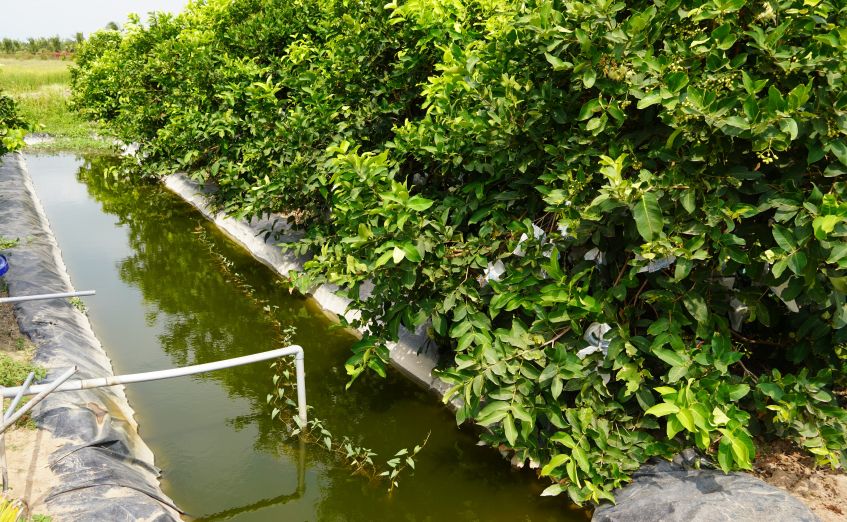
However, the water source to the Mekong Delta in the dry season depends greatly on the flow from the upper Mekong River. Therefore, it is necessary to be wary of abnormal fluctuations due to the impact of hydropower reservoir operation (water storage, limited discharge).
It is necessary to prevent the risk of localized water shortages that may occur in some downstream areas of provinces such as: Tay Ninh, Dong Thap, Vinh Long, Ca Mau. This includes irrigation systems such as: Go Cong irrigation (Dong Thap), Nam Mang Thit irrigation (Vinh Long), Long Phu - Tiep Nhat irrigation (Can Tho City), Nhat Tao - Tan Tru (Tay Ninh province).


