However, behind the title "World Biosphere Reserve" or "Cu Lao Cham Nature Reserve" are increasingly clear challenges, forcing conservation work to shift from political determination to concrete, persistent actions and relying on the community.
Pressure builds on the forest - marine ecosystem
Cu Lao Cham marine reserve (Tan Hiep island commune, Da Nang) has a total area of over 23,500 hectares, of which the sea area accounts for nearly 21,900 hectares. This is home to many rare marine species such as lobsters, star apple snails, male monkeys, apricot tables, purple fin, pink fish... On the shore, more than 1,300 hectares of primeval forest surrounding the mountainsides play a role in regulating the flow, limiting erosion and protecting the coastline.


However, according to the Cu Lao Cham Marine Reserve Management Board (BQL), this precious ecosystem is facing many risks of damage. Destroying seafood exploitation activities, plastic waste from land and sea, along with the pressure from tourism development are directly affecting the ecological environment.
Since the beginning of 2025, the authorities have organized 138 patrols of both waterways and roads, detecting dozens of cases of violations of reserve regulations. However, these figures do not fully reflect the extent of damage to the marine and island ecosystem.


At a workshop on marine conservation held in Hoi An, Associate Professor, Dr. Vo Si Tuan, Vice President of the Vietnam Seafood Breeding Association, former Director of the Nha Trang Institute of Oceanography, frankly acknowledged: Many marine conservation areas in Vietnam are currently ineffective in regenerating seafood resources. The situation of depleted exploitation, even in the core area, still occurs. If the approach is not changed, the conservation area will find it difficult to fulfill its long-term mission.
According to Mr. Tuan, marine conservation cannot stop at banning exploitation but needs a comprehensive plan, combining natural habitat restoration, creating breeding sources, developing high-tech, environmentally friendly marine farming and linking it with sustainable eco-tourism.


Reviving coral reefs, recreating life for the sea
Faced with these challenges, Cu Lao Cham has chosen a conservation path based on science and community participation. One of the most obvious marks is coral restoration and sea turtle conservation programs.
Over the years, the Management Board has coordinated with specialized units to carry out 6 trans flights of 1,900 sea turtle eggs from Con Dao National Park to the hatchery in Cu Lao Cham. The releases of baby turtles into the sea all recorded a high survival rate, contributing to the restoration of sea turtle populations in the area.


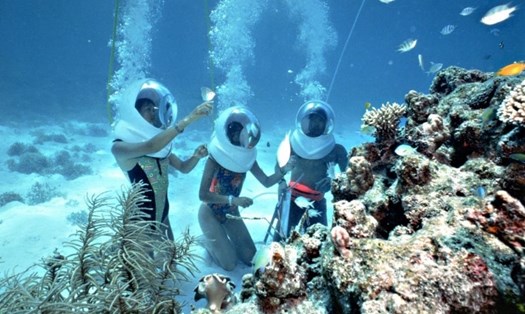
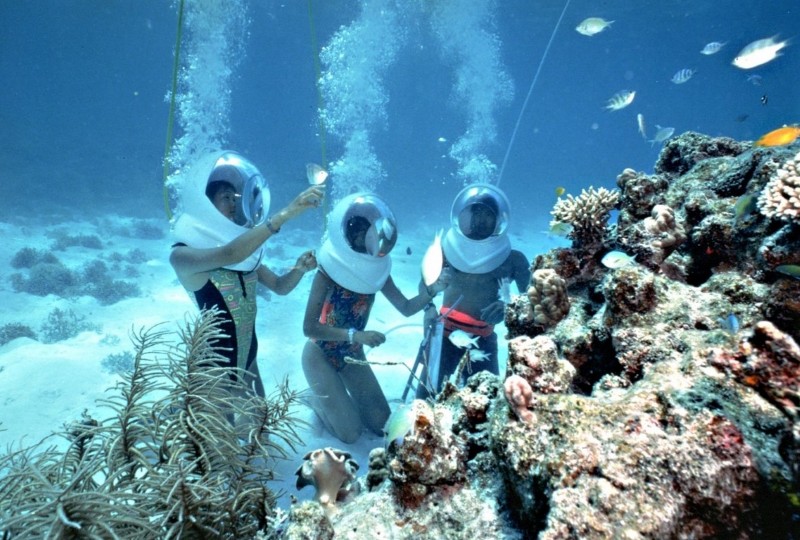
At the same time, the hard coral restoration project with the participation of the community has built two coral nursery gardens with 30 farming frames, restored two coral reef areas with a total area of about 4,000m2. Healthy coral pieces are intercropped and raised under control conditions before being planted at the seabed in suitable locations for depth, flow and water quality.
According to the technical staff, if conditions are favorable, coral can grow from 4-5cm per year. Thanks to strict care procedures, the survival rate of corals in nursery gardens is up to 95%. Up to now, the area of coral reefs recovered in Cu Lao Cham has increased to more than 350 hectares, contributing to the increase in the coverage of hard coral and soft coral, while the fish density has increased nearly 1.5 times compared to before.
Mr. Nguyen Van Vu - Deputy Director of the Cu Lao Cham Marine Reserve Management Board, said: "We not only focus on restoring the ecosystem but also monitor the exploitation output of people, implementing a plan to preserve seafood resources in sub-regions such as Bai Huong. The goal is to preserve it in conjunction with livelihoods, so that people can see long-term benefits".
According to Mr. Vu, when the environment is restored and aquatic resources increase, the people are the direct beneficiaries and thereby become the most effective protective force for the reserve.
Community - the pillar of sustainable conservation
A special feature in conservation work at Cu Lao Cham is the co-management model, in which local people directly participate in protecting and exploiting resources responsibly. Since 2011, the Bai Huong Village marine Conservation Management Sub-area has become the first model in Vietnam to give the community the right to manage resources.
Mr. Tran Hoan, who has been attached to this model for many years, shared: About two decades ago, for a living, people used to blast underwater to get coral to burn. Now it's different. When coral reefs are kept, new visitors will come, and aquatic resources will recover. When conservation brings economic benefits, people will voluntarily participate.


Not only preserving biodiversity, Cu Lao Cham is also a pioneer in reducing plastic waste. Since 2009, the " state no to plastic bags" campaign was launched and maintained for more than 16 years. Then there are the programs " says no to plastic straws", " Say no to disposable plastic items".
In 2021, the resource recovery facility (MRF) in Bai Ong village came into operation, turning domestic waste into recycled resources. Ms. Le Thi Thu Thuy, a household participating in the model, said: Previously, garbage was a burden, now it has become a reusable item. Every day, we classify, fertilize, and recycle to reduce environmental pollution".
According to statistics, each year, the MRF model collects and processes more than 15 tons of household waste, of which more than 7 tons of organic waste is treated on site, contributing to a reduction of more than 50% of waste generated from households. However, Cu Lao Cham still generates about 34 tons of garbage every day, while Eo Gio landfill is overloaded.


Faced with this situation, the Tan Hiep island commune government launched a campaign "Tourists and fishermen bring waste to shore". Ms. Pham Thi My Huong - Chairman of the People's Committee of Tan Hiep island commune (Cu Lao Cham) said: "The goal is to reduce 70 - 80% of plastic waste at sea, while building the image of Cu Lao Cham as a green, environmentally friendly tourism destination".
According to Prof. Dr. Nguyen Hoang Tri, Chairman of the National Committee of the Vietnam Human and Biosphere Program, the core value of Cu Lao Cham lies in the connection between nature and culture: On one side is a marine reserve, on the other side is Hoi An cultural heritage. It is this connection that creates a special strength and image recognized by UNESCO.
Maintaining Cu Lao Cham is not only about preserving a tourist destination, but also preserving the harmonious relationship between people and nature. When coral reefs are revived, forests retain water for the sea, and people have sustainable livelihoods, conservation will no longer be a burden, but will become the foundation for the long-term development of this island's sea area.