
On March 20, the Department of Agriculture and Environment of Lam Dong province said that in the past time, the Provincial People's Committee has issued many directing documents to ensure the collection and treatment of waste, maintain the environment and urban aesthetics.
According to regulations, the People's Committees of communes and wards are responsible for agreeing with units to sign contracts to provide garbage collection and treatment services.
However, the implementation in many localities still has many obstacles, slow and unsynchronized implementation, leading to difficulties in implementation organization.
Accordingly, currently, the demarcation of authority between the commune level and the Regional Construction Investment Project Management Board is not clear; the work of preparing estimates, allocating and allocating funds in some places is still slow, even unable to be implemented.
In addition, the choice of form of organization of implementation and signing of service contracts is not timely, causing garbage collection and transportation activities to lack regular maintenance resources.
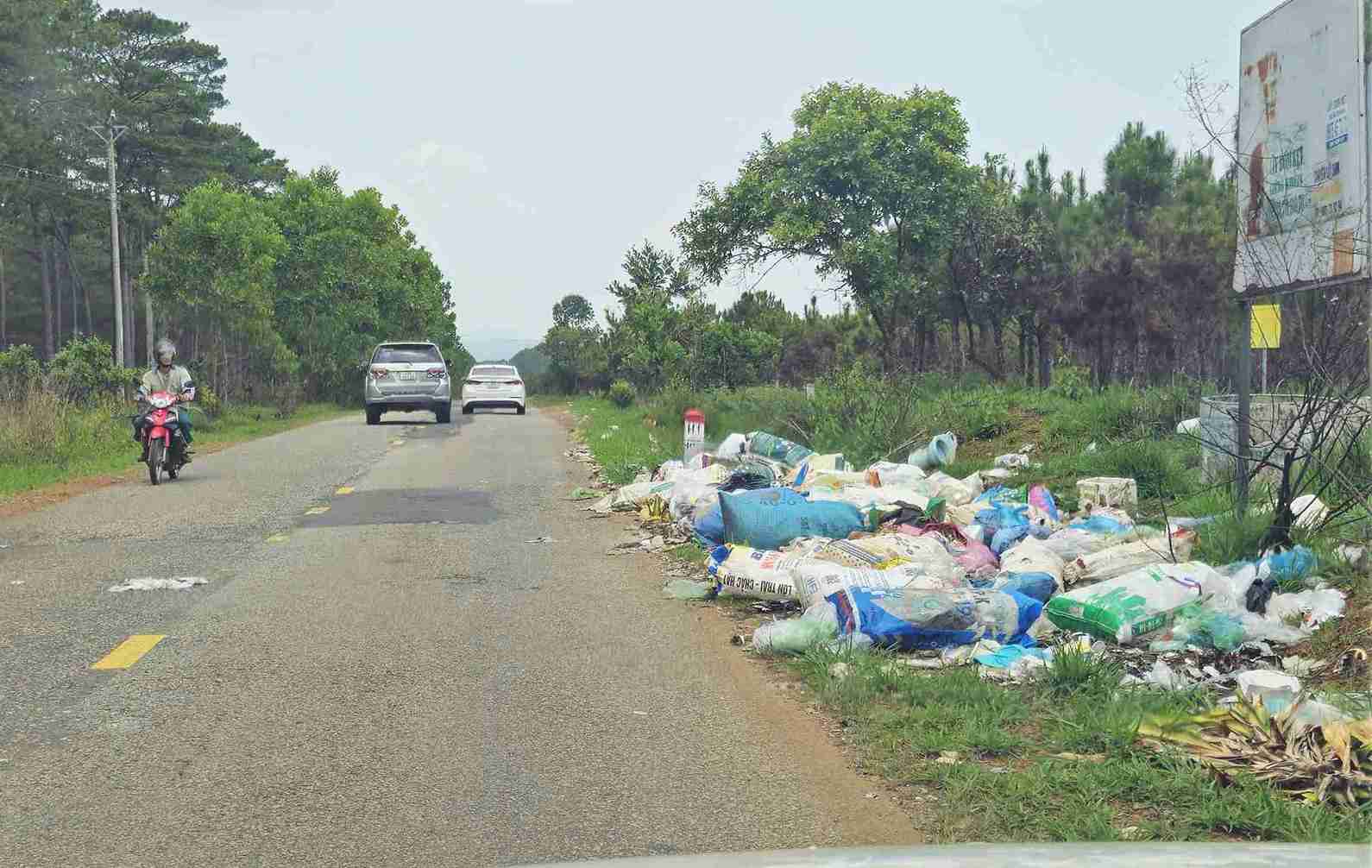
Recorded in communes and wards in the southern area of the province, domestic waste is often accumulated and gathered along roads such as Provincial Road 728, National Highway 27, National Highway 28 and many inter-communal and inter-village routes, causing environmental pollution and affecting people's lives.
Representatives of the Bao Lam area construction investment project management board said that the unit is collecting waste under contract with a frequency of 3-5 days/time.
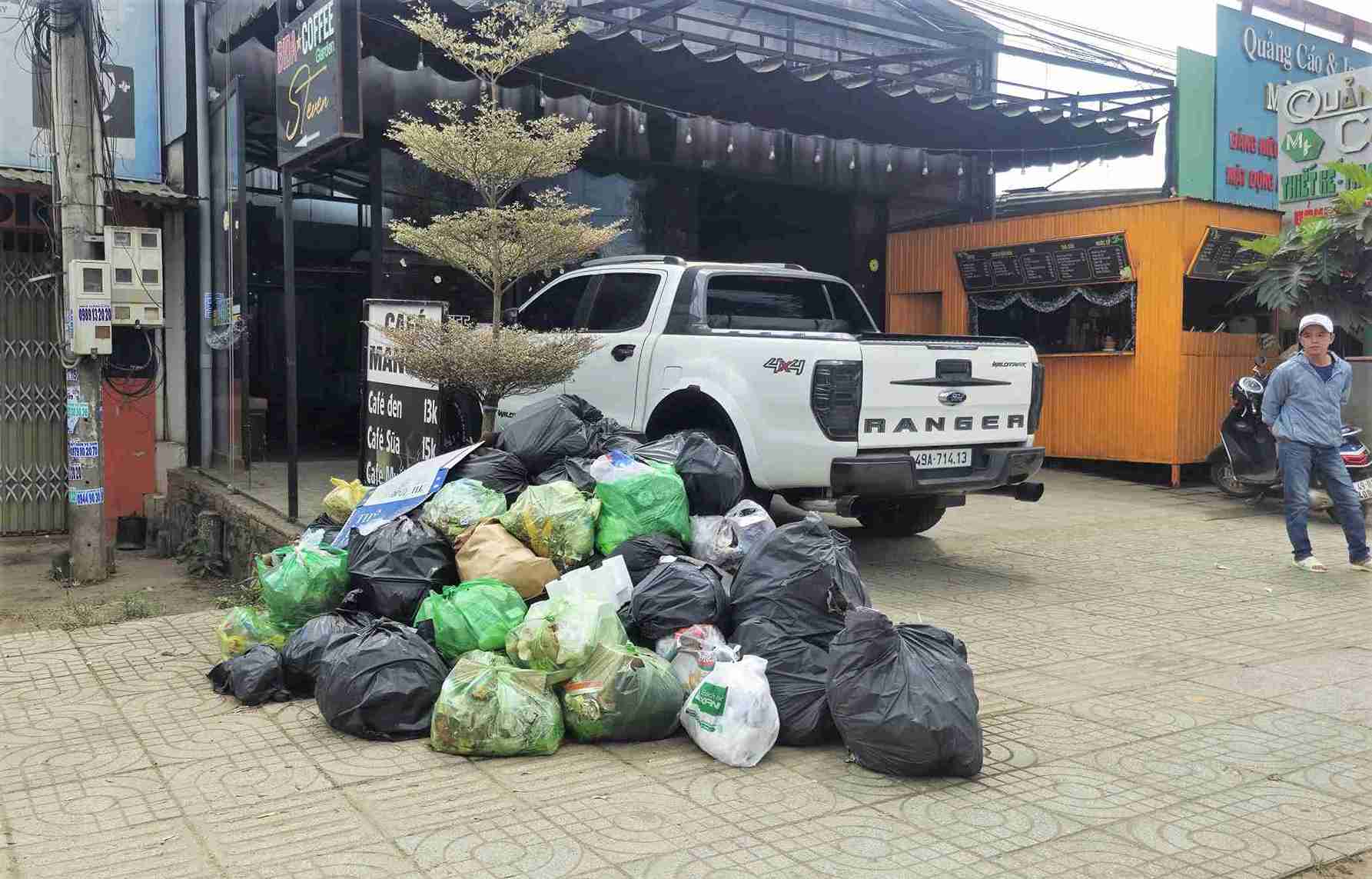
However, due to the large area, long transportation distance, while the budget is limited and dependent on local payment sources, collection work is still difficult.
In Hoa Ninh commune, along National Highway 20, domestic waste is also often accumulated. People reflect that at times it is collected once every 10 days, even more than half a month, causing garbage to spread.
Faced with this situation, the People's Committee of Lam Dong province has directed localities to urgently complete bidding dossiers, order or assign garbage collection tasks according to regulations; and at the same time, implement parallel fee collection to ensure continuous collection activities.
Regarding waste treatment in Da Lat and Bao Loc, Mr. Vu Dinh Cuong, Deputy Director of the Department of Agriculture and Environment of Lam Dong province, said that Da Lat generates about 389 tons of waste every day, and Bao Loc about 130 tons.
Functional sectors have worked with localities to sign contracts to maintain collection, and at the same time implement immediate solutions to prevent garbage from accumulating in residential areas.
In the long term, the province is studying the construction of a backup landfill in the Cam Ly area and accelerating investment procedures for waste treatment plants in Da Lat and Lac Duong.


