
Controversy over AI copying real people
Dieu Khach Media Company (China) has just caused a shock when announcing the signing of two AI artists, Tan Lang Nhac and Lam Tich Nhan.
This is a unit that has produced quality TV series such as "Real Estate Expert" (Sun Li, Luo Jin starring), "Day Without Sleep" (Bach Kinh Dinh), "Cuu Trong Tu" (Manh Tu Nghia, Ly Quan Nhue)...
Two AI actors of Dieu Khach will be assigned the main roles in the 60-episode detective short film "Tan lĩnh thanh đồng quỷ sự lục". At the same time, they will be allowed to open personal accounts on social networks and promote as real people.
This move immediately caused fierce controversy surrounding the issue of copyright infringement and AI replacing humans.
Audiences believe that the two AI actors are introduced like "patchwork" images from real actors.
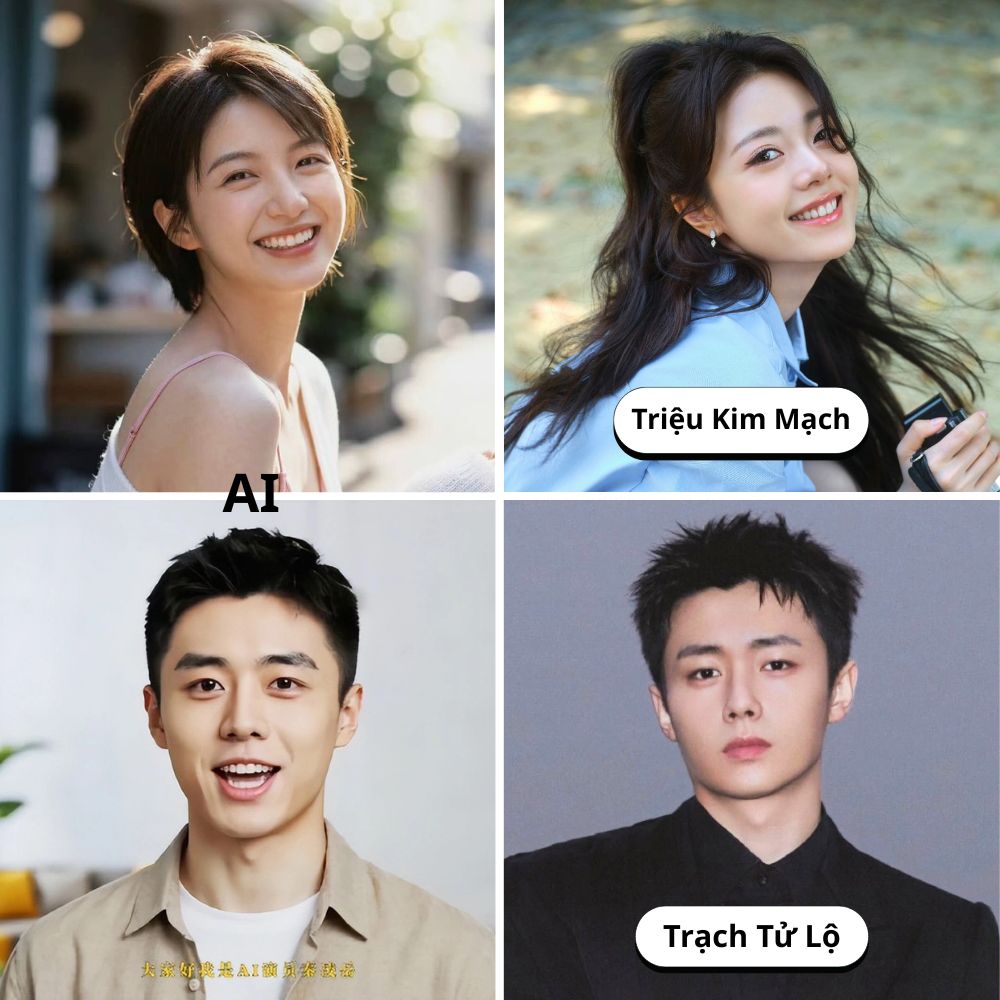
Male AI artist Qin Lingyue with short hairstyle, mole on his right cheek, distance between eyes and eyebrows, and curved corners of his mouth when smiling is said to be unbelievably similar to Zhuo Zilu. Some AI recognition tools even directly labeled him "Zhuo Zilu".
Meanwhile, AI artist Lam Tich Nhan was commented on as a "mixture" of Trieu Kim Mach's "house girl" aura, Truong Tu Phong's facial features, and Luong Khiet's characteristics.
Most Chinese audiences react negatively: "This is not AI, this is a high-end patched monster", "Taking showbiz as a data warehouse?", "Looking at it, you'll see familiar faces right away"...
Previously, many AI short film projects were criticized for using Tieu Chien's face as the male lead, even copying his entire image in the movie "Tang Hai Truyen".
According to lawyers, if the AI image created makes the public recognize who it is, the production unit will face the risk of being sued for infringement of personal image rights.
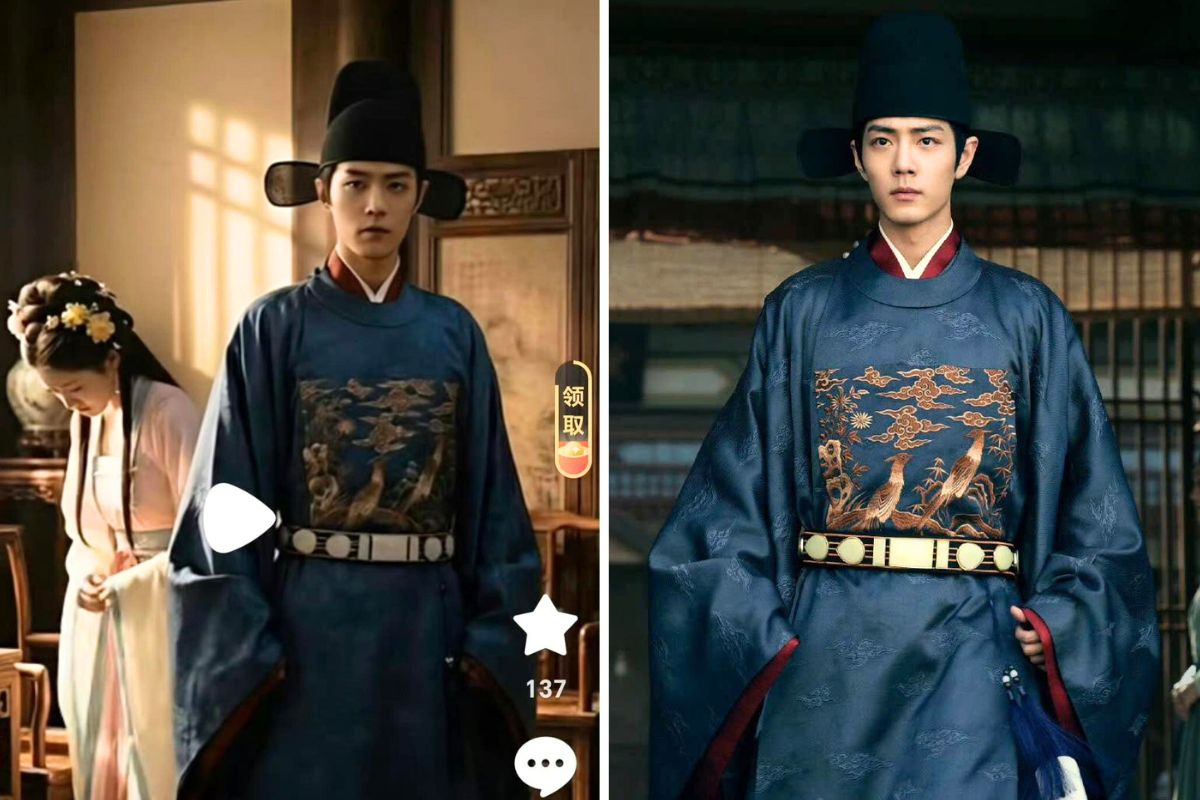
Worry about actors being replaced by AI
The Chinese entertainment industry is spreading information that major film platforms are issuing new regulations to tighten production and distribution: the number of films shot has decreased significantly, while implicitly encouraging producers to take advantage of AI to cut costs, from post-production to setting up scenes.
There is a more shocking source, which is that actors playing the second male/female role or lower will gradually be replaced by AI.
According to the media, if these orientations are implemented, supporting roles and extras are the first objects of concern.
Previously, filming a spectacular war scene or crowded nightlife needed to hire hundreds of extras. But now, the main character only needs to act in front of a green screen, and the entire crowd behind can be assigned to post-production using AI to create.
The AI character does not have schedule conflicts, does not need to eat and rest, and is never involved in scandals that cause the film to be removed. Some producers calculate that if AI is used to replace unimportant supporting roles, the cost can be reduced by up to 90%.
Mid-range actors in the short film segment are also complaining about the fear of being replaced by AI. Many actors revealed being owed salaries, reduced cat-xe but still not sure of having roles.
Stars who only rely on beauty to become famous can also be eliminated as AI develops.
According to iFeng, some Chinese actors today only have beautiful faces, no voice skills, and cannot control their expressions; when acting, every climax scene must be saved by voice acting.
If a movie only needs a "beautiful face" to attract fans, then AI is definitely a better choice. AI can create hundreds of perfect faces according to popular aesthetic standards.
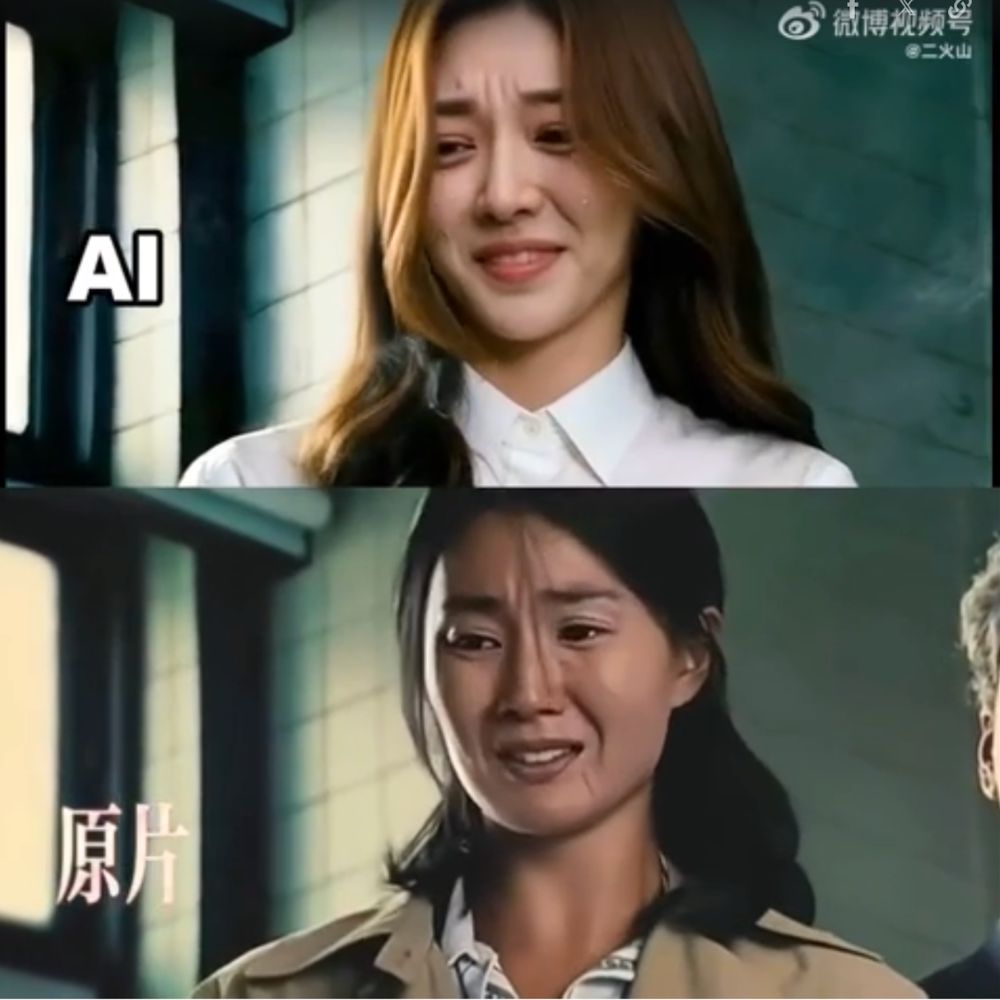
However, producers and people in the industry also note that bringing AI actors to the screen still has many limitations such as being able to only film close-up faces, limitations in action and interaction. When opening the mouth to speak, AI actors will reveal speech errors and sound deviations; changing shooting angles easily make faces look different.
In particular, emotions and subtle expressions are things that AI can hardly show off like real actors.
Director Vu Chinh said that AI clearly brings benefits to the film industry, but truly talented actors do not need to worry.
“That may be a temporary trend, but human acting as well as human needs for peers are absolutely not something that AI can completely replace,” the director said.


