
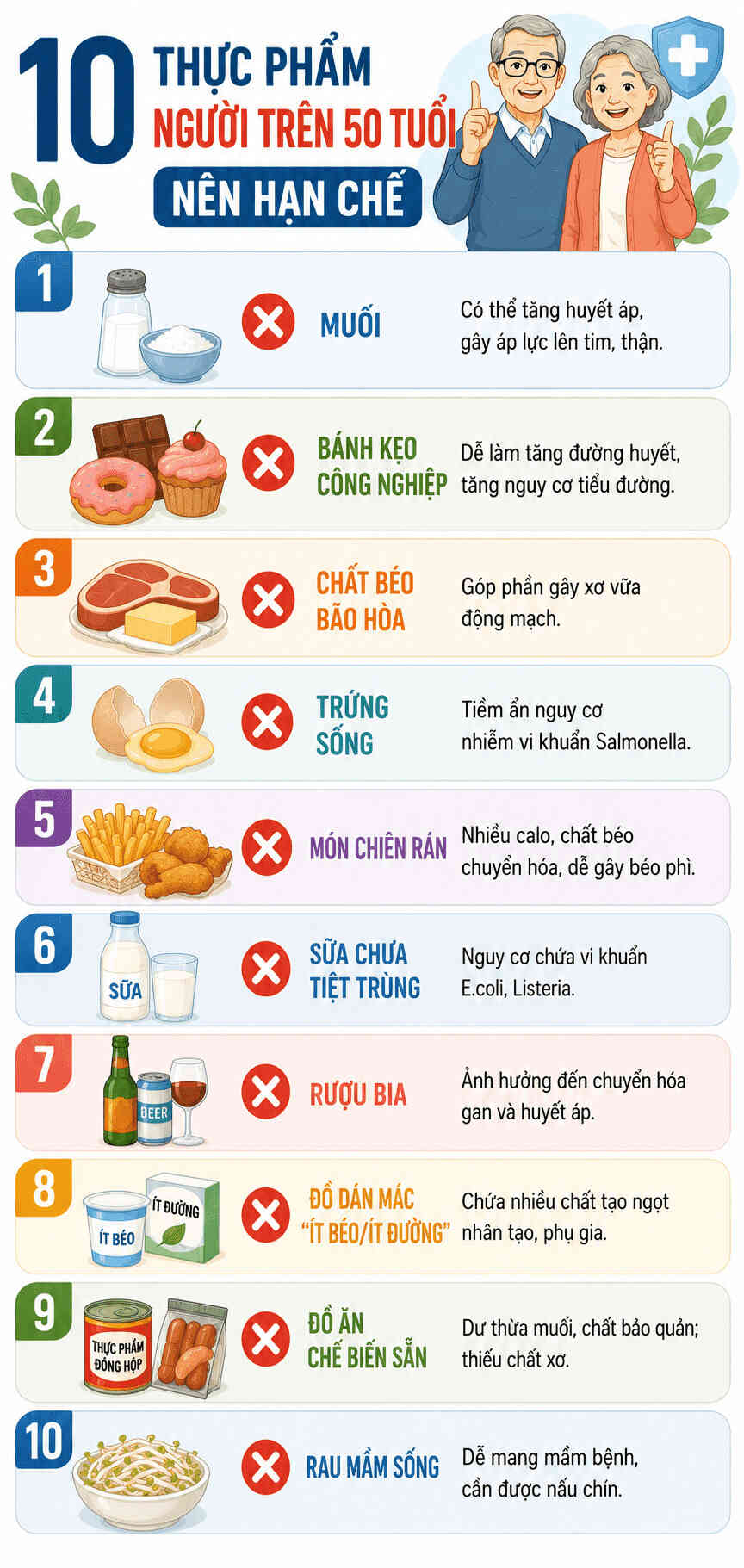
After age 50, energy needs and the risk of chronic diseases may change with age. According to experts, adjusting diet not only helps maintain health but also contributes to limiting the risk of cardiovascular disease and diabetes. Below are food groups that older people should pay attention to limiting.
| Food classification | Reasons to limit after age 50 |
|---|---|
| Many calories, bad fats; contributing to atherosclerosis, obesity. | |
| Ready-made items | Contains many additives, artificial sweeteners that are not good for health. |
Consuming a lot is related to high blood pressure, causing pressure on the heart. You should replace it with pepper, garlic, lemon to create flavor.
Confectionery, industrial sweets: Contains a lot of refined sugar. Consuming a lot of sugar can contribute to increased energy, weight gain and risk of type 2 diabetes.
Saturated fats: Abundant in butter, fatty meat, sausages. Can increase cholesterol, contributing to atherosclerosis.
Raw or undercooked eggs: Easily potentially exposed to Salmonella infection, especially dangerous when resistance is reduced.
Fried dishes: French fries and fried chicken are high in calories, easily causing weight gain and adversely affecting people at risk of diabetes.
Unpasteurized milk: May contain E. coli or Listeria bacteria. Older people should prioritize pasteurized milk.
Older bodies metabolize alcohol slowly, abuse can affect the liver and blood pressure.
Products labeled "low sugar", "low fat": Consumers should read the entire nutritional table, pay attention to portion sizes, energy, sodium, added sugar and saturated fat. These foods are not necessarily safe for people with diabetes.
Processed foods: Frozen foods, cold cuts contain a lot of salt, sugar, preservatives but lack fiber.
Sprouts and bean sprouts eaten raw: Humid environment is prone to bacteria. Sprouts should be cooked before eating to contribute to reducing the risk of poisoning.
The information in the article is for reference only, not for medical diagnosis or treatment. You should talk directly to your doctor for accurate and appropriate advice to your health condition. People with diabetes, cardiovascular disease, kidney disease or using medication need to talk to a doctor or nutritionist before making significant dietary changes.
Food Q&A corner to support health care for the age of 50
Why are products labeled "low in sugar", "low in fat" not necessarily good for people at risk of diabetes?
According to experts, to compensate for the flavor lost due to reduced sugar/fat, some manufacturers may add artificial sweeteners, additives or refined starches to these products. These substitutes can still contribute to affecting blood sugar and people with diabetes.


