
Should people with cardiovascular disease eat pork fat or vegetable oil? People with cardiovascular disease should prioritize non-tropical vegetable oils rich in unsaturated fats, while limiting pork fat and saturated fat sources. The choice and processing of fats also affect cardiovascular health.
Pork fat and vegetable oil both provide energy, helping the body absorb some vitamins. However, the fat composition of these two types is different, so the impact on cardiovascular health is also not the same.
| Criteria | Pig fat (Animal fat) | Vegetable oil |
|---|---|---|
| Sustainable at high temperatures, recommend limiting deep frying | ||
| High-temperature frying easily produces harmful substances. |
How does pork fat affect cardiovascular health?
Pork fat belongs to the solid fat group, containing more saturated fat than most non-tropical vegetable oils.
Eating too much saturated fat can increase LDL cholesterol in the blood. High LDL is associated with the risk of heart disease and stroke. Therefore, the American Heart Association recommends limiting saturated fat and replacing it with unsaturated fats found in suitable vegetable oils.
People with cardiovascular disease should not consider pork fat as the main source of fat in their daily diet. The level to be limited depends on the condition, blood fat index, weight, accompanying diseases and overall diet.
Experts recommend that people who need about 2,000 kcal per day should aim for saturated fat to provide less than 6% of total energy. This is a general reference level; patients need to follow the specific instructions of their doctor or nutritionist.
Which vegetable oil is suitable for people with cardiovascular disease?
Non-tropical vegetable oils such as olive oil, canola oil, soybean oil, corn oil, peanut oil and sunflower oil contain a lot of unsaturated fats. When used instead of pork fat, butter and solids, these oils are more suitable for heart health diets.
However, not all vegetable-based oils are the same. Coconut oil, palm oil, and palm kernel oil contain more saturated fats than non-tropical liquid vegetable oils, so they also need to be used sparingly.
The World Health Organization recommends that fat in the diet should mainly be unsaturated fat. Saturated fat should not exceed 10% of total daily energy, while trans fat should be minimized.
Should cardiovascular patients use oil for frying?
Oils such as canola oil, corn oil, olive oil, peanut oil, soybean oil, and sunflower oil can be used for cooking, stir-frying, baking, or pan-frying. However, do not continue using oil when it has smoked and do not reuse fried oil.
Deep frying is not recommended as a good preparation method for cardiovascular health. Patients should not switch to using pork fat for frying just because they believe that animal fat is more heat-resistant.
Priority should be given to boiling, steaming, grilling, stewing, pan-frying or quick stir-frying with a moderate amount of oil. WHO also recommends steaming or boiling instead of frying to reduce the amount of saturated and trans fat in the diet.
What should be noted about a good diet for the heart?
Cardiovascular health does not depend on a single type of oil or fat. Diet should increase vegetables, fruits, whole grains, beans, fish and nuts; and limit salt, sugar, processed meat, fried foods and super processed foods.
In summary, people with cardiovascular disease should prioritize non-tropical vegetable oils rich in unsaturated fats instead of pork fat. Regardless of the type of fat used, it is necessary to control the amount of food and choose appropriate cooking methods.
Content is for reference only, not to replace personal examination or nutritional counseling.
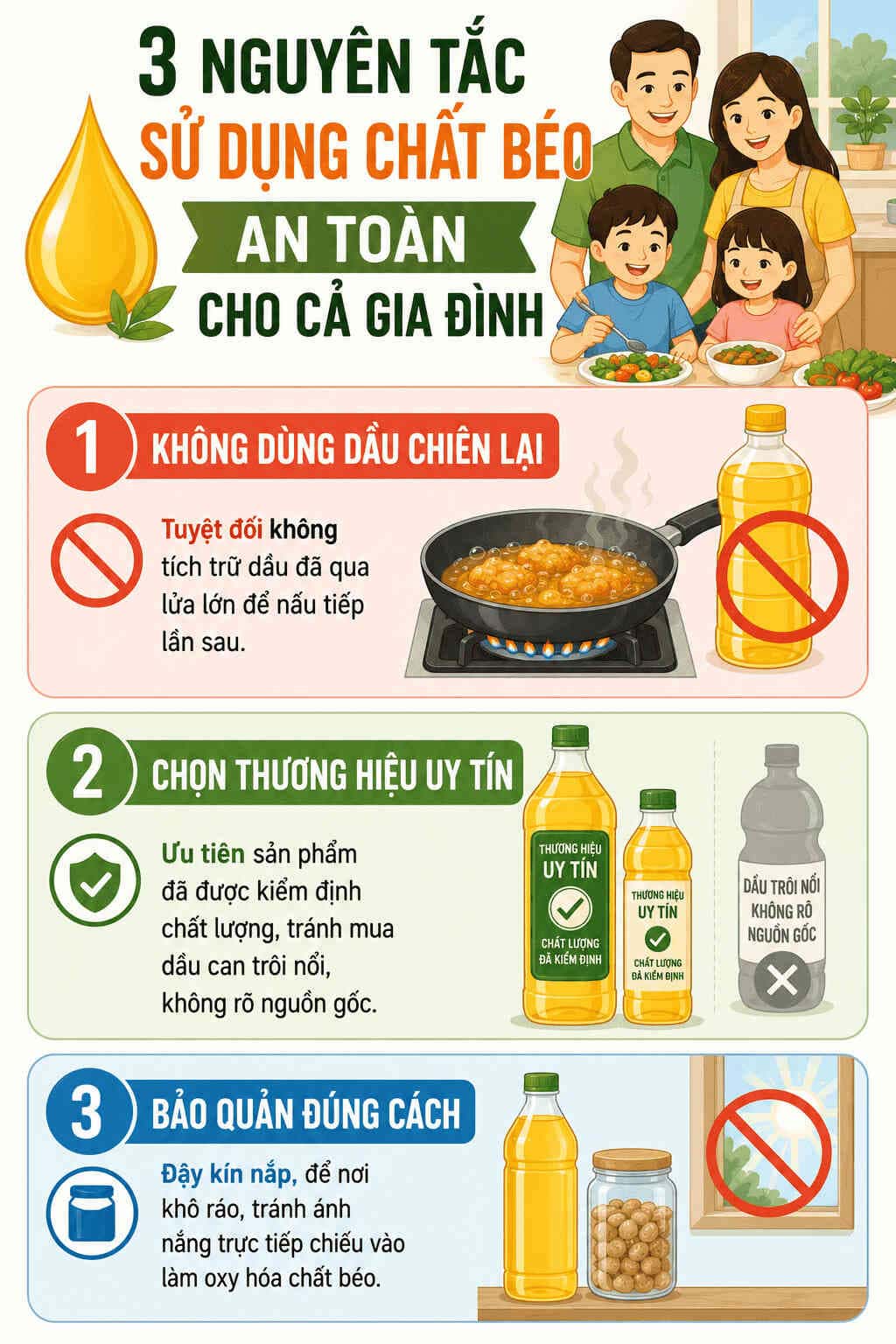
The information in the article is for reference only, not for medical diagnosis or treatment. You should talk directly to your doctor for accurate and appropriate advice to your health condition.
Q&A corner: Nutrition helps protect cardiovascular health
Is using vegetable oil good for the heart?
Vegetable oil may be suitable for a heart-healthy diet when used instead of animal fat and saturated fat sources. However, you need to choose the right oil, use it in moderation, do not heat it until it smokes and do not reuse it many times.


