
The nutritional value of green vegetables not only depends on the variety but is also greatly affected by the processing process. If done incorrectly, a significant amount of vitamins, especially vitamin C and group B, can be quickly lost.
This does not mean that eating raw vegetables is always better than cooked vegetables. In fact, cooking properly can help the body absorb some nutrients better (such as beta-carotene in carrots, lycopene in tomatoes), contributing to softening fiber and minimizing the risk of bacterial and parasitic infections.
However, to preserve the precious source of vitamins, we need to avoid 3 common mistakes below:
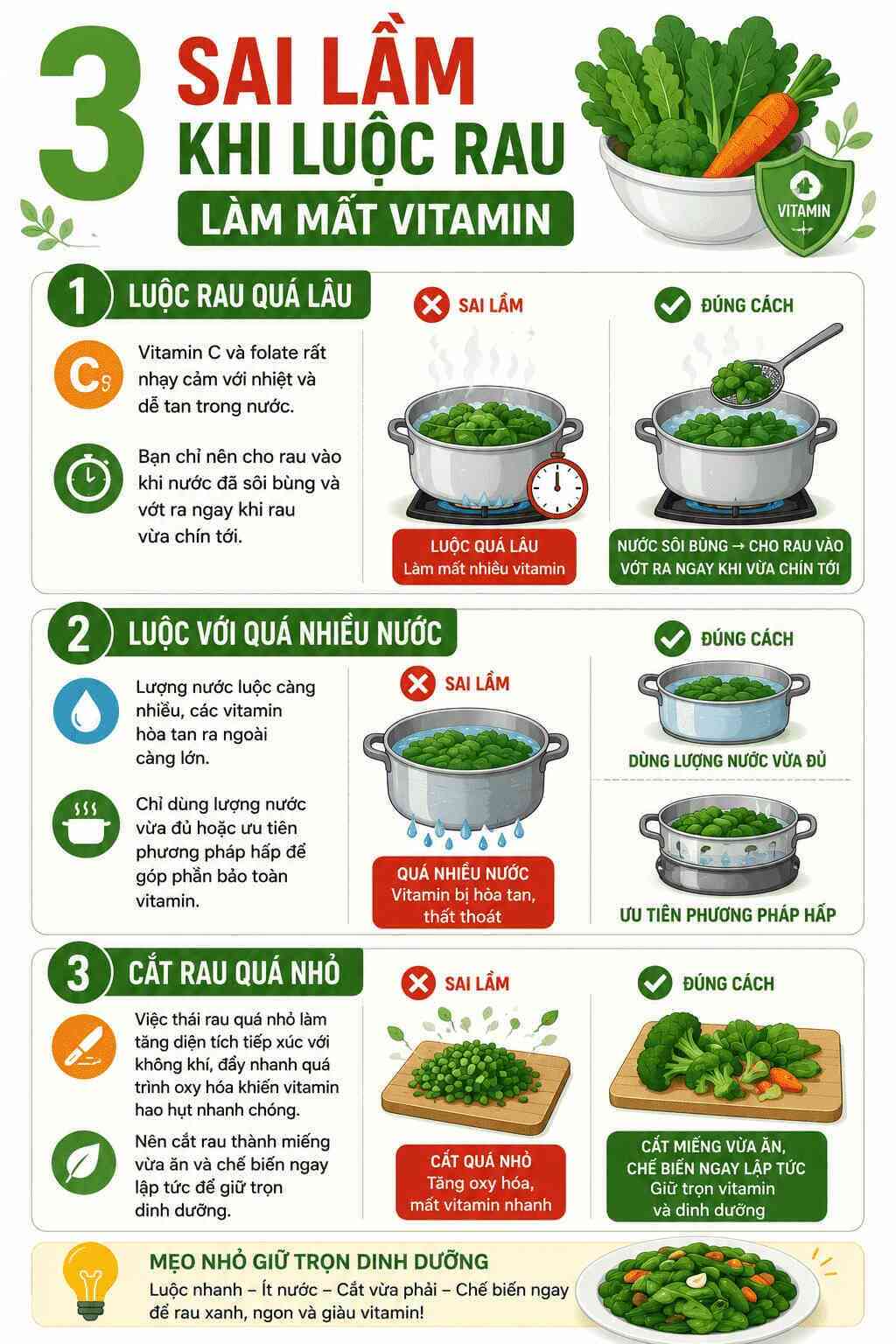
Boiling vegetables for too long at high temperatures
Boiling is a familiar method, but soaking vegetables in boiling water for too long can cause significant vitamin loss. Studies show that vitamin C and many B vitamins (such as folate) are very sensitive to heat and easily soluble in water. When cooked for a long time, the vitamin structure can be destroyed by temperature and dissolve into boiling water.
Some reports indicate that boiling is the cooking method that can cause the most vitamin C loss compared to blanching, steaming or using the microwave. To limit this situation, you should only add vegetables when the water has boiled, boil until the vegetables are just cooked and take them out immediately.
Using too much water when boiling
Pouring too much water into the pot will create conditions for more water-soluble vitamins to dissolve. If you have a habit of throwing away vegetable broth afterwards, the body will lose a large part of important nutrients.
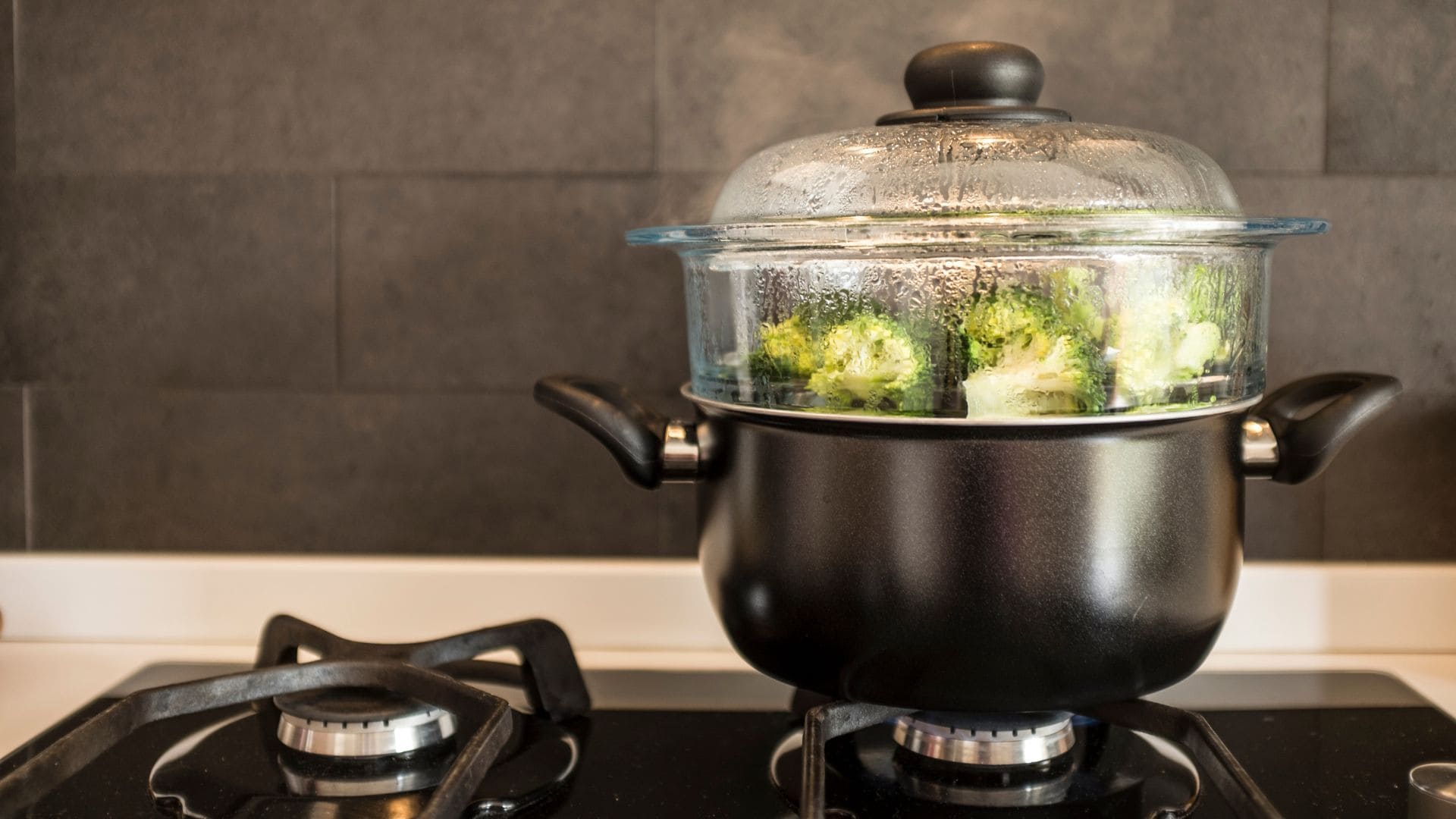
Nutrition experts recommend using just enough water. Prioritizing steaming may be a good solution, as steaming helps food have less direct contact with water, thereby contributing to preserving optimal vitamin C and folate levels.
| Preparation method | Vitamin impact | Practical suggestions |
|---|---|---|
| Loss of large amounts of vitamin C and group B. | Should avoid. Only boil just enough water, take it out quickly. | |
| Increase oxidation rate, break down vitamins. | Should avoid. Wash the whole leaves/strains before slicing. | |
| Good preservation of water-soluble vitamins. |
Cut vegetables too small before washing and cooking
Many people pre-process by chopping vegetables very small to save cooking time. However, as soon as the cutting surface forms, plant cells are broken and exposed to air. The oxidation process can cause vitamins (especially vitamin C and folate) to gradually decrease.
The smaller the cutting, the larger the area of contact with the air, the faster the rate of vitamin loss. Therefore, vegetables should be washed thoroughly before slicing, only cut into bite-sized pieces and processed immediately afterwards to protect the nutritional structure.
Quick Q&A on how to preserve nutrition when processing green vegetables
What processing methods help retain the most nutrients for food?
Steaming is considered one of the processing methods that often helps keep vitamin C and folate better than boiling underwater for a long time.
Does eating raw vegetables always bring higher nutritional value than cooked vegetables?
Not entirely. Cooking food properly will help the body easily absorb beta-carotene and lycopene, while softening fiber and minimizing the risk of intestinal infections.


