
Whether you eat rice, noodles or sweet potatoes, the starch in these foods is ultimately converted by the body into glucose - the main energy source for cells.
Many people believe that glucose after absorption will quickly turn into fat. However, in reality, the body will prioritize bringing glucose to the liver and muscles for storage in the form of glycogen, only when this reserve is full and the energy intake exceeds the needs for a long time will the excess tend to turn into fat.
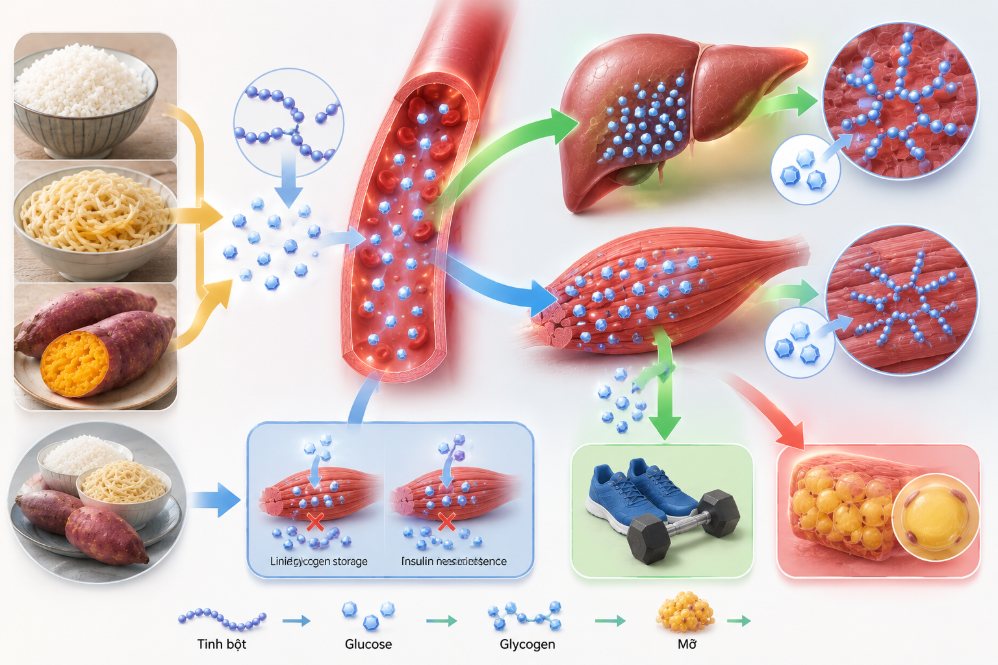
If muscles cannot absorb or store glucose effectively, blood sugar will be difficult to control. This often happens due to two main reasons: muscles' ability to store glycogen is limited or insulin resistance in muscles, making it difficult for glucose to enter cells.
Muscles not only help people move but also play the role of the body's energy reserve. Glucose is converted into glycogen and stored here for use during exercise or between meals. In addition, muscles are also considered an endocrine organ, capable of secreting many substances to help regulate metabolism.
Therefore, after meals, the body will prioritize storing glucose in the form of glycogen in the liver and muscles first, instead of immediately converting it into fat. Only when the amount of energy ingested continuously exceeds the needs and the stores are full, does excess accumulate in the form of fat.


