
Conclusion No. 76-KL/TW dated July 28, 2026 of the 3rd Plenum of the 14th Central Committee on continuing to improve and effectively operate the overall organizational model of the political system, the 2-level local government model clearly states the task of building a contingent of cadres to meet the requirements of the new model.
The conclusion requires the implementation of salary reform closely linked to the roadmap for streamlining the apparatus and streamlining staff. Have preferential policies on salaries, allowances, housing, working conditions and appropriate preferential treatment regimes so that commune-level cadres and civil servants can feel secure in their work, promote their capacity, and be attached for a long time.
Based on Conclusion No. 76-KL/TW, in the coming time, the Ministry of Home Affairs will preside over and coordinate with relevant agencies to report to competent authorities for consideration and adjustment of the public sector salary regime.
This adjustment ensures compliance with the consumer price index and the capacity of the state budget, in order to partially improve income, encourage and motivate cadres, civil servants, and public employees to complete assigned tasks.
This salary reform is an opportunity to further strongly promote the process of reforming the national public service; improve the sense of responsibility of the contingent of cadres, civil servants and public employees.
Talking to Lao Dong Newspaper, Mr. Nguyen Tuc - Chairman of the Advisory Council on Culture and Society (Central Committee of the Vietnam Fatherland Front) - said that cadres, civil servants, and public employees who remain in the apparatus must be capable people, who have been deeply trained and fostered, especially commune-level cadres.
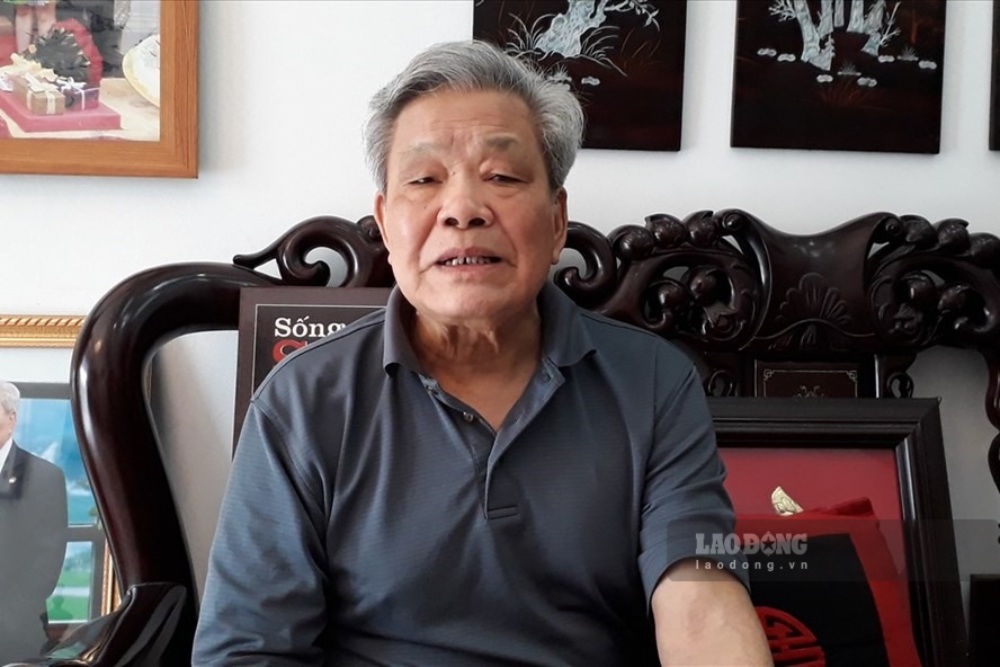
Through practical surveys in many wards and communes, Mr. Nguyen Tuc realized that cadres, civil servants, and public employees are very hardworking, working day and night, racing against work progress. In which, on one hand, a lot of work is assigned to the grassroots level, in some places the team of cadres has not been deeply trained and fostered in that field.
To streamline the apparatus and improve efficiency and effectiveness, Mr. Nguyen Tuc believes that it is necessary to soon have policies and preferential treatment regimes suitable for cadres, civil servants, and public employees, especially at the commune level. Because currently cadres work one and a half to two times more than before, but salaries and allowances have not changed significantly.
According to him, early reform of this wage policy will also affect all pensioners from the budget and some social security policies that are linked to the base salary.
The transfer of old salaries to new salaries must be suitable for the job position and not lower than the current salary. Salaries must be paid according to the true value of labor, strengths, labor costs and ensure salaries sufficient for living for themselves and their families.
In particular, it is necessary to ensure that this salary is maintained, ensuring purchasing power of money, and not being affected by the impact of price slippage.
At the first non-scheduled session of the 16th National Assembly, delegate Nguyen Khanh Vu (Quang Tri Provincial National Assembly Delegation) said that Resolution No. 27-NQ/TW has identified the goal of reforming salary policies to ensure that cadres, civil servants, and public employees can live on their salaries.
The delegate proposed to add the principle of prioritizing balancing and allocating budget resources for the public sector salary policy.


