
On December 4, Hoan My Cuu Long Hospital said that patient D.V.G (55 years old, Thot Not ward, Can Tho city) was admitted to the hospital after many months of continuous unusually rapid heartbeat, accompanied by nervousness, dizziness and sudden fatigue. The frequency of attacks gradually increases, seriously affecting daily activities and sleep.
Previously, the patient had been burned twice with 2D electrocardiology in Ho Chi Minh City, but the symptoms still recurred, and treatment with drugs was not effective.
Through examination, doctors at Hoan My Cuu Long Hospital found that the patient's appendix was located in a deep and inaccessible location, with an atypical transmission line. 2D X-ray charging techniques make it difficult to fully simulate the structure of the heart cell and the transmission of electrical pulses, leading to the risk of inaccurate identification of intervention locations.

Based on the professional assessment of the specific structure of this case, the medical team decided to apply an electrolyte - 3D pathology map making system to re-evaluate the disorder before performing the intervention.
3D technology has the ability to recreate a heart chamber model in three-dimensional space, displaying details of unusual electrical signals in real time. Thanks to that, the doctor can clearly see the heart structure and accurately understand how the electrical current is transmitted, thereby determining the correct location of the start of the arrhythmia.
In this patient's case, a 3D system with a clear display of three-dimensional images and electronics signals helped the crew accurately locate the point that needed to be treated, and perform burning by high- frequency waves (RF). This method helps to minimize the possibility of missing or incorrect burning of healthy heart tissue.
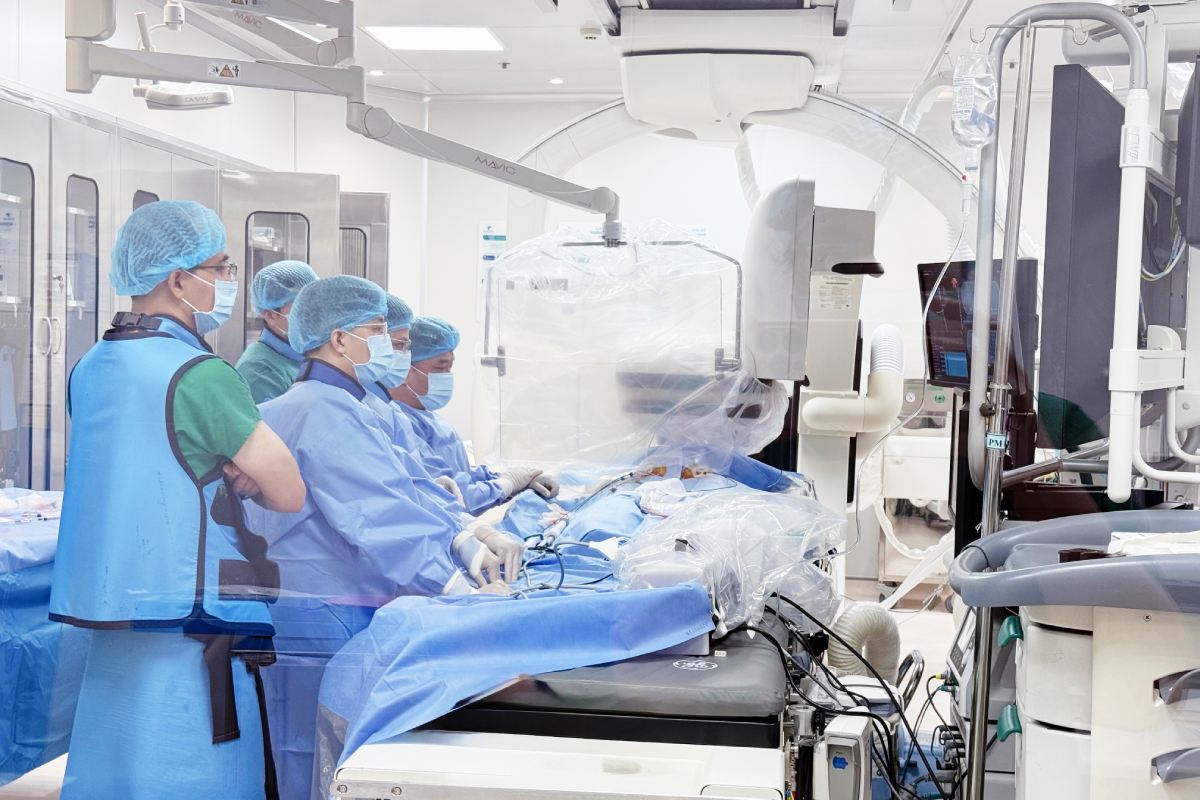
Dr. CKII. Nguyen Huu Thai, Head of the Department of Cardiology - Endovascular Intervention, Hoan My Cuu Long Hospital, emphasized: The technique of making electrolyte maps - 3D anesthesia is especially useful for cases of complex rhythm disorders. Just a few millimeters away from detecting theorder can also be a failed procedure when using a 2D system.
Thanks to the accuracy of 3D technology, the procedure was successful. After the procedure, the electromechanical signals returned to stability. The patient's heart rate was stable immediately after the procedure. The patient recovered well and was discharged after 24 hours of monitoring.
In recent check-ups, the electric heart rate was recorded as having a steady, no more rapid, recurring heartbeat. The patient said that his health improved significantly, no longer as nervous or suddenly dizzy as before.
Doctors recommend that symptoms such as unusually rapid heartbeat, seizure anxiety, dizziness, and shortness of breath should not be taken lightly. This can be a sign of arrhythmia - a group of diseases that can cause heart failure, fainting or hem dynamic disorders if not treated early. People with underlying diseases such as high blood pressure, diabetes or a family history of arrhythmia should have regular cardiovascular check-ups for timely assessment and consultation.


