
Omega-3 is an essential fatty acid group that plays an important role, which can support maintaining cardiovascular, brain and vision health. Instead of abusing supplements, nutrition experts always recommend that people prioritize natural food sources, especially fatty fish.
When it comes to fatty fish, salmon and mackerel are usually the two most popular choices. So which type of fish provides more abundant omega-3?
| Comparison criteria | Mackerel | Salmon |
|---|---|---|
| About 2 - 4g/100g | About 2 - 2.5g/ 100g | |
| Rich in EPA and DHA, especially in some small carp species | Contains Astaxanthin, Vitamin D, B12 | |
| Costs are usually more affordable | Soft meat, less fishy, easy to prepare salad/stir-fry |
Some types of mackerel may contain slightly more omega-3
According to nutrition experts, if simply comparing the omega-3 content, mackerel is usually slightly higher than salmon. Notably, many types of mackerel are classified as the most abundant food groups in terms of two easily absorbed forms of omega-3, EPA and DHA.
On average, 100 grams of mackerel can contain 2 to more than 4 grams of omega-3, depending on the species. Meanwhile, with the same weight of 100 grams, salmon usually provides about 2 to 2.5 grams of omega-3.
Salmon brings comprehensive nutritional value
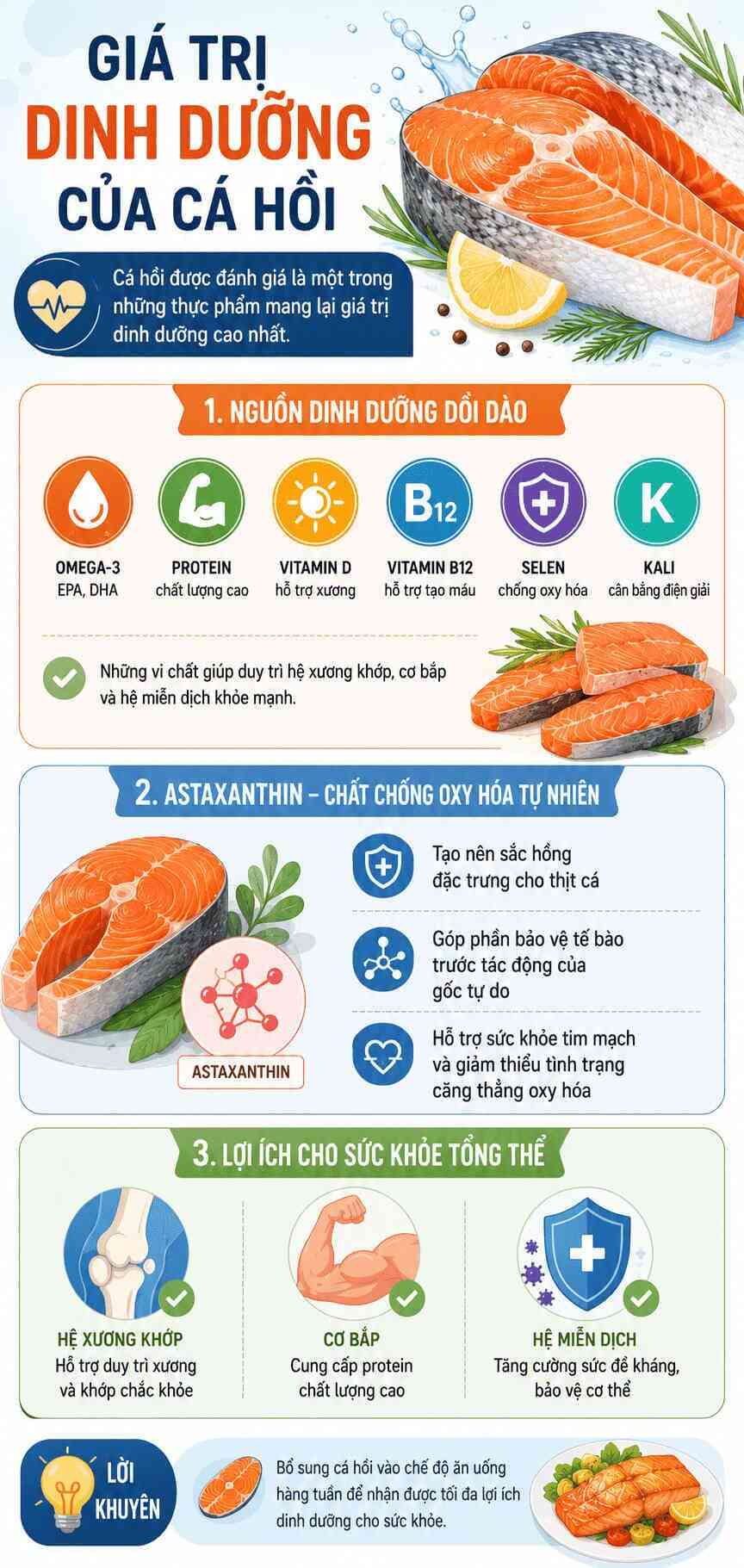
Although the omega-3 content may be slightly lower, salmon is still considered one of the foods that bring high nutritional value. In addition to EPA and DHA, salmon also provides a source of quality protein, vitamin D, vitamin B12, selenium and potassium. These are micronutrients that can contribute to supporting the maintenance of healthy bones, muscles and immune systems.
Another highlight of salmon is the presence of astaxanthin - an antioxidant that creates the characteristic pink color for fish meat. This active ingredient is believed to contribute to protecting cells from the effects of free radicals, thereby supporting cardiovascular health and reducing oxidative stress.
Factors that alter omega-3 levels in fish
According to medical experts, the omega-3 content in both mackerel and salmon is not fixed but depends on many factors. First of all, the species factor (for example, Atlantic mackerel will have a different composition than king mackerel).
In addition, the living environment and diet also significantly affect omega-3 levels. Farmed and natural salmon often have different fat ratios due to different food sources. Habitat, fishing season and size are also variables that can change EPA and DHA levels.
Omega-3 supplementation advice from experts
If your goal is to supplement a large amount of omega-3 at an affordable cost, mackerel is often a suitable choice.
However, instead of sticking to just one type, experts encourage consumers to diversify seafood sources. Alternating consumption of salmon, mackerel, herring or sardines not only helps the body absorb a variety of micronutrients but can also support minimizing the risk of accumulation of pollutants from the marine environment.
Q&A corner on supplementing Omega-3 from fatty fish
Is the omega-3 content between farmed salmon and natural salmon the same?
According to experts, the amount of omega-3 between farmed and natural fish is often different. Industrial diets or natural foods, combined with the aquatic environment, will directly change the rate of accumulation of EPA and DHA fatty acids in fish meat.
Should I only eat mackerel to supplement omega-3?
Nutrition experts recommend not consuming only one type of fish for a long time. Alternating with eating mackerel, salmon, sardines... can help the body receive micronutrient diversity, while contributing to limiting the risk of accumulating pollutants from a certain environment.


