
Dengue fever epidemic is entering its peak phase
According to the Hanoi Department of Health, in the past two weeks, the number of dengue fever cases has increased in many localities, showing that the epidemic is entering its peak period and poses a risk of spreading if drastic prevention and control measures are not implemented.
The Department of Health has established 46 working groups to inspect 91 communes and wards with recorded cases in the past two weeks. On August 7, working group No. 41 inspected Cua Nam ward and Hoan Kiem ward.
According to the Cua Nam Ward Health Station, dengue fever prevention and control work has been implemented right from the beginning of the year with the motto of proactiveness, not waiting for many new cases to appear to be handled.
Through two environmental sanitation campaigns, the locality has inspected more than 14,100 households and agencies, handled 1,118 water containers with larvae, collected about 13,500 waste tools, released about 5,000 larvae-killing fish and completed chemical spraying at 100% of schools before the new school year.
In Hoan Kiem ward, the locality recorded 3 cases and 1 outbreak. Two environmental sanitation campaigns have handled dozens of larvae breeding sites. The first phase of the dengue fever prevention and control campaign mobilized 901 officials, collaborators and youth union members, inspected more than 16,600 households, discovered and handled 1,266 water containers containing larvae, distributed nearly 16,700 propaganda leaflets, and at the same time released fish and used chemicals to treat risk points.
Task Force No. 42 of the Department of Health also worked in Gia Lam and Phu Dong communes.
In Gia Lam commune, 6 cases of dengue fever have been recorded since the beginning of the year. The locality maintains 276 shock teams to kill larvae and 36 monitoring teams, regularly inspecting each household, guiding the handling of water containers, monitoring larvae index and promptly handling risk areas.
The Commune Health Station has advised on organizing 2 general environmental sanitation campaigns, killing larvae and pupae. However, through actual inspection, many water containers containing pupae were still found in households.
The locality also organized 4 training classes, preparing sufficient medicines, chemicals, supplies and chemical spraying equipment to be ready to respond when outbreaks occur.
In Phu Dong commune, as of August 6, 7 cases were recorded scattered in 7 villages, an increase compared to the same period last year. The commune has established 552 shock teams with 1,132 members and 71 supervisory teams of 142 members, and at the same time built 2 rapid response teams and a chemical spraying team of 30 people.
The locality has deployed environmental sanitation campaigns, killing larvae, organized 3 training classes and fully stockpiled chemicals and equipment to serve epidemic prevention and control.
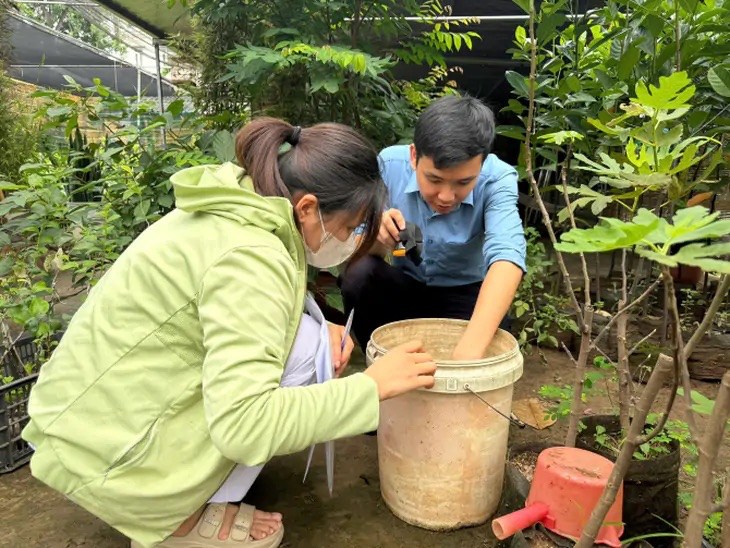
People need to proactively prevent and control dengue fever.
Through actual inspection in many residential areas, the working group of Hanoi CDC recorded that many households still leave water containers with larvae, many waste such as bottles, cans, old items that have not been collected, creating favorable conditions for mosquito breeding.
According to the working group, although the health sector plays a core role in terms of expertise, the effectiveness of dengue fever prevention and control depends greatly on the participation of the community.
If people do not change their habits, do not regularly check, clean the environment and remove water containers, the risk of larvae recurrence and widespread epidemics is still very high.
The Hanoi Department of Health requests localities to continue to strengthen supervision, early detection of cases, thoroughly handle outbreaks, organize environmental sanitation, spray chemicals in accordance with regulations and promote communication to raise disease prevention awareness in the community.
Only when each household proactively kills larvae, eliminates mosquito breeding grounds and coordinates with the government in environmental sanitation campaigns can the risk of dengue fever outbreaks be limited.


