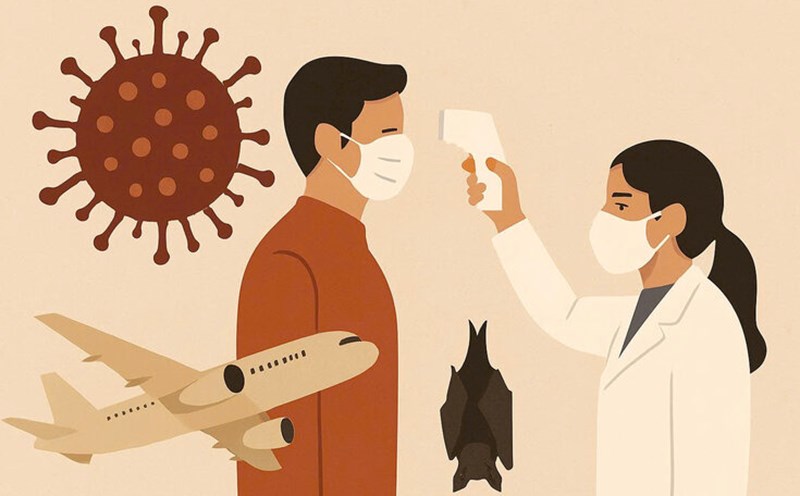
On January 29, recorded at Lao Bao International Border Gate (Quang Tri province), the work of preventing and controlling epidemics caused by the Nipah virus is being strictly implemented by functional forces. As soon as people enter the border gate area, officials of the Quang Tri Provincial Center for Disease Control (CDC) perform medical surveillance through an automatic body temperature control system.
Passengers traveling or returning from epidemic areas are required to declare their health fully, and at the same time comply with personal protective measures such as wearing masks to limit the risk of spread. In case the body temperature control device detects abnormal temperatures, passengers will be thoroughly checked according to the procedure, taken to a temporary isolation area and transferred to a medical facility for monitoring and in-depth examination.
According to the plan to prevent and control the Nipah virus epidemic at border gates in Quang Tri province issued by the provincial CDC, the key objective is to strictly inspect and monitor 100% of people entering the country to detect suspected cases early, prevent the risk of epidemics entering and spreading across borders.
Accordingly, inter-sectoral coordination between border health, animal and plant quarantine, customs, border guards and related units has been strengthened. Health quarantine work is carried out strictly for people, vehicles and goods from epidemic areas. Forces regularly update disease information around the world to promptly adjust appropriate monitoring measures.
At the same time, the health sector is preparing a temporary quarantine area at the border gate, ensuring full equipment, chemicals, and medical supplies to serve epidemic prevention work. Personnel at border gates are trained to improve their capacity to monitor, detect and handle situations when there are suspected cases.
With the synchronous implementation of solutions, Quang Tri province shows its determination to strictly control the risk of epidemics caused by the Nipah virus, ensuring health safety at border gates and in the community.
Nipah virus is a group A infectious disease, capable of transmitting from animals to humans, from humans to humans through direct contact with secretions. Incubation period is from 4-14 days, initial symptoms are usually headache, muscle pain, vomiting, sore throat, then serious neurological signs may appear. In the world, from the end of December 2025 to the end of January 2026, India has recorded a number of suspected cases and confirmed cases of the disease, while Vietnam has not recorded any cases.