
In rural areas, the grassroots healthcare level still silently plays an important role in primary health care for people. Recorded by reporters in the last days of March 2026, at Nhon Hoi Commune Health Station (An Giang province), despite many difficulties, the team of doctors and nurses is still dedicated to primary health care for people. Not only medical examination and treatment, they are also a close support, ready to be present when people need it.
Doctor Nguyen Van Thao - Nhon Hoi Commune Health Station said that at the grassroots health level, the distance between doctors and patients is almost blurred. Medical staff are not only patients but also friends and familiar relatives of each household.
“We remember each circumstance, each medical history of people in the commune. Medical staff come to their homes to mobilize mothers to take their children for vaccination, and guide people on how to prevent diseases seasonally. There are cases of emergency at night, just one call and we are ready to go, regardless of rain, wind or long distance,” said Dr. Thao.
That closeness comes not only from professional responsibility but also from long-term attachment to the area. For many people, the commune health station is not simply a place for medical examination, but also a familiar address, where they come to whenever they need health advice and sharing.
Doctor Nguyen Van Thao also shared that for many people in rural areas, commune health stations are the first place they go to when they have health problems. Therefore, the presence of grassroots health workers is of special significance, not only in terms of expertise but also in terms of spirit.
Many cases of lonely elderly people and people in difficult circumstances have considered medical staff as relatives. Words of concern and dedicated guidance are sometimes even more precious than prescriptions, helping patients feel more secure during treatment.
The work of grassroots healthcare is not only limited to regular medical examination and treatment. We are also the core force in disease prevention and control, primary health care and the implementation of national health programs. In epidemics, from dengue fever, hand, foot and mouth disease to dangerous infectious diseases, commune health workers are always the pioneers, from organizing surveillance, zoning, propaganda to directly participating in handling outbreaks," said Dr. Thao.
According to Dr. Thao, the grassroots healthcare level is the first "shield" in detecting and controlling epidemics. Thanks to the proactiveness of this force, many outbreaks are controlled promptly from the beginning, limiting the risk of widespread spread. However, behind those silent efforts, there are still many difficulties. Facilities conditions in some places are still limited, equipment is not synchronized, human resources are thin while the workload is increasing. However, grassroots health workers still persistently stick to their positions, maintaining their role in primary health care for people.
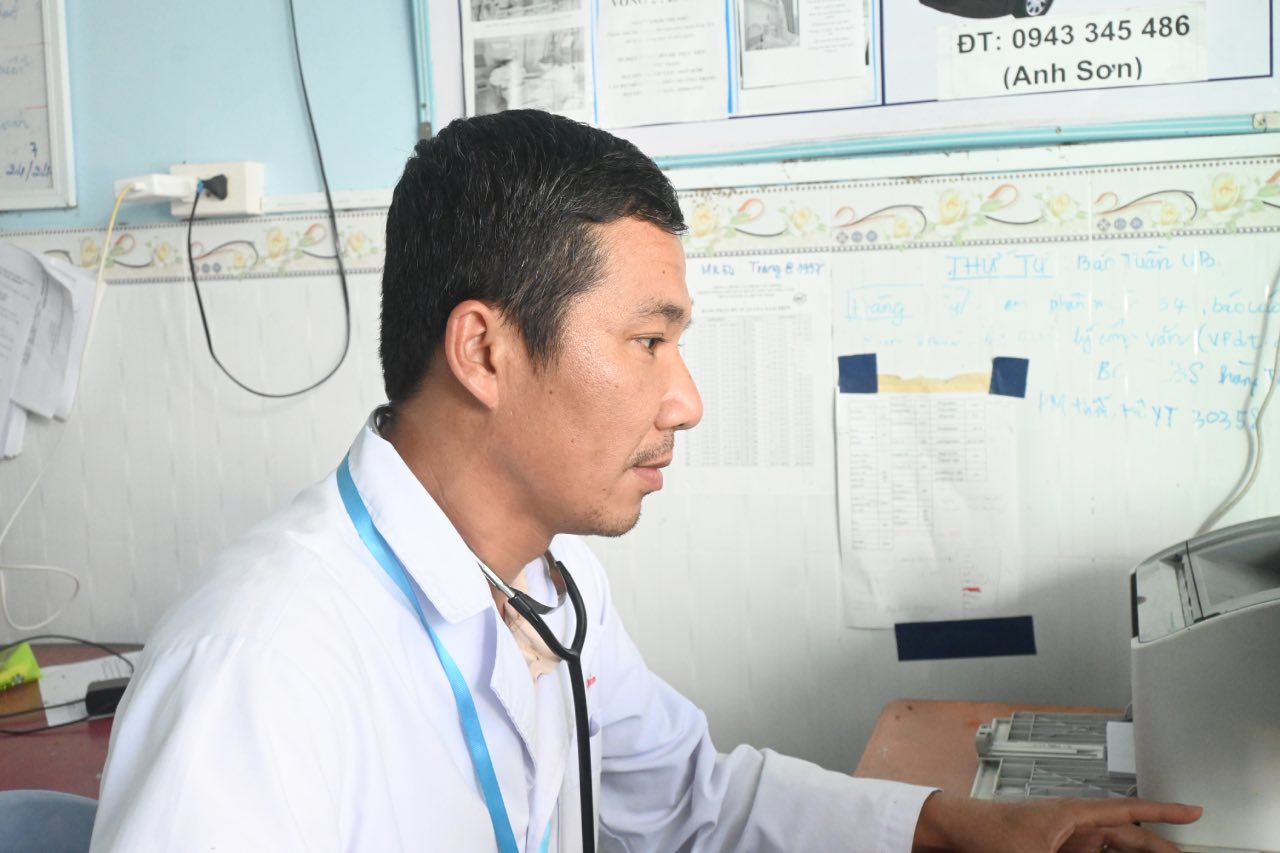
Doctor Nguyen Van Thao also added that although there are still many difficulties, for people working in grassroots health care, love for the profession is still the biggest motivation. He and his colleagues are attached to the job not only because of responsibility but also because of understanding and sharing with the people. "We will continue to improve our expertise to better care for people's health, contributing to reducing the burden on upper levels. Besides, helping people not have to go far to get treatment," said Doctor Thao.


