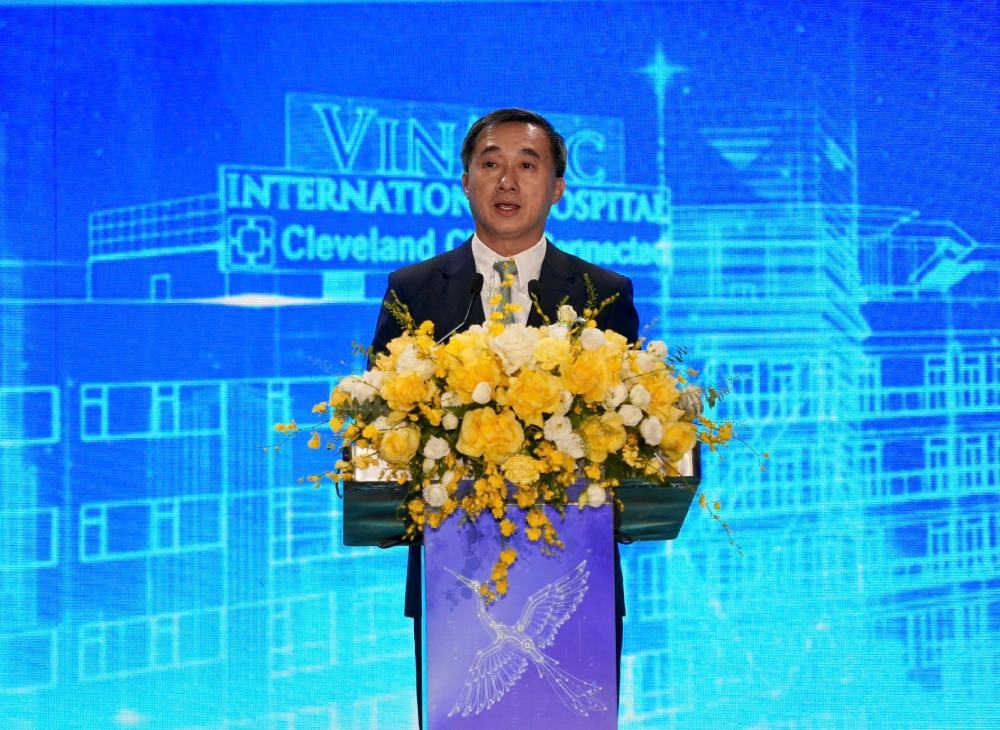
Prof. Dr. Tran Van Thuan - Deputy Minister of Health, Chairman of the National Medical Council emphasized the above requirement at the opening ceremony of the High-Tech Robot Surgery Center system of Vinmec Health System held on June 27 in Hanoi.
According to the Deputy Minister, robots cannot replace doctors, but when operated by a team of doctors with professional qualifications, professional ethics and scientific and technological thinking, they will contribute to expanding the capabilities of surgeons, improving accuracy in each operation and increasing patient confidence.
The Deputy Minister of Health assessed that Vinmec's development of a robot surgery network in many specialties is proof of the Central Government's policy on developing specialized healthcare, putting people at the center, promoting the application of science and technology, innovation and promoting the role of the private economy in healthcare.
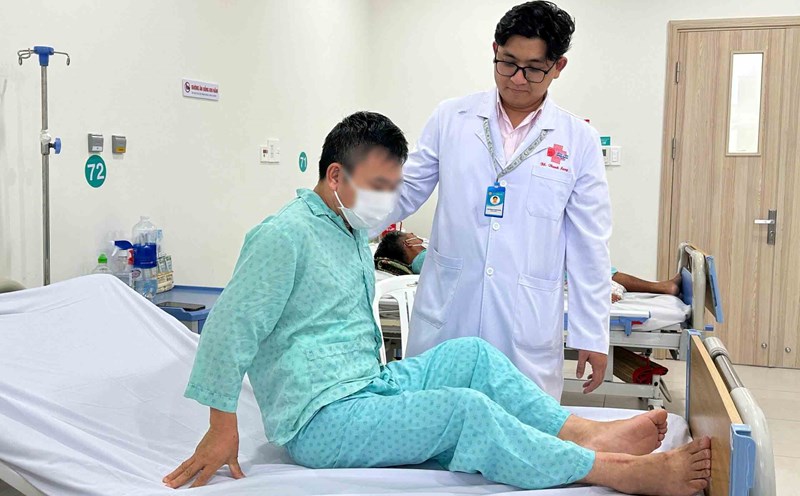
According to Assoc. Prof. Dr. Hoang Gia Du, Director of Vinmec Smart City General Hospital, in neurosurgery - spinal surgery, just a few millimeters of deviation can cause serious complications. The application of robots with modern positioning technology and 3D spatial image helps improve accuracy, increase safety and reduce the risk of accidents for patients.
However, he emphasized that robots are only supporting tools and cannot replace doctors.
Robots do not operate on themselves, the person who makes all decisions is still the surgeon," Assoc. Prof. Du said.
Not only in the field of neurology - spine, robot surgery is also effectively applied in the treatment of cancer, orthopedic trauma, knee replacement... thanks to its high accuracy, contributing to optimizing treatment results and shortening recovery time for patients.
From a professional perspective, Assoc. Prof. Dr. Pham Van Binh, Director of the High-Tech Robot Surgery Center, Vinmec Health System, said that robot surgery is creating a major step forward in surgery, especially cancer treatment. Compared to traditional surgery, this technology helps reduce blood loss, reduce postoperative pain, shorten recovery time and improve aesthetics. For cancer patients, robots support surgeons to operate more accurately, increasing the ability to completely remove tumors while still preserving maximum healthy tissue.
According to Assoc. Prof. Binh, costs are still the biggest barrier preventing robot surgery from being popularized. However, as technology develops, the number of manufacturers increases, and with the companionship of health insurance and support funds, opportunities to access modern techniques will become increasingly widespread, especially for patients in difficult circumstances.
He also emphasized that robots cannot replace doctors but are only a tool to support improving the accuracy and effectiveness of surgeries. Treatment results still depend on the professional qualifications, experience and treatment strategies of surgeons, especially in cancer treatment that requires a multi-model and individualized approach.
Deputy Minister Tran Van Thuan affirmed that the Ministry of Health will continue to improve the legal corridor, creating favorable conditions for research, transfer and application of high techniques in medical examination and treatment. However, he emphasized that innovation must always go hand in hand with effective governance, compliance with the law, protection of patient data and ensuring principles of safety, quality and treatment effectiveness.