
Strengthening food safety control in schools
Recently, 184 students of Binh Quoi Tay Elementary School suspected food poisoning and came for examination and treatment at many medical facilities in Ho Chi Minh City. The incident caused parents to worry, and at the same time was a warning about food safety assurance.
According to the Ho Chi Minh City Department of Health, initial analysis results showed that 7/10 stool samples were positive for Salmonella bacteria - a common agent causing digestive tract infections related to food. Currently, functional agencies continue to monitor cases and investigate the origin of food to prevent similar incidents.
The Food Safety Department (Ministry of Health) has also issued a document requesting the Ho Chi Minh City Department of Food Safety to urgently investigate and handle this case.
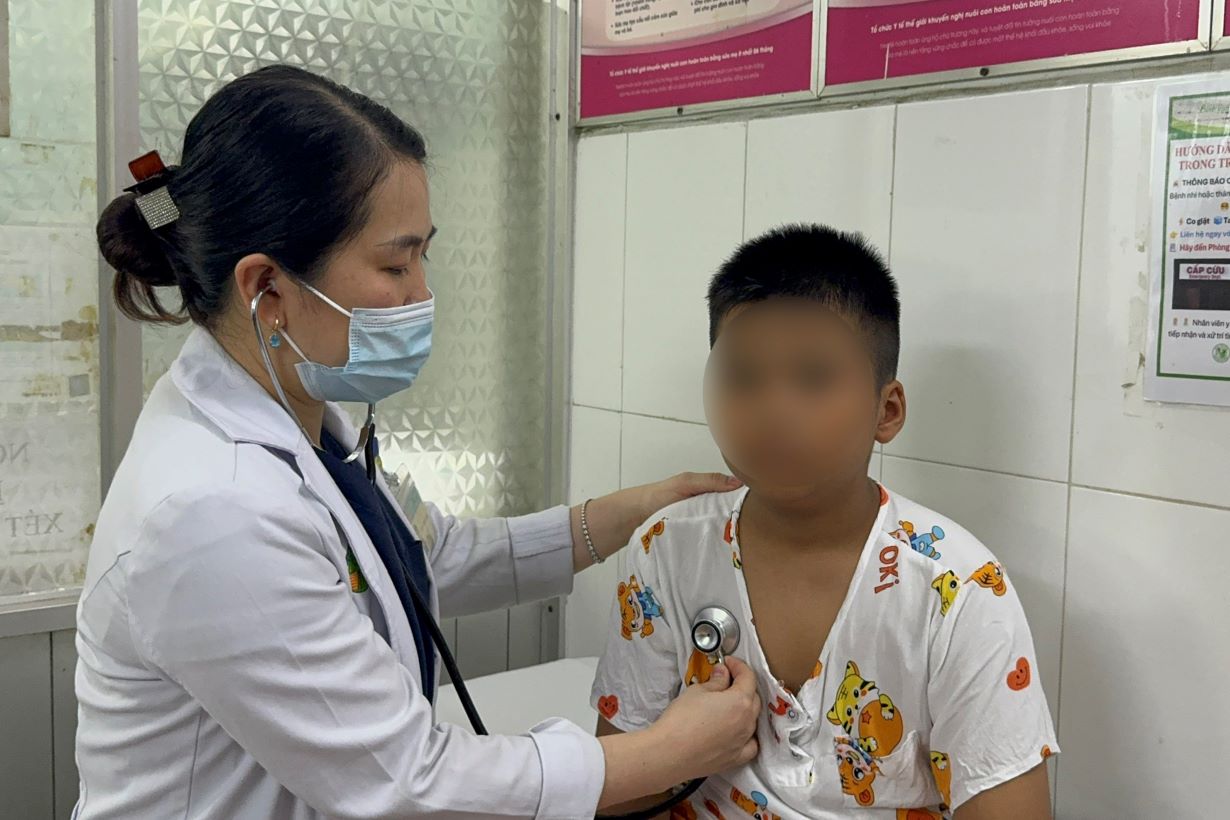
Faced with concerns about food insecurity at school kitchens, recently, the Ho Chi Minh City Department of Food Safety deployed food safety assurance work for establishments providing meals and food for schools in the city. In the coming time, the unit will organize signing commitments to ensure food safety between management agencies and supply units.
Assoc. Prof. Dr. Pham Khanh Phong Lan - Director of Ho Chi Minh City Department of Food Safety - said that the city focuses on prevention at collective kitchens, especially schools, through a training program for about 3,500 schools. At the same time, actual inspection activities are maintained regularly to guide, detect and handle violations. The supervision of input materials also involves the participation of parents' associations.
Previously, the Ho Chi Minh City People's Committee issued a plan to inspect the compliance with the law in the field of food safety for establishments providing meals and food for schools. The inspection time takes place in April 2026.
Early identification of signs of food poisoning in children
Children's Hospital 2 recommends that parents and schools pay attention to signs suspected of food poisoning in children such as nausea, vomiting, abdominal pain, diarrhea, fever, fatigue or loss of appetite. In severe cases, anaphylactic signs may appear such as urticaria, swollen lips, shortness of breath.
When suspecting a child of food poisoning, immediately stop the suspected food, monitor symptoms, remember the time of eating and the type of food used. If the child is vomiting, lie on their side to avoid choking.
Parents need to allow children to replenish water and electrolytes properly with oresol solution mixed according to instructions, drinking small sips. You should prioritize liquid, easy-to-digest foods such as porridge, soup and do not force children to eat when they are still tired. If possible, keep suspected food samples or packaging images. In addition, take children to a medical facility for diagnosis and appropriate treatment.
Absolutely do not try to cause vomiting, arbitrarily use antibiotics, stop diarrhea, anti-vomiting... Do not rehydrate children with soft drinks, carbonated drinks or apply folk remedies of unknown origin for treatment.
In particular, it is necessary to take children to the doctor immediately if they have symptoms such as lethargy, difficulty waking up, convulsions, rapid breathing, shortness of breath; frequent vomiting, inability to drink, frequent diarrhea, suspected dehydration; bloody stools, vomiting blood, severe abdominal pain; red rashes, swelling of the face and whole body, wheezing, shortness of breath; young children, especially infants, or those with underlying diseases being treated with medication.
Hot weather poses a risk of food insecurity
According to the Ho Chi Minh City Department of Food Safety, the city is entering the peak of hot weather. This is a favorable condition for bacteria and mold to develop. Food is therefore easily spoiled and deteriorated if not properly preserved. Each family and food business establishment needs to raise awareness of health protection by choosing, processing and preserving food in accordance with regulations.


