
On April 12, negotiations between the US and Iran in Islamabad, Pakistan ended after hours of exchange, while the two sides still had significant disagreements.
The Iranian government said that negotiations have closed, and the two sides will continue to exchange technical documents. Tehran affirmed that negotiations will resume even though a specific time has not been set.
The US delegation, led by Vice President JD Vance, Special Envoy Steve Witkoff and Mr. Jared Kushner, met with Speaker of Parliament Mohammad Baqer Qalibaf and Foreign Minister Abbas Araqchi of Iran in many working sessions. According to an intermediary source from Pakistan, the two sides had a direct exchange lasting about 2 hours before the break.
Vice President JD Vance said on April 12 that the US negotiating delegation left Pakistan after 21 hours of negotiations without reaching an agreement with Iran, shaking the 2-week ceasefire. He said Iran does not accept US terms, especially the commitment not to develop nuclear weapons.
Mr. Vance emphasized that the US has clearly stated the "red line" and will return home without achieving results. Meanwhile, the Iranian side believes that "excessive" demands from the US are the reason for the negotiation failure, but affirmed that the exchanges will continue at the technical level.
This is the first direct meeting between the US and Iran after more than a decade, and also the highest-level dialogue since the Islamic Revolution in 1979. The negotiation results are assessed to be likely to affect the 2-week ceasefire and the reopening of the Strait of Hormuz.
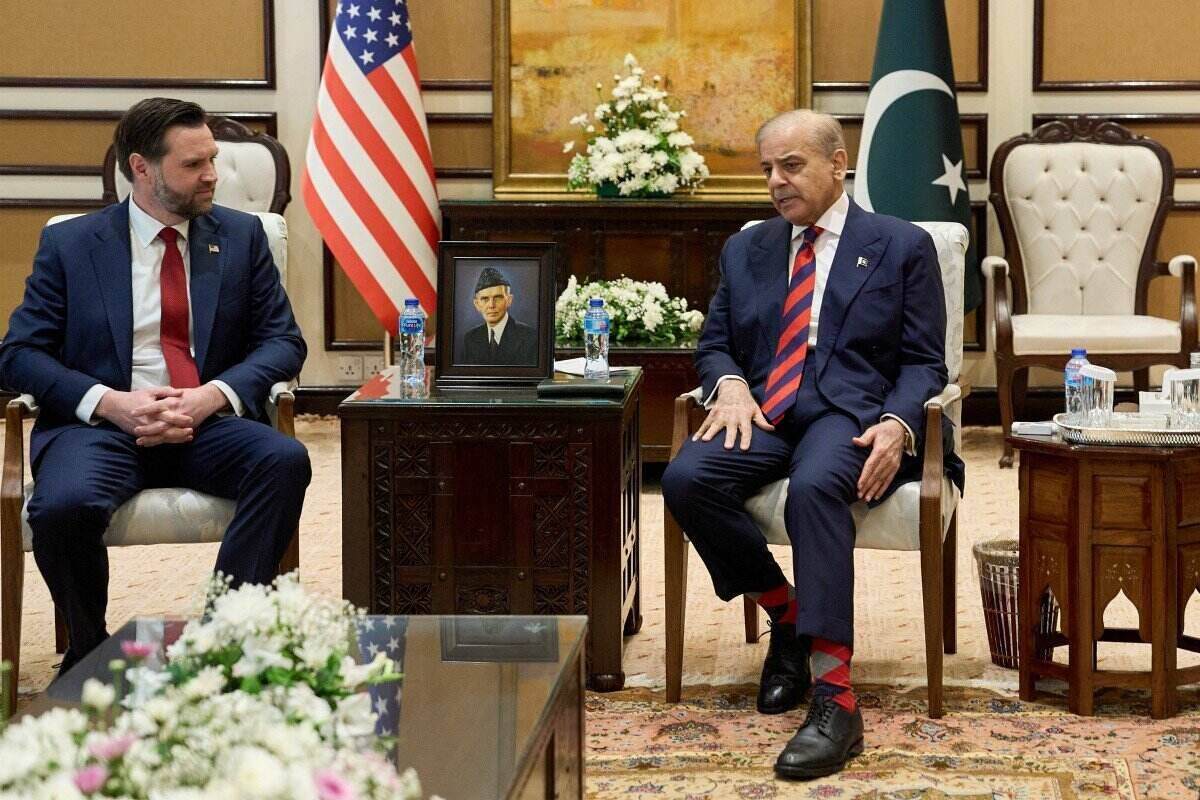
Sources said that the negotiating atmosphere was volatile, with tensions continuously increasing and decreasing throughout the working process. The city of Islamabad was placed in strict security with a dense presence of military and paramilitary forces.
The Strait of Hormuz continues to be the focus of the negotiations. The US said it is preparing conditions to clear mines and restore maritime traffic, and affirmed that two warships have passed through the area. Iran denied this information.
Before the negotiations took place, there was information that the US agreed to release Iran's frozen assets in Qatar and foreign banks, but a US official denied this.
Iran has made many demands, including controlling the Strait of Hormuz, collecting transit fees, receiving war reparations and establishing a ceasefire throughout the region, including Lebanon. Meanwhile, the US emphasized the goal of ensuring freedom of navigation and limiting Iran's uranium enrichment program.
The lack of trust between the two sides remains high, while regional conflict has not shown signs of cooling down, leaving the prospect of reaching a comprehensive agreement still open.


