
Restructuring for development
Gia Dinh People's Hospital - Branch 2, Saigon branch, after many months of operation, has recorded many positive signs, from in-depth treatment to attracting international patients. This is considered one of the first imprints showing that the direction of restructuring the health system of Ho Chi Minh City is being effective.
In the first month after the merger, facility 2 received more than 200 foreign patients for examination and treatment, nearly double compared to before. Many international and overseas Vietnamese patients highly appreciated the short waiting time, friendly service attitude, English communication skills of medical staff and reasonable treatment costs.
In parallel with regular medical examination and treatment activities, Facility 2 also quickly deployed many specialized techniques such as endoscopic gastrectomy, colonectomy to treat digestive cancer, ERCP combined with endoscopic cholecystectomy, percutaneous kidney stool dilation or hip replacement for the elderly. Some stroke cases are also activated with the "stroke network" inter-facility model for timely intervention.
The successful deployment of complex techniques right at the new facility shows that the model of human resource coordination and technical transfer between the two facilities has operated effectively. Patients have more high-quality treatment addresses, while the pressure on the main facility has also been significantly reduced.
According to the Ho Chi Minh City health sector, the merger and restructuring is not aimed at "restricting" the system but towards improving treatment quality standards, optimizing facilities and expanding access to health services for people. With the advantage of spacious infrastructure, convenient reception procedures and a development orientation friendly to foreigners, facility 2 is expected to become a new highlight of medical tourism in Ho Chi Minh City.
Leaders of Gia Dinh People's Hospital said that in the coming time, the hospital will continue to expand the model of expert examination, minimally invasive surgery, cashless payment and improve the capacity to serve international patients in a more professional direction.
Patients benefit from connected medical services after merger
Con Dao Military-Civilian Medical Center (HCMC) has performed artificial kidney dialysis for the first 3 patients with chronic kidney failure. The technique is directly supported by a team of experts from Thong Nhat Hospital to deploy and transfer expertise.
This is a very special milestone for the Ho Chi Minh City health sector in general and people in the Con Dao special zone in particular. Previously, patients with chronic kidney failure were forced to leave the island to go to the mainland for periodic blood filtration, incurring large costs and prolonged psychological pressure.
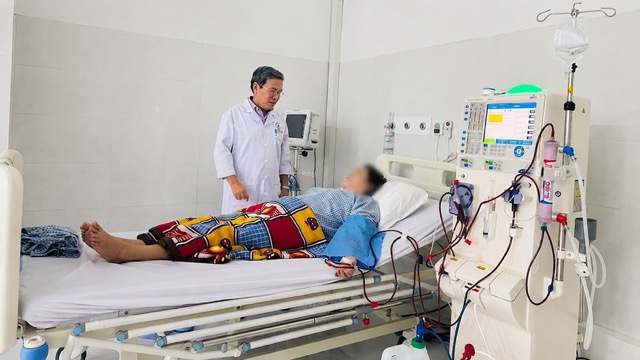
The successful deployment of hemodialysis technology right in Con Dao helps patients continue treatment right where they live. In particular, mastering this technique also helps kidney failure patients who are undergoing periodic dialysis in many other localities to feel more secure when traveling, working or staying for short days in Con Dao without having to worry about interrupted hemodialysis treatment.
This is also the result of the program of rotating specialist doctors from end-line hospitals of Ho Chi Minh City to support Con Dao, which has been continuously implemented by the city's health sector since September 2025 to date. Many general and specialized end-line hospitals of Ho Chi Minh City have participated in the program such as People's Hospital 115, Hung Vuong Hospital, Binh Dan Hospital, Gia Dinh People's Hospital, Children's Hospital 1, Children's Hospital 2, City Children's Hospital, Thong Nhat Hospital, Ho Chi Minh City Central Hospital of Odonto-Stomatology.
With the spirit of connecting the Ho Chi Minh City health sector to create strength, in the past time, a series of hospitals in the area merged with Ho Chi Minh City have been transferred techniques such as: Ba Ria Hospital, Can Gio Hospital, Vung Tau General Hospital... From there, the hospitals have become an extended arm of the Ho Chi Minh City health sector, confident and self-reliant in treatment work, reducing overload for upper levels.


