Bệnh vẫn không cai
Theo báo cáo của Ban sức khỏe Hoa Kỳ, việc bỏ thuốc lá làm giảm đi một nửa các biến cố bệnh tim mạch trong năm đầu và sau khi bỏ 10 năm thì nguy cơ chỉ còn gần tương tự như ở người chưa từng hút thuốc.
Tuy nhiên, tỷ lệ cai nghiện thành công thuốc lá trên toàn cầu khá thấp. Theo nhóm nghiên cứu của bác sĩ Cristian Zamora và các đồng nghiệp công tác tại Đại học Y khoa Albert Einstein ( New York, Mỹ), chỉ 18% người hút thuốc lá mắc bệnh tim mạch trong giai đoạn 2013 - 2014 đã cai nghiện thành công trong giai đoạn 2016 - 2018.
Các chuyên gia y tế trong nước cũng chia sẻ có những bệnh nhân đã mắc bệnh khá nặng nhưng vẫn không cai bỏ thuốc dù đã được khuyên bảo, giải thích và cung cấp các giải pháp hỗ trợ cai thuốc miễn phí.
Trong khói thuốc lá chứa hơn 6.000 chất hóa học trong đó khoảng 100 chất gây ung thư và các bệnh liên quan đến hút thuốc như tim mạch, COPD (phổi tắc nghẽn mạn tính), hen suyễn…

Theo Trung tâm Kiểm soát và Phòng ngừa Dịch bệnh Hoa Kỳ (CDC), những người hút thuốc lá có khả năng ung thư phổi cao gấp 15-30 lần so với những người không hút. Cụ thể, một người không nghiện thuốc lá (vợ, con, những người khác) sống chung với người hút thuốc có nguy cơ phát triển ung thư phổi tăng 20- 30% do tiếp xúc với nồng độ khói trong môi trường.
Đặc biệt, việc hút thuốc lá là một yếu tố nguy cơ nghiêm trọng cho bệnh nhân COPD, dẫn đến 3 triệu ca tử vong và là nguyên nhân thứ tư của tất cả những trường hợp tử vong trên toàn cầu.
Cần giảm tác hại khi chưa bỏ được
Tình trạng “dễ hút, khó bỏ” là vấn đề gây đau đầu cho các chuyên gia y tế công cộng trên toàn cầu trong nhiều năm nay. Bởi, việc cai thuốc ngoài các phương pháp hỗ trợ về mặt y học giúp cai dần nicotin, còn cần có ý chí rất mạnh mẽ từ người hút. Đây chính là rào cản vì thực tế dù biết tác hại nhưng phần lớn người hút thuốc vẫn tiếp tục hút vì nhiều lý do. Do vậy các tổ chức y tế, các chuyên gia trên toàn cầu cho rằng cần có những giải pháp thay thế trong lúc người hút thuốc chưa thể cai thuốc lá bằng ý chí, hơn là theo đuổi lý tưởng “zero thuốc lá” trong hàng thế kỉ nay.
Theo đó, việc nghiên cứu khoa học của các sản phẩm thuốc lá thế hệ mới đã và đang được nhiều tổ chức y tế đến từ các quốc gia tiên tiến tham gia trong hai thập kỷ nay.
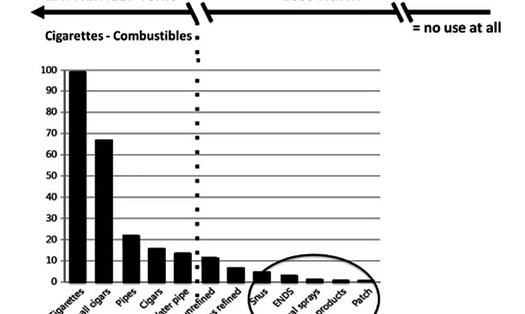
Thuốc lá thế hệ mới, còn được biết đến là thuốc lá không khói hay thuốc lá “công nghệ”, mà tiêu biểu là các sản phẩm thuốc lá điện tử, thuốc lá làm nóng (thuốc lá nung nóng), thuốc lá ngậm snus,… Đây là những sản phẩm đã được khoa học chứng minh là loại bỏ được khói do phản ứng đốt cháy trong quá trình cung cấp nicotin cho người sử dụng.
Do vậy, những sản phẩm này có hàm lượng các chất gây hại thấp hơn nhiều lần so với thuốc lá điếu. Điều này có ý nghĩa rất lớn bởi hàm lượng các chất gây hại thấp hơn thì khả năng về nguy cơ các bệnh lý liên quan đến sức khỏe, dù không bị loại bỏ hoàn toàn, nhưng cũng thấp hơn. Điều này đã được tìm thấy trong các nghiên cứu khoa học cho đến hiện nay.
Cụ thể, một số nghiên cứu cho thấy, nguy cơ ung thư đối với loại sản phẩm thuốc lá làm nóng sẽ dưới mức 1/100.000, thấp hơn ba bậc so với thuốc lá điếu thông thường.
Trên Tạp chí Thực hành Tim mạch của Hiệp hội Tim mạch Châu Âu (ESC), TS. Dimitris Richter – một chuyên gia Tim mạch ủng hộ tiếp cận giảm thiểu tác hại cũng dẫn chứng các dữ liệu khoa học về mức độ giảm thiểu tác hại của thuốc lá làm nóng và thuốc lá điện tử. Theo đó, nghiên cứu chỉ ra, tất cả các sản phẩm thuốc lá mới có tác động đối với sức khỏe, bao gồm sức khỏe tim mạch, tuy nhiên, ít tác hại hơn so với thuốc lá điếu thông thường.
Nghiên cứu cho thấy thuốc lá làm nóng thải ra lượng chất độc giảm đáng kể so với thuốc lá điếu. Các thành phần có hại và có khả năng gây hại được đo bằng khí hơi aerosol, bao gồm các chất gây ung thư, tác hại đến sức khỏe tim mạch, sức khỏe sinh sản, khả năng phát triển và hệ hô hấp (dựa trên danh sách do Cục Quản lý Thực phẩm và Dược phẩm Mỹ FDA công bố năm 2012), giảm thiểu trung bình hơn 90% so với với mức độ có trong khói của thuốc lá điếu.
Nghiên cứu cũng nhắc lại, một số thiết bị thuốc lá không khói đã được phép bán ở Hoa Kỳ, là do nhà sản xuất đã chứng minh được rằng nó ít gây hại hơn so với thuốc lá thông thường. Sau khi xem xét dựa trên kiểm chứng khoa học nghiêm ngặt thông qua hồ sơ xin cấp phép kinh doanh (PMTA) với chỉ định Giảm thiểu phơi nhiễm (MRTP), cơ quan này xác định rằng việc cấp quyền lưu hành sản phẩm này tại thị trường Hoa Kỳ là phù hợp để bảo vệ sức khỏe cộng đồng bởi vì, trên các cơ sở đánh giá chính, sản phẩm này có lượng phát thải một số chất độc ở mức độ thấp hơn so với thuốc lá điếu.
Các chuyên gia nhấn mạnh rằng, mặc dù nghiên cứu chỉ ra tác động lên sức khỏe sẽ đạt mức độ tối ưu nhất khi người dùng bắt đầu chuyển từ thuốc lá điếu thông thường sang sản phẩm thuốc lá không khói, nhưng cai thuốc lá và nicotin đồng thời và hoàn toàn mới là biện pháp hiệu quả nhất để cải thiện sức khoẻ bản thân và cộng đồng.