
On September 6 (local time), according to the latest storm news from the US National Hurricane Center (NHC), Hurricane Lowell mostly maintained stable status with maximum winds of about 195 km/h. Data from the last flight of the storm hunting aircraft showed that the maximum wind speed measured in the storm reached about 202 km/h, while the lowest pressure was at 948 hPa.
The eye of the storm is still closed, about 56km wide. However, a second maximum wind area is forming. AMSR3 microwave image also shows a second convection ring, a sign that Lowell may soon enter another storm-replacement cycle. This process may take place in the next 24-48 hours, when windbreaks begin to increase and weaken the storm's intensity.
Storm Lowell is forecast to continue moving north, then gradually shifting north-northeast at a faster rate. Meanwhile, forecast models have adjusted the storm's trajectory eastward, increasing the risk of affecting Kauai and Niihau.
After about 48 hours, Lowell may shift direction to the northwest or west as the mid-altitude and high-altitude low pressure affects the orbit moving away from the area.
The NHC forecasts that the weakening rate will increase from the night of September 7 to September 8, with winds possibly breaking to 56-74 km/h.
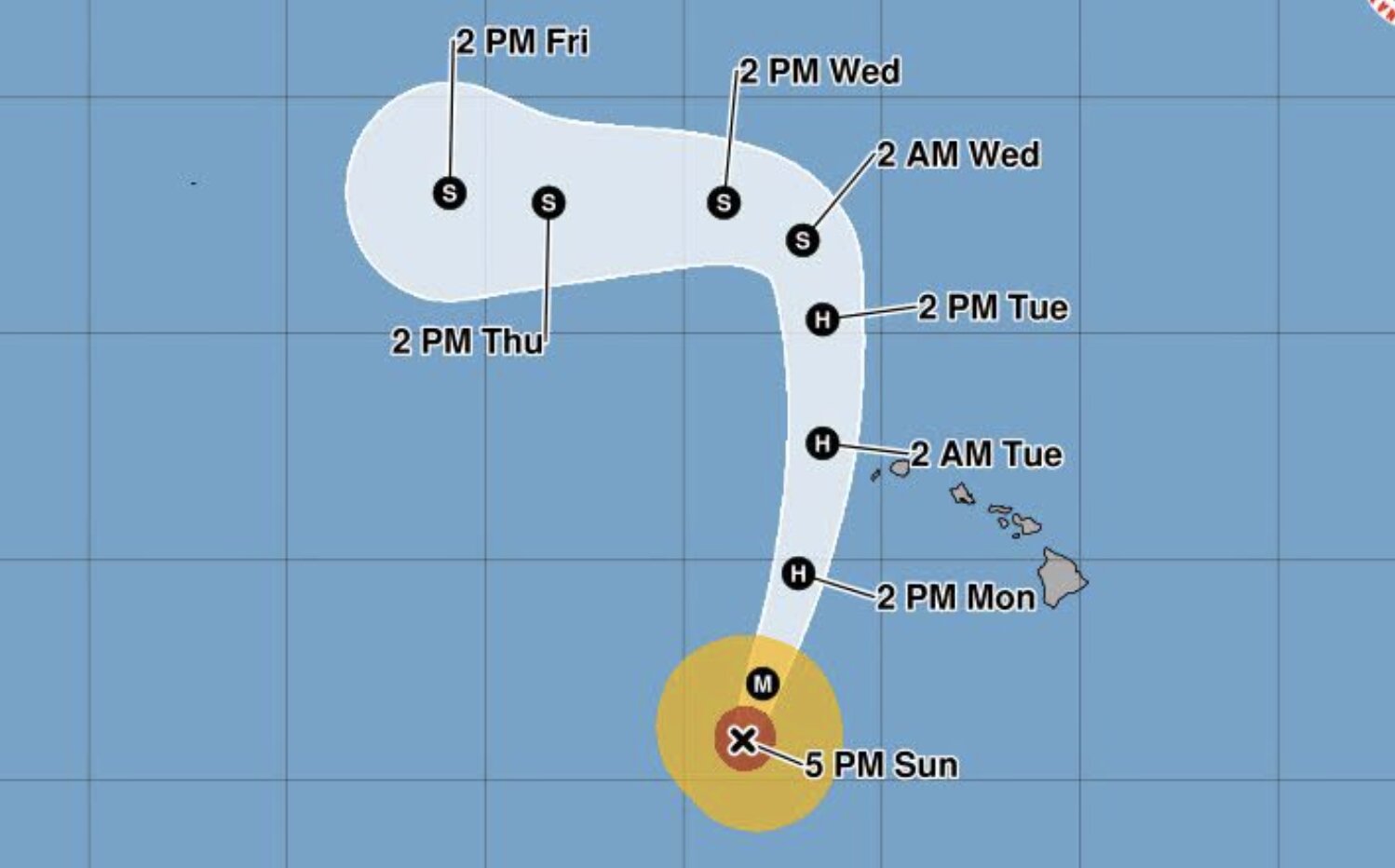
Despite weakening, Lowell is still forecast to maintain storm intensity as it approaches the Hawaiian archipelago closest on the night of September 7. The NHC has issued a storm warning for Kauai County.
Storm Lowell is forecast to move west of Kauai County from the end of September 7 to the beginning of September 8. Strong tropical storm winds may start from the afternoon of September 7 and last until the morning of September 8. Strong gusts may also appear in mountainous areas.
Heavy rain related to Hurricane Lowell will increase over the Hawaiian archipelago from the night of September 6th and last until September 9th, potentially causing flash floods and landslides, especially in Kauai and some areas on Hawaii. Large waves can also cause dangerous offshore currents and coastal flooding in low-lying areas of Kauai.


