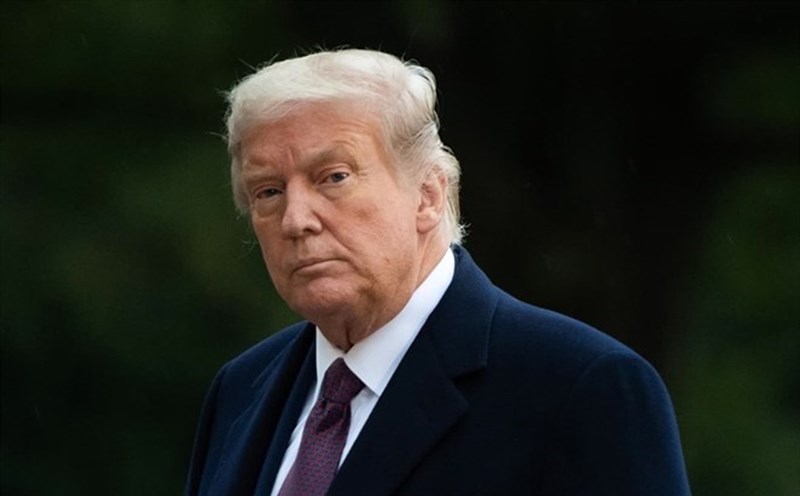
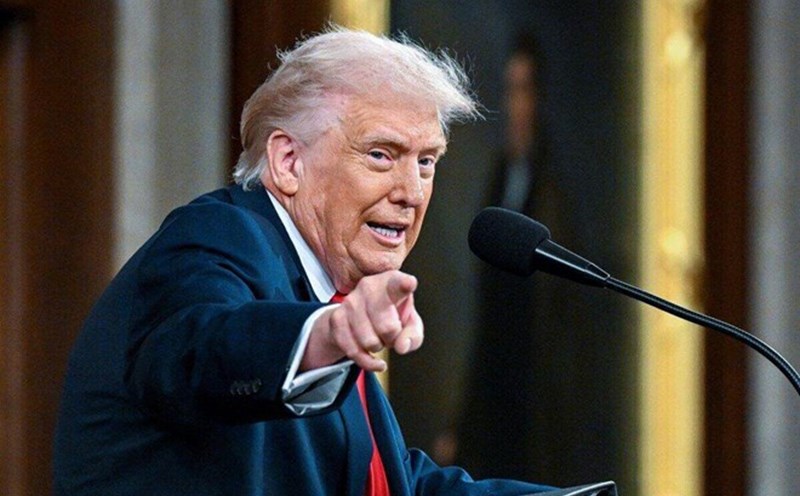
US President Donald Trump once again issued an ultimatum to Tehran, after the US successfully launched an operation to rescue a pilot stranded in Iran after the plane was shot down.
Mr. Trump set a new deadline requiring Iran to fully reopen the Strait of Hormuz. "March, 8 pm US Eastern time" - he wrote on social media, while threatening to bomb Iran's key infrastructure, including power plants, if Tehran does not comply. Previously, Mr. Trump had repeatedly issued and adjusted the deadline for reopening the Strait of Hormuz.
Iranian senior officials responded, affirming that the Strait of Hormuz remains blockaded until Iran receives war reparations. The US pilot on the plane shot down on Iranian territory avoided being arrested for more than a day, hiding and moving through dangerous terrain while a large-scale rescue operation was deployed. This operation mobilized hundreds of US military and intelligence personnel, including special forces and CIA agents, implementing deceptive tactics to avoid Iran's pursuit.
On the afternoon of April 6 (local time), President Donald Trump provided more information about the pilot rescue operation at a press conference at the White House. He also revealed that the rescued soldiers were "seriously injured".
Behind the scenes, sources said that Oman had negotiated with Iran about the Strait of Hormuz, while Pakistan and Egypt sought to maintain a channel of communication between Washington and Tehran.
Axios news site reported that the US, Iran and a group of intermediaries in the region are discussing terms for a 45-day ceasefire. Four US, Israeli and regional officials familiar with the negotiations revealed that negotiations are taking place through intermediaries between Pakistan, Egypt and Turkey, and there are also direct exchange messages between Mr. Trump's special envoy Steve Witkoff and Iranian Foreign Minister Abbas Araghchi.
However, sources say that the possibility of reaching partial agreement within the next 48 hours is low. The Iranian side has emphasized to the intermediaries that it does not want to fall into a situation like Gaza or Lebanon - where a ceasefire exists nominally, but the US and Israel can still attack at any time.
According to the news report, the intermediaries are discussing the terms of the two-stage agreement: The first phase includes a potential ceasefire lasting 45 days, in which the parties will negotiate to permanently end the conflict; the second phase focuses on reaching an agreement to end the conflict. The ceasefire may be extended if more time is needed for negotiation. The news report also noted that the complete restoration of circulation in the Strait of Hormuz and the handling of Iran's high-enriched uranium issue can only be achieved in a final agreement.
Meanwhile, airstrikes continue, humanitarian crises occur and the global economy continues to fluctuate. In Lebanon, at least 11 people have died due to Israeli airstrikes. As of April 5, more than 1,460 people have died since the conflict broke out. Meanwhile, some far-right Israeli parliamentarians argue that the plan to destroy Lebanese border villages is not enough, calling for the establishment of a "new security border" and the deportation of hundreds of thousands of Lebanese civilians living south of this area.
In the early morning of April 6, Israeli rescue forces were still searching for 4 missing people, hours after a missile hit a 7-story building in Haifa. The attack damaged buildings and many apartments, trapping many people under the rubble. Videos recorded in Jerusalem show many missiles flying over the night sky.
In addition, militia forces linked to Iran carried out 2 attacks overnight targeting US diplomats and facilities in Iraq, according to a US State Department spokesman. However, the location of the attack has not been disclosed by officials.