
According to forecasts by scientists at the US National Oceanic and Atmospheric Administration's (NOAA) Center for Geo-Meteorological Forecasting, the overall picture of the earthquake from January 2026 is relatively "smooth".
January recorded many days of low-level seismic disturbances, with insignificant impacts on Earth, including January 1st; January 9th and January 19th.
Even at a mild level, prolonged peristalsis for many consecutive days can still create fatigue for people with sensitive constitutions.
Some magnetic field disturbances may increase in intensity and turn into strong G1-level geomagnetic storms in the middle of the month. The days warned include January 17 and 18.
At level G1, geomagnetic storms usually do not cause serious damage on a large scale, but can still affect the health of a part of the population and slightly disrupt some sensitive technology systems.
Geomagnetic storms are natural phenomena originating from the Sun. When energy eruptions and strong solar winds move in space and collide with the Earth's magnetic field, they can cause certain fluctuations in the geomagnetic environment.
According to experts, the phenomenon of "weather-sensitivity" - that is, the body's strong reaction to changes in natural conditions - may be congenital or formed due to chronic diseases.
People with cardiovascular disease, nervous system disorders, hormonal changes or prolonged stress are more likely to be affected when geomagnetic storms occur.
Medical experts recommend that in days forecast to have geomagnetic storms, sensitive people should closely monitor their health, rest reasonably, limit stress and comply with doctors' instructions to reduce the risk of discomfort.
Not only in 2026, the activity of the Sun in 2025 also left many notable imprints. Last year, the Earth witnessed a series of strong solar storms and geomagnetic storms, in the context that the solar cycle is approaching its peak.
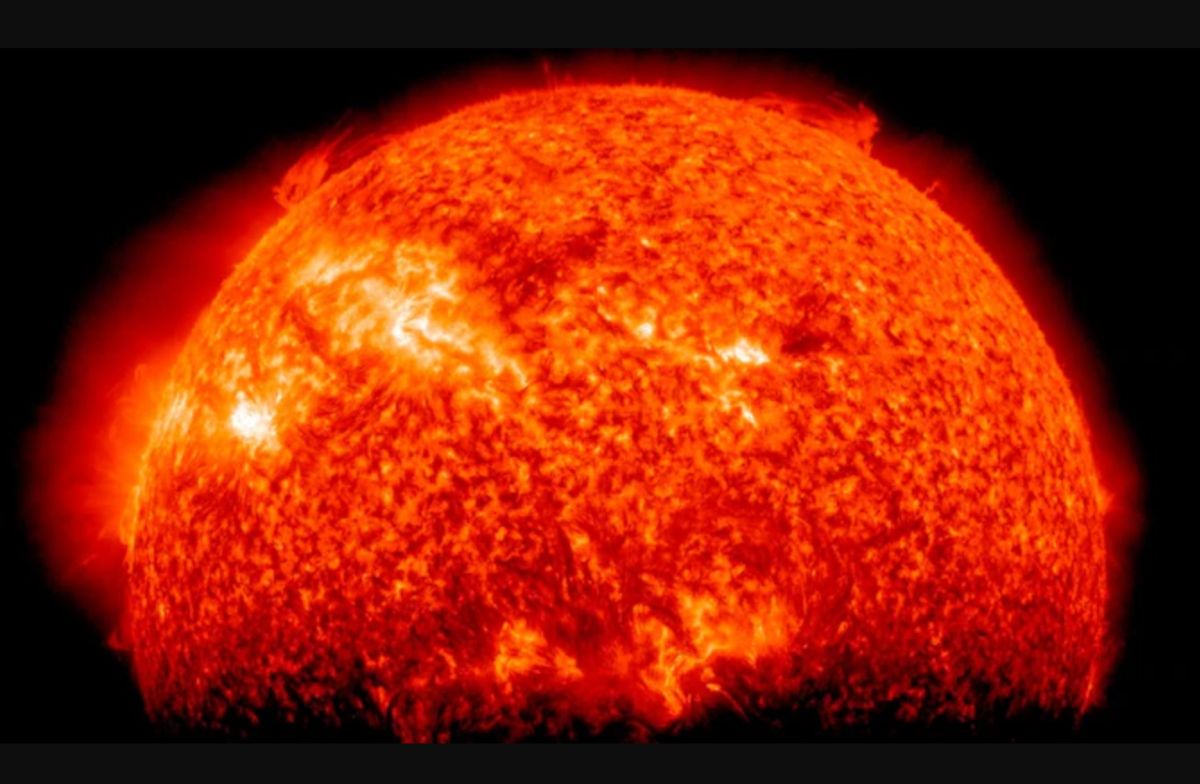
Mr. Shawn Dahl, an expert from NOAA at the Center for Geo-Meteorological Forecasting, said that this is completely consistent with the laws of nature. The magnetic field cycle of the Sun reverses about every 11 years, and this period is often accompanied by an increase in sunspots and strong energy storms.
The most notable in 2025 is the storm in mid-November, when auroras appeared deep within the US, significantly affecting the aviation industry and forcing airlines to cancel more than 30 flights.
According to Mr. Dahl, solar storm activity in 2026 may decrease in number compared to the previous year, but history shows that storms can still reach strong intensity. Therefore, forecasting work is still placed at a high priority level.
A positive signal is that the latest spatial weather forecasting satellite SWFO-L1 was launched in September and is in the final testing phase, before stabilizing at a position about 1.6 million km from Earth by the end of January. When put into operation, this satellite is expected to significantly improve the accuracy of geomagnetic storm warnings in the near future.


