
The blockade of the Strait of Hormuz amid escalating military conflict between the US, Israel and Iran could change the balance of the global energy market, in which Russia's LNG liquefied natural gas is forecast to benefit in Asia.
The Strait of Hormuz is a strategic oil and gas transport route connecting the Persian Gulf with the Gulf of Oman and the Indian Ocean, which transits more than 20% of global oil and LNG supplies.
On March 2, the Commander of the Iranian Islamic Revolutionary Guard Corps announced that the Strait of Hormuz was blocked and any ships trying to pass could be burned down.
Russian experts believe that if LNG exports from Qatar are disrupted for a long time due to security instability, Russia's demand for LNG in the Asia-Pacific region will increase significantly.
Ms. Maria Belova, Research Director of Consulting Company Implementa, said that in the event that the Hormuz Strait encounters long-term problems, not only Asian countries but also Europe may increase demand for LNG supplies from Russia.
Agreeing with this view, Mr. Sergey Kaufman, an analyst at Finam Financial Group, said that the disruption of supply from Qatar could promote the gradual reorientation of Russian LNG to the Asian market.
On March 2, Iran attacked the world's largest LNG plant in Qatar. Qatar's state-owned corporation QatarEnergy confirmed that it had stopped LNG production at the Ras Laffan complex - the facility accounting for about 1/5 of global LNG supply.
Qatar is currently the third largest LNG exporter in the world, after the US and Australia, with a capacity of about 77 million tons per year and plans to increase it to 142 million tons in the near future.
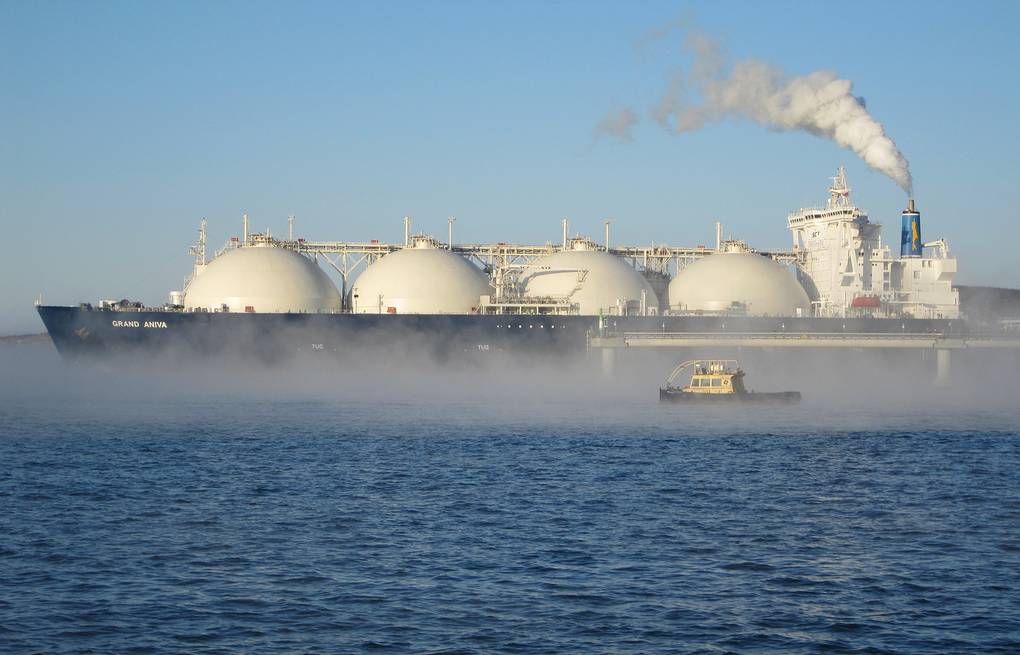
Meanwhile, Russia produced 32.9 million tons of LNG in 2025, down 3.6% compared to the same period last year. Of this, 9.79 million tons were supplied to China (up 18.2%), and about 20.3 billion m3 were transported to Europe.
Russia is currently operating two large-scale LNG projects, Yamal LNG and Sakhalin-2. The Arctic LNG 2 project (phase one) has not officially gone into full operation, although there has been information about some shipments exported to China.
Russia also owns two medium-sized LNG plants in the Baltic region, Gazprom LNG Portovaya and Cryogas-Vysotsk, but these facilities have been put on the US Treasury Department's sanctions list.
Middle East tensions flared up after the US and Israel launched a large-scale military campaign against Iran from February 28, with many major Iranian cities, including Tehran, being airstriked. Washington declared this action to deal with missile and nuclear threats from Tehran.
After the attacks, the Iranian Islamic Revolutionary Guard Corps announced a retaliatory operation, targeting targets in Israel. Some US military bases in Bahrain, Jordan, Qatar, Kuwait, UAE and Saudi Arabia also suffered attacks.


