
According to maritime sources and regional officials, 3 oil tankers were damaged off the Gulf after the US and Israel launched attacks on Iran, followed by retaliatory actions. Escalating tensions put direct risks to maritime trade.
Iran announced that it has stopped traffic through the Strait of Hormuz - a strategic sea route transporting about 20% of global oil supplies, including exports from Saudi Arabia, the United Arab Emirates, Iraq, Kuwait and Iran, along with large volumes of liquefied natural gas from Qatar.
Sea transport data shows that more than 200 ships, including many oil and liquefied natural gas (LNG) tankers, have anchored around the Strait of Hormuz and adjacent waters in just the past 24 hours. The risk of war has skyrocketed, forcing ship owners to temporarily stop their journeys, awaiting security assessment.
An oil tanker flying the Palau flag, which is under US sanctions, was attacked off the coast of Oman's Musandam Peninsula, injuring 4 people, according to the Oman Maritime Security Center. The specific cause has not been announced.
Meanwhile, the crude oil tanker MKD VYOM flying the Marshall Islands was hit by an object while moving about 44 nautical miles northwest of Muscat. The UK Maritime Trade Agency said a cargo-carrying commercial ship reported an explosion in the same area.
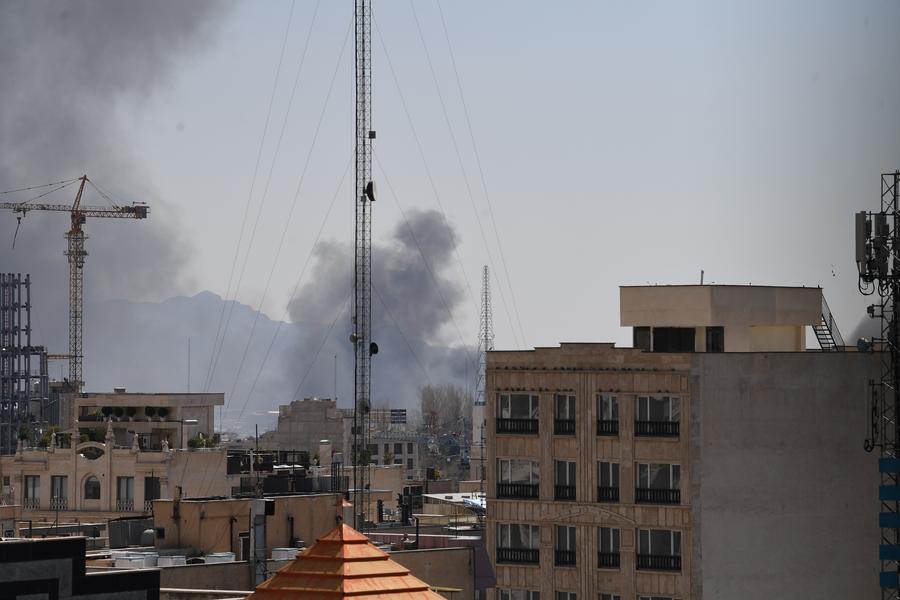
At Jebel Ali port in the UAE, an oil tanker was almost hit by debris from an air interception operation during the night Iran launched attacks targeting Gulf countries. Another refueling ship was also damaged off the UAE.
Faced with the risk of escalation, the US Maritime Administration recommends that ships avoid passing through the Strait of Hormuz and the entire Oman Bay area due to the risk of continued retaliatory attacks. The agency also requires US flag ships or those related to the US to maintain a minimum distance of 30 nautical miles from US military ships to reduce the risk of misidentification.
Security sources also warned of the possibility of naval mines appearing in narrow shipping routes. Two US officials said that Iranian forces had loaded naval mines onto ships in the Gulf region in June, raising concerns that Tehran could blockade the strait.
Insurance experts predict that war risk premiums will increase sharply as insurers review contracts. Lloyd's of London has now ranked Iran, the Gulf and part of the Gulf of Oman as high-risk areas. Dylan Mortimer of insurance brokerage firm Marsh estimates that hull premiums in the Gulf area could increase from 25% to 50% in the short term.
At the same time, the Russian Foreign Ministry warned that any move to completely close the Strait of Hormuz could seriously disrupt the global oil and gas market. Many ship owners, oil and gas corporations and traders have temporarily suspended the transportation of crude oil, fuel and LNG through the strait after attacks and military responses.
Russia also condemned the assassination of Iranian Supreme Leader Ayatollah Ali Khamenei and family members and senior officials, saying that this is an act that violates international law and the principles of relations between sovereign states. Moscow declared its resolute opposition to political assassinations targeting leaders of countries.


