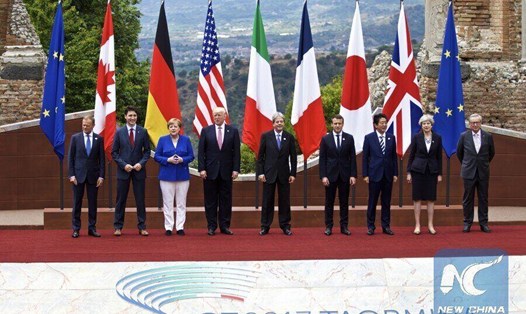
The joint statement affirmed the G7's steadfast support for Ukraine in its conflict with Russia, demonstrating the group's determination to continue to cause difficulties for Russia and criticizing China for supporting Russia.
At the conference, foreign ministers of G7 member countries reached a broad consensus on many other topics and contents in the agenda such as supporting Mr. Trump's proposal for peace in the Gaza Strip, criticizing North Korea for its nuclear and missile programs, and expressing deep concern about the chaotic violence in Sudan.
They agreed on the policy of escaping dependence on the supply of rare earths and rare metals from China and the use of Russian assets that were being frozen by them.
All of the above were especially emphasized in both the conference and the post-conference joint statement. This special emphasis was premised from the beginning to imply that the G7 is currently very united internally and the new US administration is currently completely "in the same boat" with the remaining 6 members of the group.
From there, it can be seen that the members of the G7 are currently pursuing the goal of restoring the role and influence of the world's politics and economy, trade that the group has had in the world. Therefore, consensus is exaggerated and disagreements of views are put aside.
The agenda did not include any content related to Mr. Trump's protectionist tariff policy, nor did it mention the instability in Washington's foreign policy. This shows that the G7 wants to avoid creating more internal tensions and expand cooperation by inviting more foreign ministers from many countries to attend, in order to restore the group's central role in global politics, economy and trade.
It can be seen that the G7 is proactively shifting from the framework of 7 major economies to the nuclear position of a new alliance structure in the world.