
On February 2nd, the global commodity market plummeted sharply as gold, silver, oil and many industrial metals simultaneously fell sharply, leading to a wave of sell-offs on risky assets.
This development appeared after Donald Trump chose Kevin Warsh, former Governor of the Federal Reserve, as his successor to Jerome Powell as Fed Chairman.
On the afternoon of February 2nd Vietnam time, world gold prices touched 4,402 USD/ounce, down to the lowest level in more than two weeks, while silver prices lost more than 13%. Both of these precious metals just set records last week.
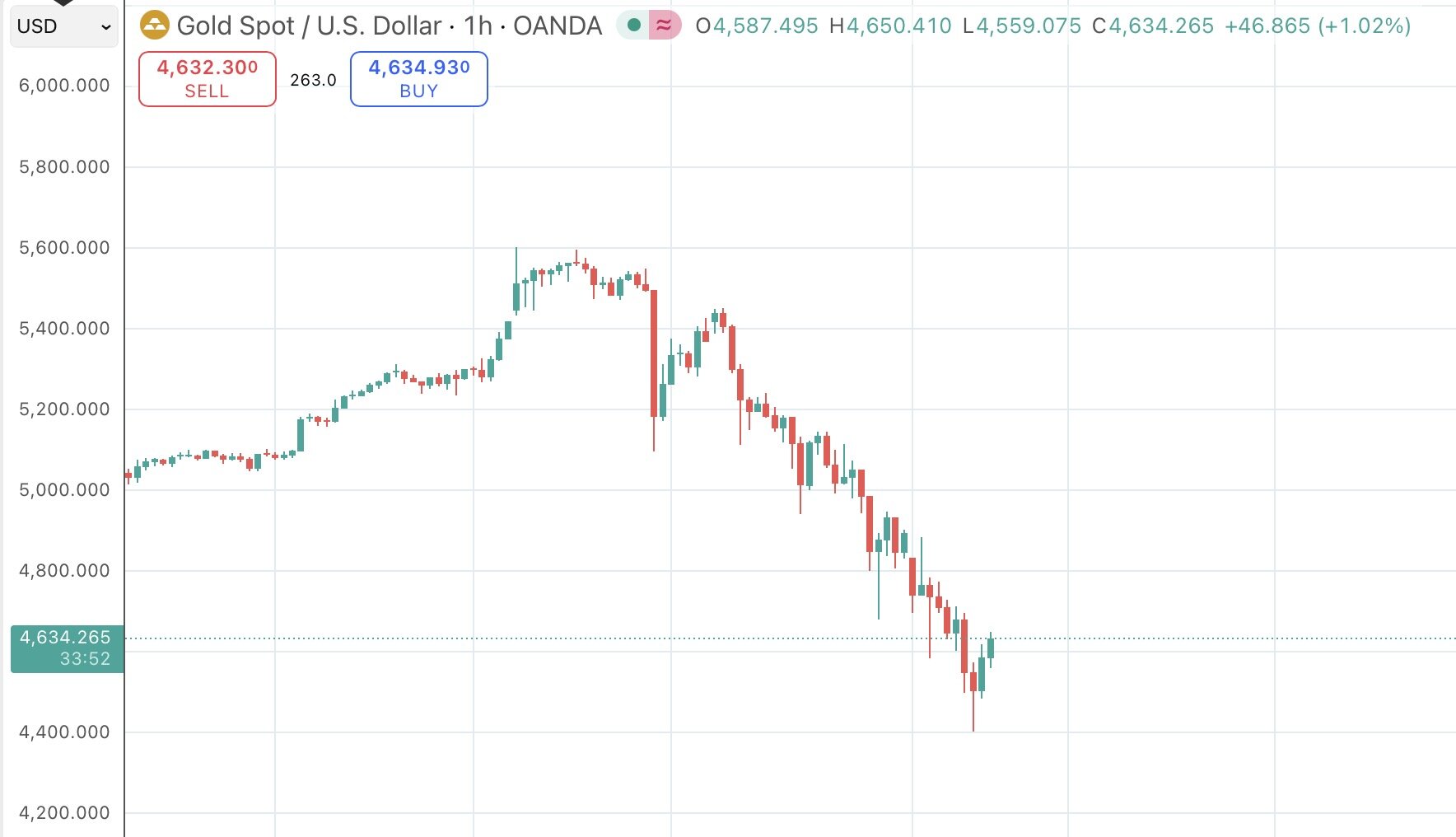
The decline took place for the second consecutive session, reflecting increased selling pressure on the market. Crude oil fell nearly 5.5%, leaving the multi-month peak, while the dong traded on the London Metals Exchange fell nearly 5%.
Mr. Vivek Dhar, commodity strategist at Commonwealth Bank of Australia, said that the market's strong selling of precious metals at the same time as US stocks shows that investors see Mr. Warsh as a more "hawkish" viewer of monetary policy.
According to Mr. Dhar, the strengthening USD also puts more pressure on gold, silver, oil and basic metals. However, he still maintains his forecast that gold prices will reach 6,000 USD in Q4/2026.
The sell-off wave accelerated as CME Group raised margins for metal futures contracts, effective from the end of the trading session on February 2. Increased margin requirements often reduce speculative attractiveness, narrow liquidity and force traders to close positions. Previously, spot gold prices recorded the strongest day-on-day decline since 1983, while silver plummeted by 27%, the largest day-on-day decline ever recorded.
The energy market is under more pressure from the signal of cooling tensions between the US and Iran. Mr. Trump's weekend statement that Iran is "seriously engaging in dialogue" with Washington, along with information that the Iranian Revolutionary Guards navy does not plan to conduct live-fire drills in the Strait of Hormuz, has eased concerns about conflict with this OPEC member, according to Tony Sycamore from IG.
Industrial metals such as copper and iron ore face obstacles due to concerns about high inventories and weak demand ahead of the Lunar New Year holiday in China, the world's largest consumer market.
Mr. Dhar believes that the current decline is more regulatory than a long-term reversal, and considers this an opportunity to buy in rather than a sign of fundamental change.


