
Unprecedented supply shock
On March 9, the global energy market experienced a rare shock when crude oil prices exceeded the threshold of 100 USD/barrel for the first time in nearly 4 years, before cooling down to 86.24 USD/barrel on the morning of March 10.
According to energy experts, the Iran war is pushing the oil market into a historic supply crisis.
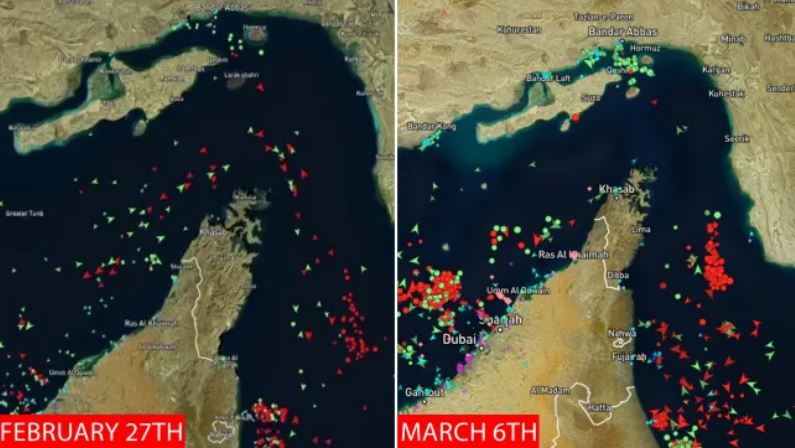
The main reason comes from the near paralysis in the Strait of Hormuz - a strategic shipping route through which about 20% of the world's oil transported by oil tankers has to pass.
Iran has warned that it may attack oil tankers passing through this strait, causing oil unloading and transportation in the area to be almost stalled.
According to historical data from Rapidan Energy Group, the current supply disruption level is equivalent to about 20% of global production - double the previous record during the Suez Canal crisis.
At the same time, oil production in the Middle East also decreased sharply as two major exporters, Saudi Arabia and the UAE, were almost cut off from the international market.
The market currently has almost no safe buffer. No manufacturer is capable of increasing output quickly to compensate," said Bob McNally, founder of Rapidan.
The sharp increase in oil prices quickly spread to the fuel market.
In the US, the average gasoline price has increased by about 50 cents in just one week, to 3.48 USD/gallon - higher than at any time in both terms of President Donald Trump.
Experts believe that if the conflict prolongs and the oil shipping line is not restored, global fuel prices could continue to escalate.
Good news and bad news
However, the oil market still has some positive signs.
Before the war broke out, the world was actually in a state of oversupply. Oil prices at that time were only around 60 USD/barrel.
Oil futures for 2027 and 2028 are currently still trading around the high of the 60 USD/barrel zone, showing that traders do not believe that oil prices above 100 USD will last long.
However, the bad news is that the war between the US, Israel and Iran is taking longer than the market initially predicted.
Current fluctuations may be a bit excessive in the short term, but if by the end of this month transportation through the strait has not been restored, oil prices could completely reach 150 USD/barrel," warned Mr. Homayoun Falakshahi, an analyst at Kpler.
Governments seek to cool down
Faced with pressure from soaring energy prices, governments are starting to consider intervention measures.
G7 Finance Ministers are scheduled to meet to discuss the possibility of jointly releasing oil from strategic reserves to stabilize the market.
The Trump administration is also promoting plans to support insurance for oil tankers passing through the Strait of Hormuz, after many maritime insurance companies refused insurance for ships operating in this area due to attack risks.
Washington is also considering the possibility of deploying naval forces to escort commercial ships, although the specific plan has not yet been announced.
According to experts, as long as this strategic oil transport route is not reopened, the oil market will still be under strong price pressure.


