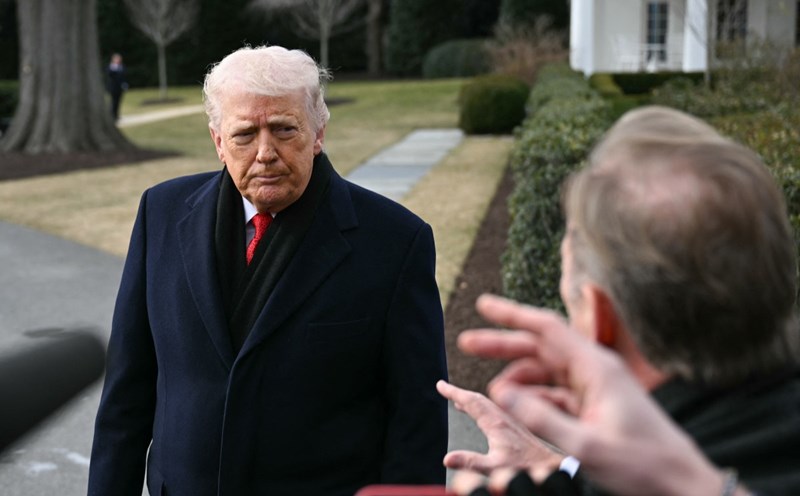
The statement was made after the US announced plans to impose tariffs on goods of 8 European NATO countries in protest of its ambition to control the strategic island of Greenland.
According to a statement from the US side, the tax rates will target Denmark, Norway, Sweden, France, Germany, the United Kingdom, the Netherlands and Finland. The tax rate is expected to start at 10% from February 1, then increase to 25% in June, and will only be lifted when the US reaches what Mr. Trump calls "a complete and thorough buy-back agreement" on Greenland - the autonomous territory of the Kingdom of Denmark.
On social network X, French President Emmanuel Macron emphasized Paris's tough stance: "France is committed to protecting the sovereignty and independence of nations, in Europe as well as around the world. There is no threat or pressure that can affect us - whether in Ukraine, Greenland or anywhere else.
He affirmed that tariff threats are "unacceptable" and if implemented, Europe will respond to protect its sovereignty.
Tensions are escalating in the context of European NATO countries recently sending small-scale military units to Greenland with Denmark. This move is considered symbolic, aimed at reaffirming the status quo of the island's sovereignty amid increased pressure from Washington.
The Danish government and the Autonomous Government of Greenland have repeatedly insisted that Greenland "is not for sale", and the future of this land belongs to the people of Greenland.
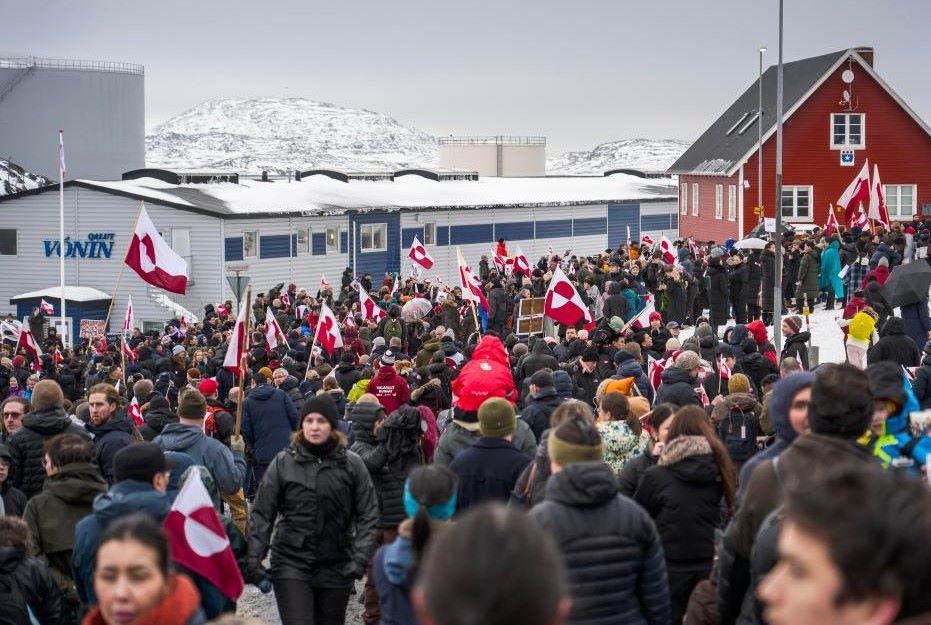
Protecting the decision to deploy forces, President Macron said that Arctic security is closely linked to European security. “We are fully responsible for this choice, because security in the Arctic and on the outer edges of Europe is being put at risk,” he wrote.
Not only France, the wave of protests quickly spread across Europe. British Prime Minister Keir Starmer publicly criticized Washington's tax plan, saying that "taxing allies for pursuing NATO's collective security is completely wrong".
He affirmed that Arctic security is an issue for the entire bloc and emphasized that Greenland is part of the Kingdom of Denmark, with the future decided by the people and government of Denmark. London also announced that it will pursue this issue directly with the US administration.
In Northern Europe, the tone is even tougher. Swedish Prime Minister Ulf Kristersson declared that the country would not let itself be blackmailed, while Finnish President Alexander Stubb warned that the use of tariff pressure could lead to a dangerous spiral, seriously damaging transatlantic relations.
Senior European Union (EU) officials also voiced that such measures threaten the foundation of EU-US relations and risk pushing the two sides into an uncontrollable escalating cycle. Faced with this development, the EU has convened an emergency meeting of ambassadors to coordinate positions and prepare a common response plan.
Meanwhile, NATO Secretary General Mark Rutte remained cautious, refusing to comment on the increasingly fierce internal controversy. Previously, President Trump did not rule out the possibility of the US withdrawing from NATO if allies continue to hinder Greenland's ambitions.