National Museum of Oriental Art at VDNKh
VDNKh (National Economic Achievement Exhibition Center, 240ha wide, opened in 1939) is a famous cultural and entertainment venue favored in Moscow, Russia. Few people know that within the VDNKh campus, there is a branch of the Oriental National Art Museum (the main building is located in the center of Moscow) with a collection of 380 works by Russian painter Nikolai Konstantinovich Rerikh (Nicholas Roerich) and his son, along with many cultural artifacts from Asian countries.
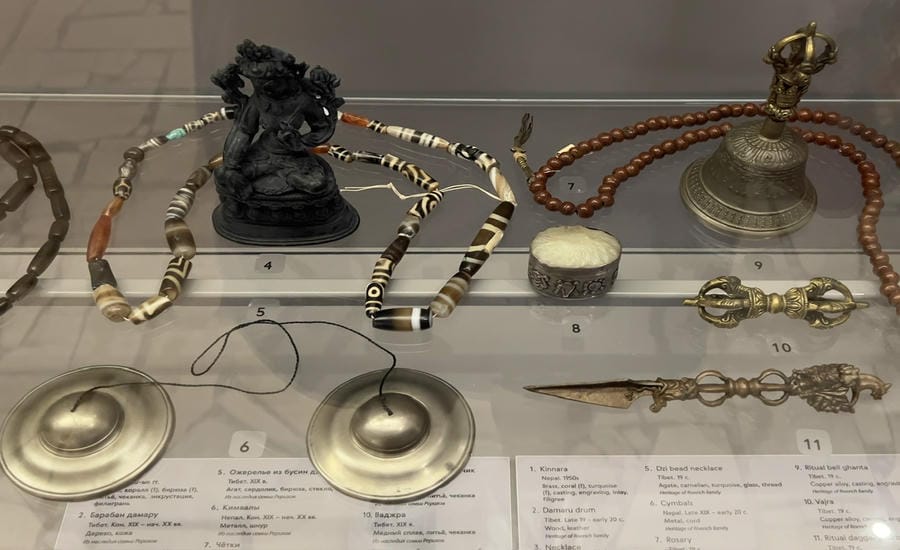
The museum has 4 main spaces: Gallery of Roerich's works; Gallery of Roerich's son Svetoslav Nikolayevich Roerich's works; Asian room displaying religious objects such as Buddha statues, jewelry, Tibetan thangka paintings... owned by the Roerich family; exhibition of cultural artifacts of Asian countries.
Winter 2022, I first came to see Roerich's paintings at the Oriental Museum. Last summer - 2025, I read his book "Heart of Asia - Memoirs from the Himalayas" (Asian Heart, Notes from the Himalayas; first published in 1929, in the United States). This is a travel diary that records Nicholas Roerich's family's 5-year expedition through Central Asia, India, Tibet, the Himalayas in the 1920s.
Reading these notes is not easy for me. It is difficult to imagine what the majestic mountains, steppes or deserts in real life look like, although Roerich describes the scenery and natural colors quite in detail. Reading the book, I wish I could see Roerich's Himalaya paintings at the Museum of the East again.
Fortunately, this summer 2026, the Oriental Museum at VDNKh is open to visitors for free from July 24 to the end of August 2026.
Majestic, quiet Himalayas in Roerich paintings
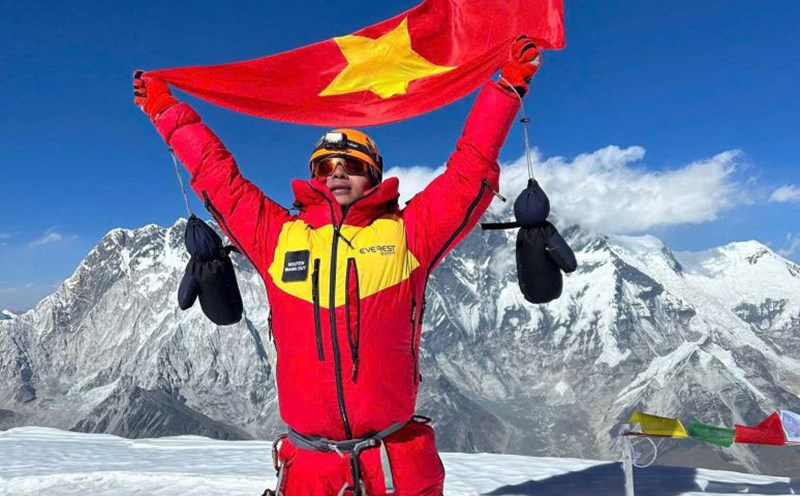
The Himalayas stretches through 5 countries Nepal, China, Bhutan, India, Pakistan. Researching, I learned that the Himalayas with the "roof of the world" - Mount Everest is no longer too unfamiliar to Vietnamese people, especially to professional climbers, Vietnamese people who are passionate and admire the Himalayas; for more than 20 years, many Vietnamese tourists and backpackers have come to the Himalayas and Tibet through many forms of tourism, some have successfully conquered Mount Everest.
To be able to overcome all obstacles and dangers of weather and terrain of high mountains, Vietnamese climbers not only need skills, but also good physical strength and extremely high patience. After trips, some climbers have organized exhibitions and released photo books about this sacred and mysterious mountain region.
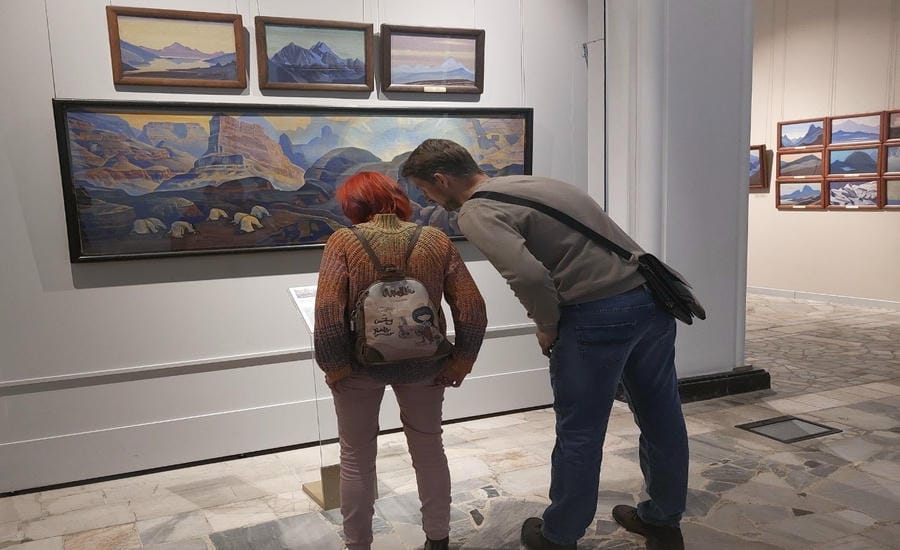
Arriving at the Oriental Museum, when entering Roerich's painting exhibition space, I suddenly felt like I had set foot in a sacred mountain. Looking at Roerich's paintings of overlapping mountains, I see that he has expanded the way people perceive nature. Nature is not just landscapes, trees, flowers... Each of his paintings not only records a scene, a mountainside; looking at the strokes, I feel like I am standing in the mountains, walking on winding roads, witnessing wild nature with my own eyes, breathing pure air.
There are paintings by Roerich that only depict majestic hills, like the sacred mountain Kailash appearing majestically. There are paintings where he adds one or two characters, such as monks or nomads standing in the vast scenery of mountains and majestic clouds.
Looking at the paintings, I thought, in the vast and immense nature, humans are so small! The famous painter Nicholai Roerich does not want to completely erase the presence of humans in his paintings, the image of humans in his mountain paintings appears humble, bare, but strangely very harmonious in its pristine beauty. Many visitors admire the paintings for quite a long time, both carefully watching the strokes and immersing themselves in silence.
One thing I really like about Roerich's paintings of nature and hills is the way he uses many colors when painting mountains. The paintings of the Himalayas, the pristine lands of Tibet, are not just a series of paintings of snow-covered mountains. The expedition to the Himalayas seems to have allowed Roerich to admire the natural scenery changing seasonally. Some paintings he uses blue to depict the coldness of winter and snow instead of a white color, some paintings he uses many oranges to record a sunset scene, the image of the mountains appearing like fire...
After seeing the paintings, when I got out of the museum, the overwhelming feeling in me was still very strong. Roerich's paintings not only recorded scenes, but also opened a door for visitors or those who had not had the opportunity to see the Himalayas and the sacred Mount Kailash with their own eyes to get closer to nature...
Roerich once said: "That's right, where mountains are, there are also mountains, water is also water, heaven is also heaven, and people everywhere are just people. However, if you sit in front of the Alps and try to imagine the Himalayas, you will find something missing - something difficult to explain, but extremely obvious".
That's right, each landscape, each mountain region has its own unique features, if you can come to see it directly once, what could be better! I think!
Watching Roerich's paintings, I realized that no matter how intelligent and brave people are, standing in front of the majesty of the mountains, they all become very small. It seems that the wilderness of the mountains, the purity of the trees and grasses makes people suddenly a little "liberated" from the noise of the hurried pace of city life, letting their souls follow nature, finding peace for themselves.
Nicholas Roerich (October 9, 1874 - December 13, 1947) - a famous Russian painter in the 20th century. His works are the result of a journey of historical, religious, and expeditionary research through Russia, Central Asia, Tibet, Mongolia, and India.
In the early stages, Roerich mainly painted Russian cities; in the second stage he focused on painting Tibetan mountains, India, Mongolia. In addition to painting, Roerich is also known as a writer, philosopher, archaeologist, and explorer. He studied Eastern languages, culture, and philosophy. His paintings are displayed in many countries around the world.