
The Telegraph reported that a rare scene appeared at Prince Sultan Air Force Base (Saudi Arabia) on March 29.: The wreckage of the US aircraft lies twisted on the runway, the radar "flying disc" overturned next to it. Those are the remnants of the E3 Sentry - a flight command center worth about 500 million USD, likened to the "battlefield brain" of the US Air Force.
According to military sources, Iran launched an attack with ballistic missiles combined with UAVs (unmanned aerial vehicles), directly hitting the radar dome mounting point - the most important position of the E3. This accurate strike shows Tehran's significant reconnaissance and guidance level.
The attack injured at least 12 US soldiers, including 2 seriously injured, and damaged about 5 refueling aircraft. But the biggest damage was the loss of one of the most key weapons in modern combat systems.
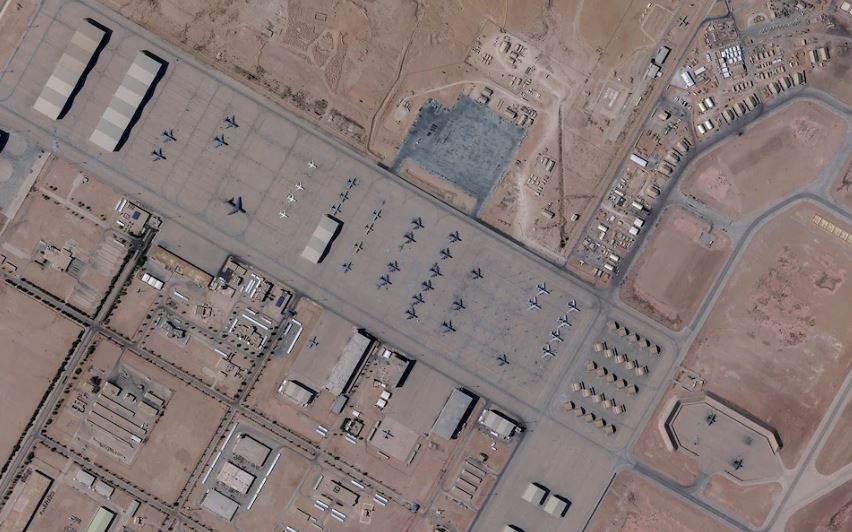
E3 Sentry is not just an aircraft. It is an early warning and air traffic control platform, which can track aircraft, missiles and UAVs within a radius of more than 400km. From the air, it plays a coordinating role in the entire battlefield - "commanding" fighter jets and defense systems.
Before the attack, the US only had 16 of this type, of which about 40% were deployed in the Middle East. After the incident, the number decreased to 15 - a loss that is not easy to compensate for.
Experts warn that this is not only a loss of equipment but also a direct blow to the US's battlefield command capabilities.
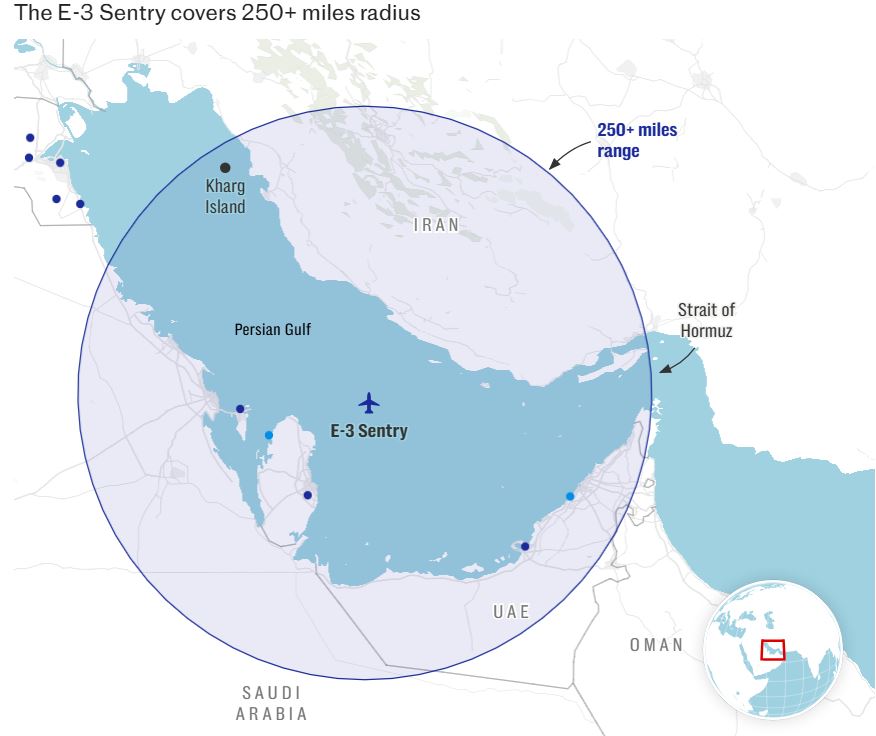
Professor Kelly Grieco, senior researcher at the Stimpson Research Center based in the US, said: "Iran is not just shooting down a plane, they have attacked a combat control layer, and right at the time that control layer is most necessary.
According to Professor Grieco, what is more worrying is that the E3 Sentry is old, and the latest one was also delivered in the early 1990s. Meanwhile, the US does not have a production line to replace it immediately. The most recent successor, the E7 Wedgetail, is priced at 700 million USD and cannot be deployed quickly.
The loss of one aircraft forced the remaining E3s to increase operating frequency, in the context that they already had to "brace themselves" to compensate for the ground radar systems previously destroyed by Iran. This adds great pressure on both equipment and crew.
This is Iran's latest successful attack on US bases in the region, which, according to information revealed this week, forced some employees to evacuate to safer locations in nearby offices and hotels.
This development occurred 1 month after the US and Israel launched a military campaign to put pressure on Iran. However, reality shows that Tehran still maintains strong and increasingly accurate counter-attacking capabilities.


