
China is expected to experience 4 severe cold spells in February, which may affect the peak travel period of the Lunar New Year.
According to Mr. Huang Zhuo, Deputy Director of the National Meteorological Center of China, rain and snow are forecast to affect the central and eastern regions of China from February 5-7 and from February 10-13.
Another cold air mass is likely to affect these areas at the beginning of the Lunar New Year holiday, from February 15-23.
Mr. Huang called for vigilance against 4 major climate risks. Northern China needs to be wary of waves of temperature drops, strong winds and heavy snowfall, while the northern and central regions of China, as well as southwest China, are facing the risk of rain and snow at low temperatures, requiring measures to ensure traffic and energy supplies.
Meanwhile, some areas in southern and southwestern China must prevent drought and forest fires by strengthening water resource management and fire prevention and fighting, Mr. Huang said.
In January, China experienced 5 severe cold spells, more than the historical average for the same period. From mid-January, meteorological droughts have appeared in areas such as eastern and southern China, with severe conditions recorded in most provinces of Fujian, central Guangdong and coastal areas of Zhejiang.
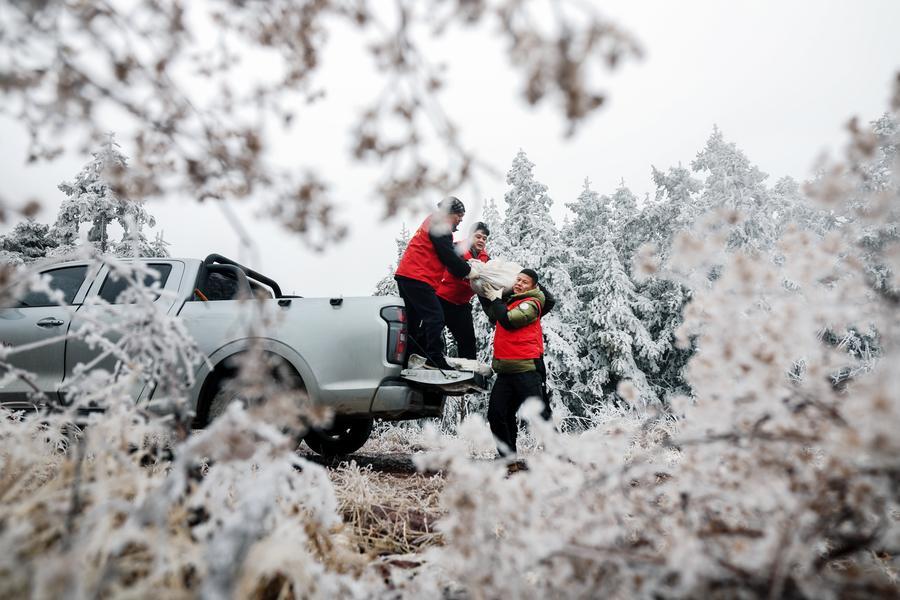
This year's Lunar New Year tourist peak season, also known as Chunyun, will take place from February 2nd to March 13th, lasting 40 days. According to the National Development and Reform Commission, the number of inter-provincial passenger trips across China during this time is expected to reach a record level of 9.5 billion trips.
Meanwhile, in Vietnam, according to the National Center for Hydro-Meteorological Forecasting, around dawn and January 31, a new cold air mass will affect the Northeast region, then affect the North Central region, the Northwest region and the Central Central region.
From near dawn and January 31, on land, the wind will turn to northeast level 2-3, coastal areas level 3-4. The North and North Central regions will have rain, scattered light rain. The Northeast region will turn cold, mountainous areas will have places with deep cold.
From the night of January 31st, the North Central and Northwest regions (except Dien Bien and Lai Chau) will turn cold.
The lowest temperature in this cold air wave in the Northern and North Central regions is commonly 12-15 degrees C, the Northern mountainous region 9-12 degrees C, the high mountainous region has places below 8 degrees C.
Hanoi area: On January 31st, there will be rain, scattered light rain; the weather will turn cold.The lowest temperature in this cold air wave is commonly 13-15 degrees C.
Regarding the weather for the Lunar New Year, after the cold spell in early February, around February 10th (December 23rd of the lunar calendar), a new cold air mass will continue to affect, with quite strong intensity and a tendency to strengthen southward.


