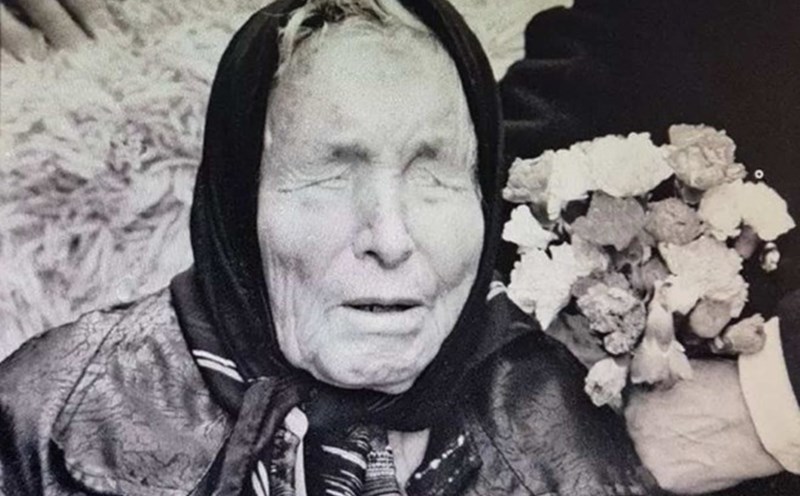
Blind prophet Baba Vanga, real name Vangeliya Pandeva Gushterova, was born in 1911. When she was a teenager, she was swept out into the field by a tornado, leading to gradually losing her sight.
The prophet nicknamed "Nostradamus of the Balkans" was famous in the region during World War II when people came to see her to see if their loved ones had returned from the battlefield.
By the 1960s, she became a regional phenomenon, attracting crowds to Petrich, a town southwest of Bulgaria where she lived with her husband.
As the fame of prophet Vanga spread, tourists began to come from countries such as Russia, Romania and Greece. Among those who enthusiastically welcomed Vanga were many Russians and the influence of this prophet on Russians has been recognized by researchers.
The blind Bulgarian prophet became "one of the most remarkable "truth" transmitters in the imagination of Russians in the 20th and 21st centuries" - researchers at the University of Texas in Austin, USA, said in 2024.
The imprint of the prophet Vanga in Russian culture is so great that she inspired the verb "vangovat", which means prediction, as well as an idiom that can be translated as: "How do I know, do I look very much like Baba Vanga?".
Today, Vanga's name and alleged prophecies are often mentioned in Russia and have led to widespread impacts.
The enthusiastic reception of Russians for the prophet Vanga is assessed by scholars as being related to Russian writer Valentin Sidorov, who claimed to have met Ms. Vanga in the 1970s.
The works of writer Sidorov have created a new generation of famous Vanga experts in Russia, many of whom have emerged over the past 10 years. These experts have "added and reinterpreted information" about Vanga's prophecies.
Researchers at the University of Texas at Austin believe that Vanga's power and attraction are not limited to her role as an intermediary connecting with the deceased or her prophetic ability.
The seemingly unstoppable flow of prophecies attributed to Vanga is very surprising because no one recorded the prophet's words when she was alive and the prophet did not leave any written records, according to Zheni Kostadinova, a Bulgarian writer whose book about the prophet Vanga has been translated into many languages.
“Everyone attributes to her words that she has never said. But because of her prestige as a prophet like Nostradamus's, hundreds of people are tempted to speak for her,” Kostadinova added.
In the book, Kostadinova describes Vanga's prophecies somewhere between "truth and legend", noting that they are often recounted and interpreted to a certain extent.
However, many people seem very keen to spread false and sensational statements about what prophet Vanga said when he was alive, according to the Bulgarian book author.
If you ask me, is there anyone who has never taken advantage of Vanga's name for personal purposes? All kinds of propaganda use her to spread messages, things that suit their wishes, to reach the masses" - Ms. Kostadinova said.