
Mr. Trump says almost everything in Iran is collapsed
On March 3, US President Donald Trump declared that the US military had attacked a series of Iranian naval and air targets, affirming that "almost everything had been destroyed". He said the operation was launched after negotiations on Iran's nuclear program broke down and he "felt" Tehran would attack first.
Meanwhile, Israel continued fierce airstrikes on the capital Tehran. Consecutive explosions shook the city, smoke rose near Mehrabad airport and the headquarters of the IRIB national television station. The Israeli military said it hit the Minzadehei underground nuclear development facility in Tehran.
A source familiar with Israel's military plan revealed that the operation is expected to last 2 weeks but is taking place faster than expected, with many Iranian senior leaders being killed in the opening attack on February 28. Among them is Supreme Leader Ayatollah Ali Khamenei, who has led Iran for 37 years.
The building of the Council of Experts - the agency responsible for selecting Mr. Khamenei's successor - in Qom city was also flattened after an airstrike. Mr. Trump declared that more Iranian senior officials had been killed and bluntly said: "Most of the people we think of have died.
Iran responds to US targets
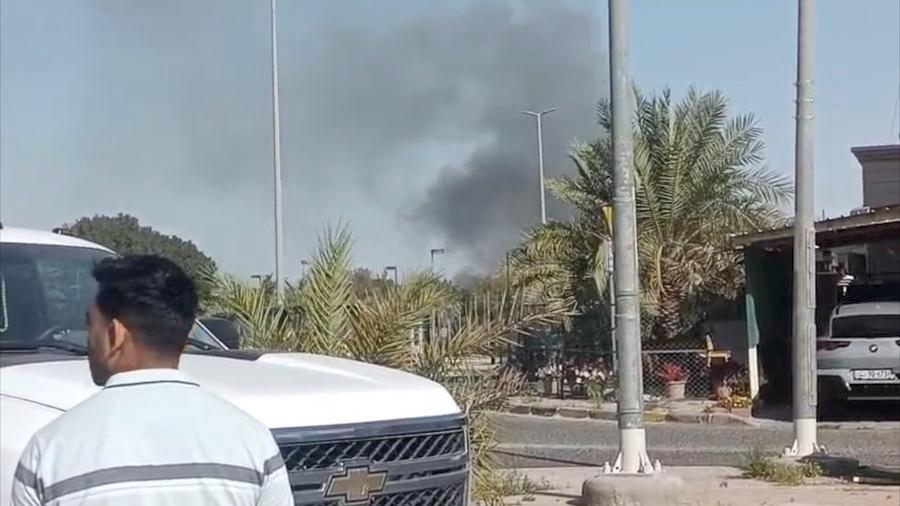
In response, Iran launched a drone attack on the US Embassy in Saudi Arabia, after hitting a US diplomatic facility in Kuwait.
Washington immediately closed its embassies in Saudi Arabia, Kuwait and Lebanon, and evacuated non-essential personnel from most of the Middle East. Smoke was also recorded rising near the US Consulate in Dubai.
Iran announced that the death toll had risen to 787, including 165 girls who died on the first day the school was bombed. The United Nations Human Rights Office called for an investigation into the attack, which they called "absolutely horrific".
Global market in turmoil
The Middle East conflict quickly entailed global economic consequences. Crude oil prices rose 5%, while wholesale gas prices in Europe jumped 40%.
In the US, according to the American Automobile Manufacturers Association, the average retail gasoline price is up to 3.11 USD/gallon - a sensitive signal for voters before the midterm election in November.
The Wall Street stock market fell in the middle of the session, continuing the decline of more than 3% of the indices in Europe and Asia.
Tensions are becoming more serious as Iran tightens maritime operations through the Strait of Hormuz - a shipping route that transports about 1/5 of the global supply of oil and liquefied natural gas.
Qatar has stopped LNG production, many oil tankers are anchored instead of risking passing through the area. The rental price of oil tankers from the Middle East to Asia has nearly quadrupled, exceeding 400,000 USD/day - a record high.
Mr. Trump said the US will provide insurance for commercial ships and is ready to escort across the strait if necessary.
The conflict also spread to Lebanon as Hezbollah rockets fired into Israel. Israel responded with airstrikes and increased troops in the south. Thick black smoke covered Beirut, dozens of people confirmed dead.
As the war shows no signs of cooling down, the Middle East is facing the risk of a full-scale regional war, while the world faces a new inflation spiral due to the energy shock.


