
International Maritime Organization (IMO) Secretary-General Arsenio Dominguez said that transport routes across the Arctic, especially the Northern Sea Route and the Trans-Arctic Transport Corridor, are increasingly attracting the attention of international transport and may witness a significant increase in traffic in the near future.
Speaking via video at the Transport and Logistics Forum held from April 1-3 in St. Petersburg (Russia), Mr. Dominguez said that the trend of shifting to shorter and more efficient shipping routes is promoting the role of the Arctic region in the global logistics map.
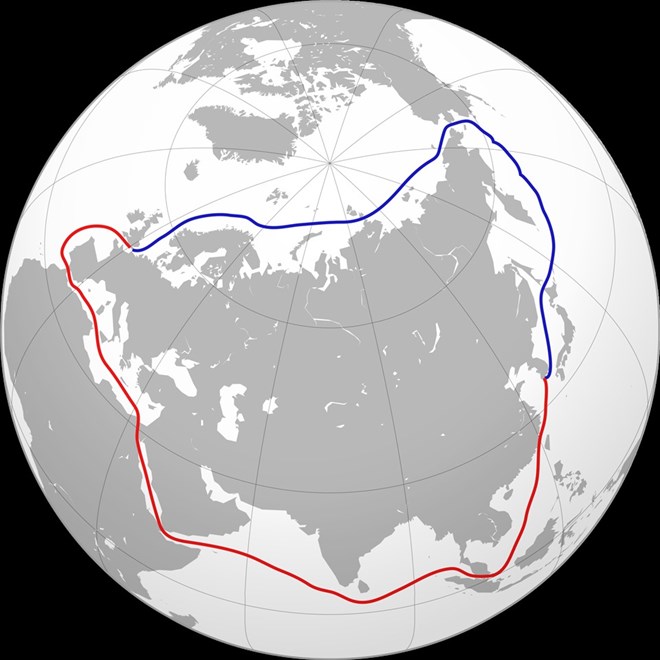
In which, the Northern Sea Route - about 5,600km long from the Kara Strait to Providence Bay - is considered a strategic "shortcut", helping to significantly shorten the journey between Europe and Asia.
Along with that, the Trans-Arctic Transport and Logistics Corridor connecting the east and west of Russia, from St. Petersburg to Vladivostok, through major ports such as Murmansk and Arkhangelsk, is expected to become a new transport corridor of the world.
These routes are considered shorter, safer and more cost-effective than many traditional routes, especially in the context of climate change melting the Arctic ice, expanding maritime exploitation capabilities.
Previously, Russian Transport Minister Andrey Nikitin affirmed that the Northern Sea Route is currently a good alternative to the Suez Canal and the Strait of Hormuz, and even has faster transportation time from Europe to Asia. This helps businesses save fuel costs and time, especially when traditional sea routes through the Middle East are facing geopolitical instability due to Iranian war.
However, the head of the International Maritime Organization also warned that the increase in transportation activities will put great pressure on the fragile ecosystem of the Arctic. He called on countries to strengthen marine environmental protection, control pollution and minimize oil spill risks in the region.
Mr. Dominguez also acknowledged Russia's contribution to the IMO, saying that Moscow has shared maritime operation experience in the icy region with many countries.
This year's forum focuses on discussing the development of international transport corridors, promoting logistics digitization and the application of unmanned technology - factors that are predicted to shape the future of the global sea transport industry.


