
Izvestia newspaper reported that Russia is increasing its military presence in the Arctic as a new helicopter regiment of the Northern Fleet is deployed in the Murmansk region. This unit undertakes many key tasks such as patrolling the Barents Sea, protecting ground facilities, escorting warships, transporting goods and soldiers.
According to military sources, the regiment is equipped with a multi-role helicopter complex including Mi-8 transport, Ka-27 anti-submarine and search and rescue, and Ka-29 - a transport - combat helicopter line. These are all upgraded equipment to suit the harsh conditions of the Arctic.
In the context of increasing geopolitical conflicts and competition, the unit's mission is not just patrolling. Squadrons are also assigned the task of detecting and destroying unmanned aerial and naval vehicles - a growing threat in modern conflicts.
Air Force Major General Vladimir Popov emphasized that controlling the Northern Sea Route and Arctic territories is an urgent requirement, not only serving economic development but also ensuring national border security. According to him, Russia even needs to deploy more helicopter regiments to cover the entire vast area.
Experts believe that the re-establishment and strengthening of air force units in the Arctic is a step inherited from the Soviet era, and clearly reflects the ambition to control the resource-rich and strategically important region.
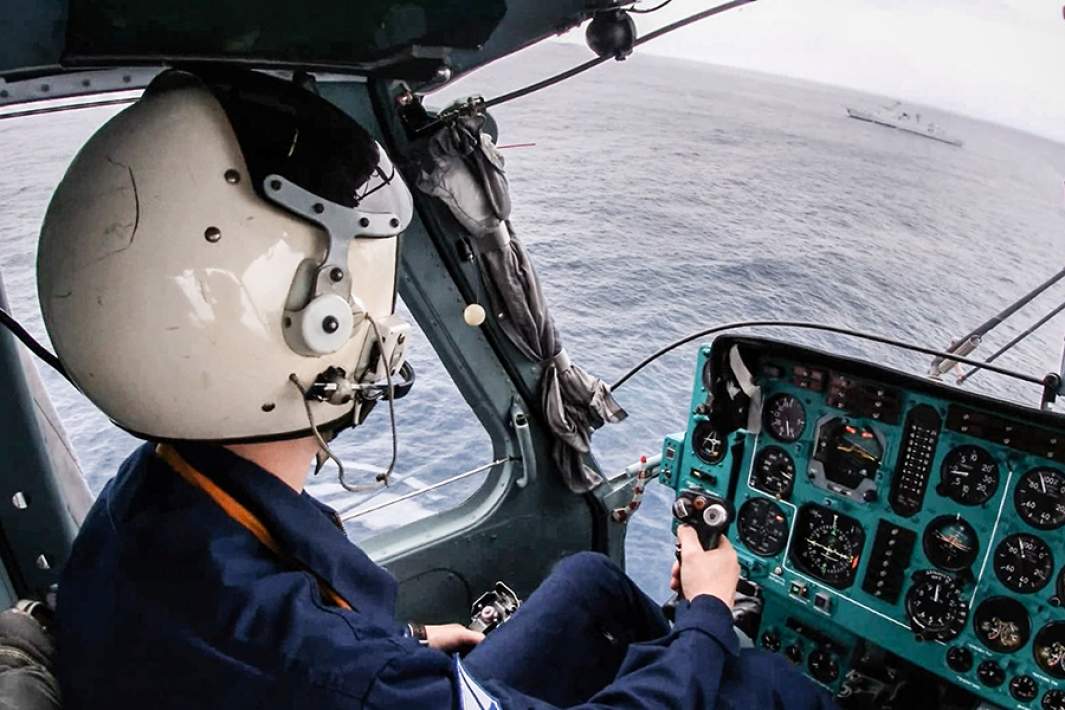
One of the notable points is the return of the Ka-29 helicopter. After the collapse of the Soviet Union, this type of helicopter was once cataloged but has now been reactivated and upgraded. According to military expert Dmitry Boltenkov, the Ka-29 has proven effective in dealing with unmanned ships, especially in the Black Sea.
With the ability to both transport troops and provide fire support, the Ka-29 is considered a flexible vehicle in modern combat scenarios, including sea landings and destroying surface targets.
Meanwhile, the Ka-27 plays the role of a "submarine hunter" with a modern reconnaissance - detection system, capable of scanning a sea surface area of up to thousands of km2 per hour. The Ka-27PS variant also undertakes search and rescue and air reconnaissance missions.
Mi-8, the "backbone" helicopter of the Russian army, continues to play the main transportation role, capable of carrying dozens of soldiers and many types of weapons from machine guns to missiles.
According to military expert Vasily Dandykin, the establishment of a new helicopter regiment is a "logical and systematic" response to changes in the regional security environment. He believes that experience from recent operations shows that the task of combating unmanned aerial vehicles has become a top priority.
In addition to military missions, helicopter units also play an important civilian role in the Arctic, such as supporting emergency medical rescue, transporting experts or supplying remote areas.
Notably, Russia is also deploying special operations teams using helicopters to protect naval bases from air and sea threats, including unmanned ships.


