
The European Union (EU) has just reaffirmed its commitment to end all imports of Russian gas by September 2027.
EU gas purchases from Russia have fallen sharply following the Ukrainian conflict. However, a paradox still exists: At many European ports, Russian fertilizer shipments still regularly dock, even more than before the conflict.
When the fertilizer production chain depends directly on gas, it means that Europe is banning the import of raw materials but buying... products made from those materials.
Before Russia launched a military campaign in Ukraine in 2022, Moscow supplied about 30% of all fertilizer consumed in Europe.
Initially, the EU only sanctioned the leaders of Russian fertilizer enterprises, but did not ban goods. As a result, imports quickly rebounded, by the second quarter of 2025, Russian fertilizer accounted for nearly a third of the European market, the highest level in a decade.
The attractiveness of Russian fertilizers lies in three factors: cheap, abundant and close. In the production of fertilizer - the most common type of fertilizer, the gas is converted into hydrogen, then created ammonia as an ingredient.
Russia not only has a surplus of gas purchased by the EU, but also has large reserves of phosphorus and potassium to produce all types of fertilizers. The country currently accounts for 20% of total global fertilizer output.
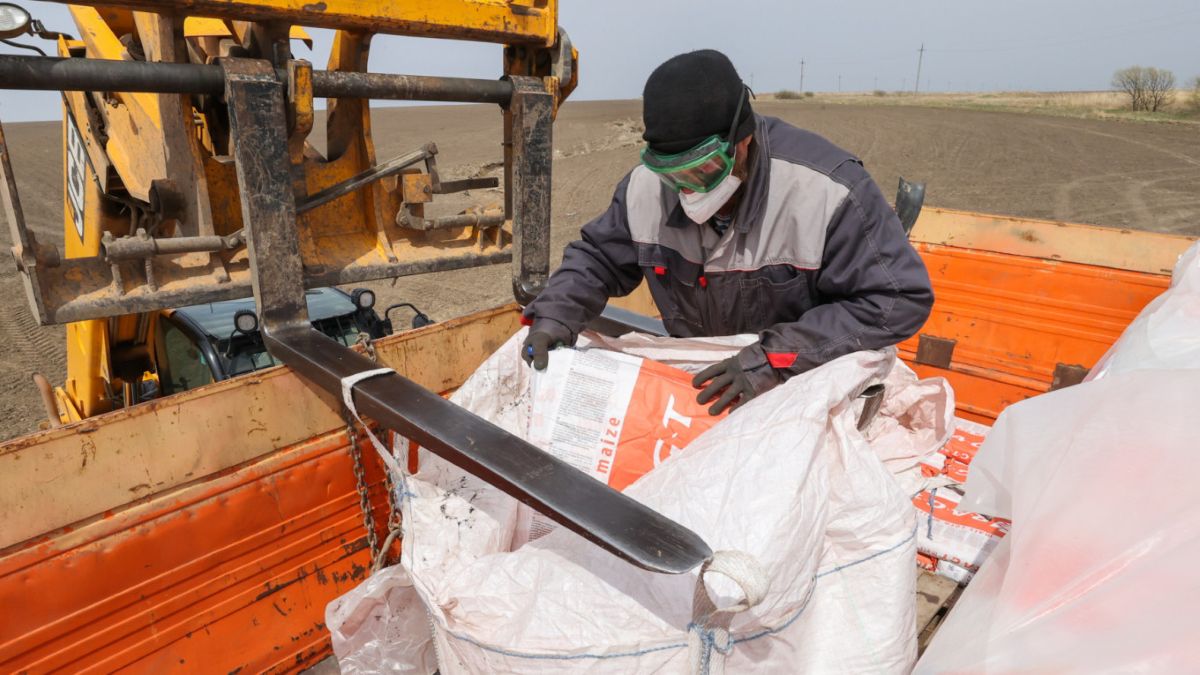
On the EU side, the failure to completely ban Russian fertilizers comes from the pressure of farmers. Throughout the 2020-2025 period, input costs for European farmers have skyrocketed due to the pandemic and conflict; while agricultural product prices have plummeted.
About 15-30% of production costs are directly related to fertilizers, causing any price shock to flare up a wave of protests.
In 2024, a series of tractor convoys surrounded Brussels, causing EU leaders to be afraid of taking strong action against the supply of fertilizers.
The solution mentioned is to restore production in the EU or find another supplier. However, hundreds of European factories that once produced 70% of the domestic defmatory demand have suffered a serious decline in capacity after gas prices increased.
To date, the capacity has only recovered by about half and investors are still avoiding it due to high environmental costs. Alternatives such as Egypt, Algeria, Morocco and Trinh & Tobago are all significantly more expensive.
In July, the EU imposed tariffs on Russian nitrogen fertilizers to force importers to change direction. However, the starting tax rate of 40 euros/ton compared to the fee of 400-700 USD/ton is still too low to create a barrier.
Taxes will increase gradually to 315 euros/ton after 2028, but may be adjusted if market prices increase sharply. As a result, the European warehouse is still containing a large amount of cheap imported goods before the tax takes effect.
A new challenge awaits the EU on January 1, when the border carbon adjustment mechanism (CBAM) imposes emission tax on imported fertilizers, causing prices of goods from countries outside Russia to increase as well.
European farmers fear they will have to bear all the costs, and a major protest was planned in Brussels on December 18.


