
A US landing campaign to seize Kharg Island - the center of Iran's 90% crude oil exports - could be a costly gamble with heavy casualties, logistical deadlock and the risk of long-term embarrassment.
Journey through the "open fire line
Kharg Island is located about 30-40km from the Iranian coast but nearly 200km by sea from US bases in Kuwait. This turns any landing operation into a journey through the "open fire line".
According to experts, the US has two options: attack by sea or air. However, both are high-risk. If moving by amphibious assault ship, US forces will face mines and coastal missiles. If approaching by helicopter or transport aircraft, they will fly straight into Iran's dense air defense net.
Kharg is not an "empty island". Iran has strengthened its multi-layered defense system, from shoulder-fired missiles, UAVs to coastal underground battlefields. This puts any landing at risk of being shot down from the air.
Depreciation operation
Even when US soldiers set foot on the island, the real war began.
Kharg has dense residential areas, factories and oil and gas infrastructure to the north. That means urban warfare - the most depleted type of operation. "Must sweep each building" - and it means heavy casualties.
More dangerously, the island is within direct firing range from Iranian mainland. Only a few dozen kilometers away, Tehran can continuously fire missiles, rocket artillery, UAVs and FPV drones into the occupied area.
Experts warn that controlling Kharg could turn US forces into "fixed targets", easily locked down and attacked continuously.
Occupy oil? Not as easy as imagined
The goal of "taking oil" sounds politically appealing, but in reality it is ineffective.
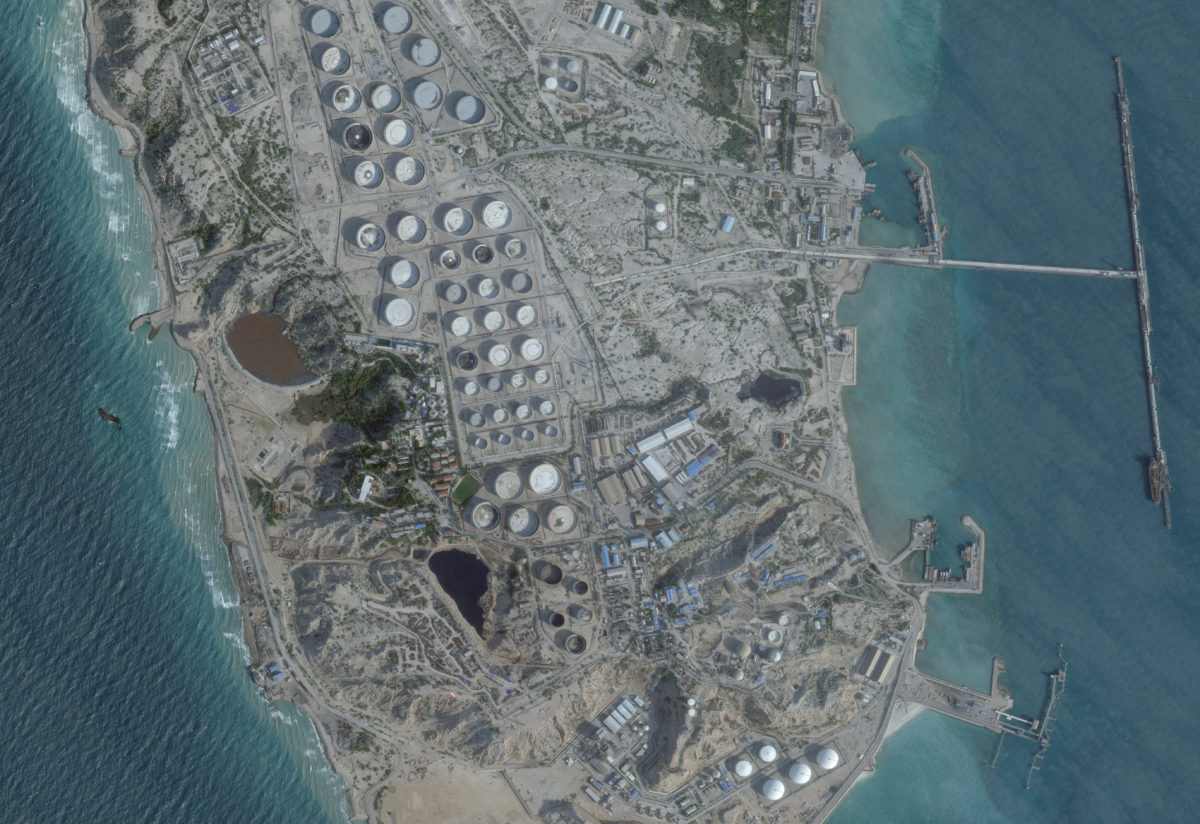
Iran could completely stop pumping oil to the islands immediately, making the amount of US oil recovered only a small part of the inventory. Meanwhile, military spending and political risks are huge.
Many analysts suggest that a naval blockade is even more effective and less risky than an occupation.
Logistics problem
The biggest difficulty is not conquering, but maintaining the force.
In temperatures that can reach 45 degrees Celsius, each soldier needs 3-4 liters of water/day. If deploying 2,000 troops, the US must transport thousands of liters of water per day, not to mention ammunition, food and medical equipment.
All must cross the Persian Gulf - an area within Iran's attack range. Evacuating wounded soldiers also becomes an extremely difficult problem when supplies are always threatened.
More political gambling than military
RT military commentator Stanislav Krapivnik commented that the idea of conquering Kharg Island has many political colors: Creating a "symbolic victory" in the context of US public opinion not supporting war.
But militarily, this is a high-risk operation, with limited benefits and easy to drag the US into a prolonged conflict.
In the worst-case scenario, Kharg could become a "new swamp" for the US in the Middle East.


