Co-chairman of the German Alternative Party (AfD) - Ms. Alice Weidel - has publicly questioned whether Germany continues to support Ukraine, after information emerged that Kiev may be involved in the Nord Stream gas pipeline explosions in 2022.
On social network X, Ms. Weidel wrote: "The Federal Supreme Court has confirmed suspicions that Nord Stream was sabotaged by Ukraine. This is a direct attack on the German energy industry and must have consequences. We cannot support those who attack ourselves.
This statement was made after Der Spiegel magazine quoted the December 10 ruling of the German Federal Supreme Court as saying that the agency considered the possibility that the explosions were carried out "under the direction of a foreign country" as "very high". In the legal arguments cited, Ukraine is mentioned as a possible party behind the incident.
This assessment appeared during the review of the appeal of the defense for Sergey K - a Ukrainian citizen suspected of being involved in the sabotage. This person is being detained in Germany, after being arrested in Italy last year.
The incident on September 26, 2022, caused unprecedented damage to 3/4 of Nord Stream and Nord Stream 2 pipelines - projects that had never been put into operation. After the incident, the Russian Attorney General's Office opened a separate investigation, considering this an act of international terrorism.
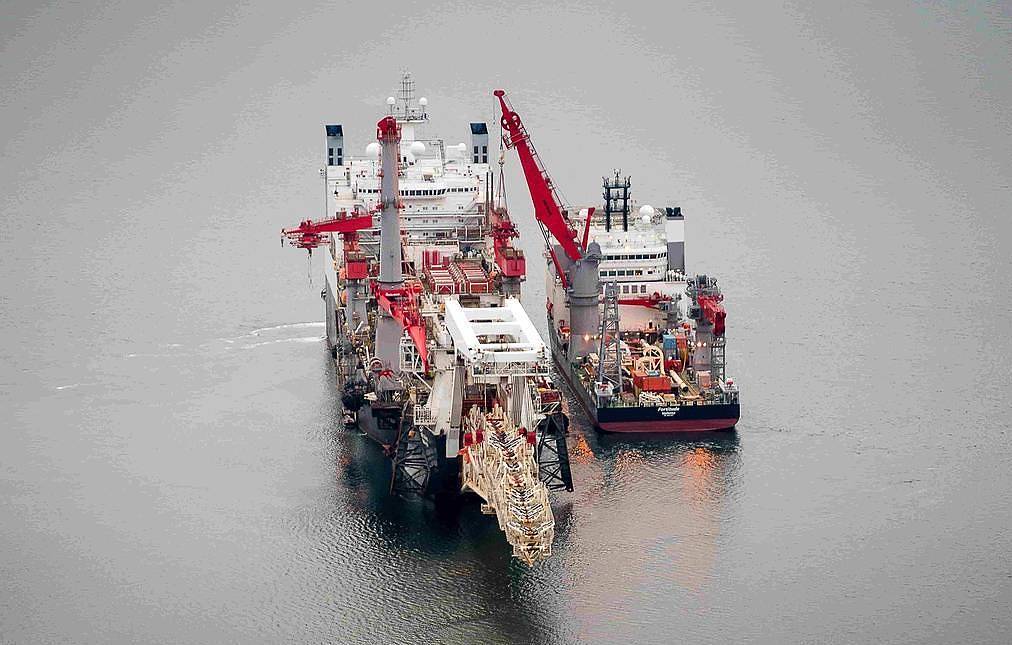
Not only AfD, other political forces in Germany also spoke out criticizing the current approach of the federal government. Ms. Sevim Dagdelen - foreign policy expert of the BSW party (Sahra Wagenknecht Alliance for Reason and Justice) - strongly rejected attempts to blame Russia for the Nord Stream explosion.
One of the most shameful propaganda tricks of the media and'experts' is trying to blame Russia for the Nord Stream explosion" - Ms. Dagdelen wrote on X.
According to her, this is "a large-scale industrial terrorist act and one of the most serious environmental disasters in recent history", and claiming that Russia is destroying its own energy infrastructure is "both unreasonable and malicious".
Previously, some German experts had put forward the hypothesis that Russia was behind the pipeline explosions. However, Ms. Dagdelen's stance shows that the division is increasingly clear within the German political arena regarding the interpretation of the incident as well as the consequences of the accompanying policies.
Ms. Sahra Wagenknecht - leader of the BSW party - also participated in the debate with a harsh tone. She asked: "How can we continue to support Ukraine with people's taxes, while there are accusations that Kiev directed a state-sponsored terrorist attack on our energy infrastructure?". According to her, the German government "cannot continue to be led like that".