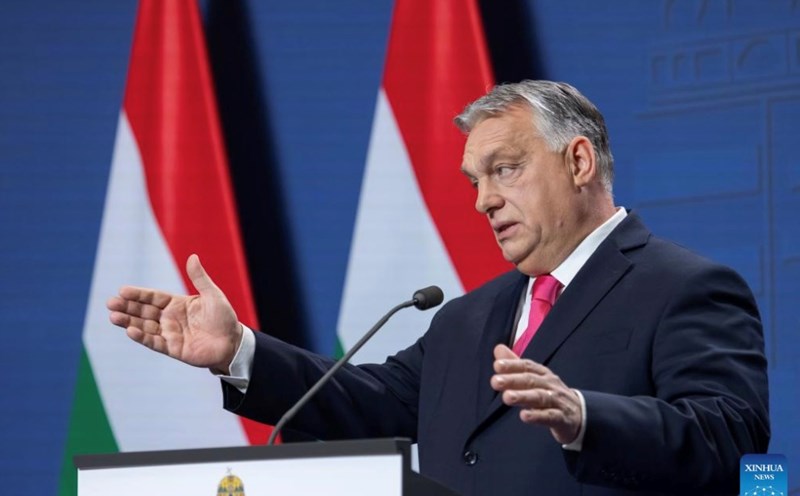
When more than 98% of the votes were counted at midnight local time, the political picture in Hungary became clear: Prime Minister Viktor Orban's 16-year continuous rule officially ended after a "seasonic" defeat.
Mr. Orban's ruling Fidesz party only won about 55/199 seats in Parliament - an unimaginable drop compared to the 135 seats they hold. This is the first time after 4 consecutive victorious elections that this conservative leader has had to accept leaving the highest power position.
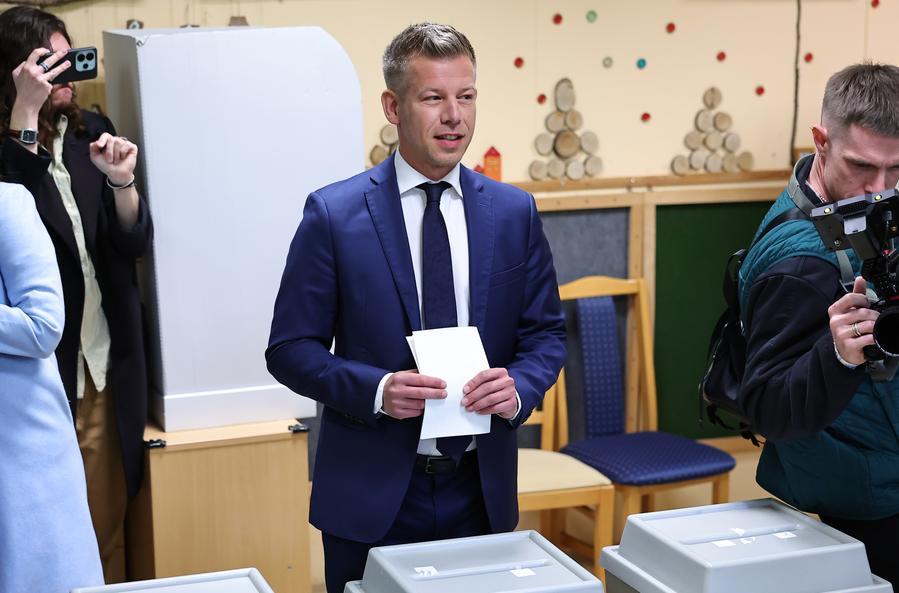
Conversely, the Tisza party - a newly emerging opposition force - created a "political earthquake" when it won up to 138 seats, enough to control Parliament. The head of this party, Mr. Peter Magyar, quickly became the focus of attention when preparing to assume the role of prime minister.
Peter Magyar's victory was warmly welcomed in Brussels - where EU leaders have long had tense relations with Mr. Orban's government.
European Commission President Ursula von der Leyen declared: "Hungary has chosen Europe", emphasizing that this change will help strengthen the bloc's common strength.
Meanwhile, European Parliament President Roberta Metsola affirmed that Hungary "belongs to the heart of Europe", while French President Emmanuel Macron considers this a victory for the values of the EU.
A series of other European leaders such as German Chancellor Friedrich Merz, British Prime Minister Keir Starmer or Polish Prime Minister Donald Tusk have sent congratulations, calling this a "historic moment" for European democracy.
During his 16-year term in power, Viktor Orban has repeatedly confronted the EU on issues such as migration law, judicial reform, or his stance on the conflict in Ukraine. He often used veto power to slow down or hinder the bloc's important decisions.
In particular, his close relationship with Russian President Vladimir Putin makes many Hungarian voters dissatisfied in the context of increasingly tense European geopolitics.
Many people believe that the country has "left Europe". Writer András Petöcz, a voter in Budapest, frankly said: "We need to return to Europe".
In his victorious speech in Budapest, Mr. Peter Magyar pledged to bring Hungary "back to European orbit" after years of tension.
He declared that the new government will reintegrate the EU judicial system, while affirming that Hungary will be a "strong ally" of both the EU and NATO.
Hungary has been in Europe for 1,000 years and will continue to be," he emphasized in front of a crowd of supporters, many waving EU flags next to the Hungarian flag.
According to the plan, Mr. Magyar's first visit as prime minister will be to Poland, then Austria and finally Brussels - a clear message about foreign policy priorities.
The results of this election are not just a simple change of power, but are also considered a strategic turning point for the entire Europe.
After many years of being seen as a "rebellious side" in the EU, Hungary can now return to the role of a more consensual partner. This is especially important in the context that Europe is facing a series of challenges from security, energy to regional conflict.