Theo kết quả nghiên cứu được công bố trên tạp chí Communications Earth & Environment, lớp vỏ Trái đất ở khu vực Tây Nam Cực - nơi có sông băng Thwaites hay sông băng ngày tận thế - nằm ở độ sâu chỉ từ 16km đến 24km thay vì độ sâu 40km như ở Đông Nam Cực
Điều này dẫn đến việc sông băng Thwaites bị ảnh hưởng bởi ''dòng địa nhiệt lên đến 150 milliwatt trên 1 mét vuông'' - tác giả chính của nghiên cứu, Tiến sĩ Ricarda Dziadek, cho biết trong một tuyên bố.
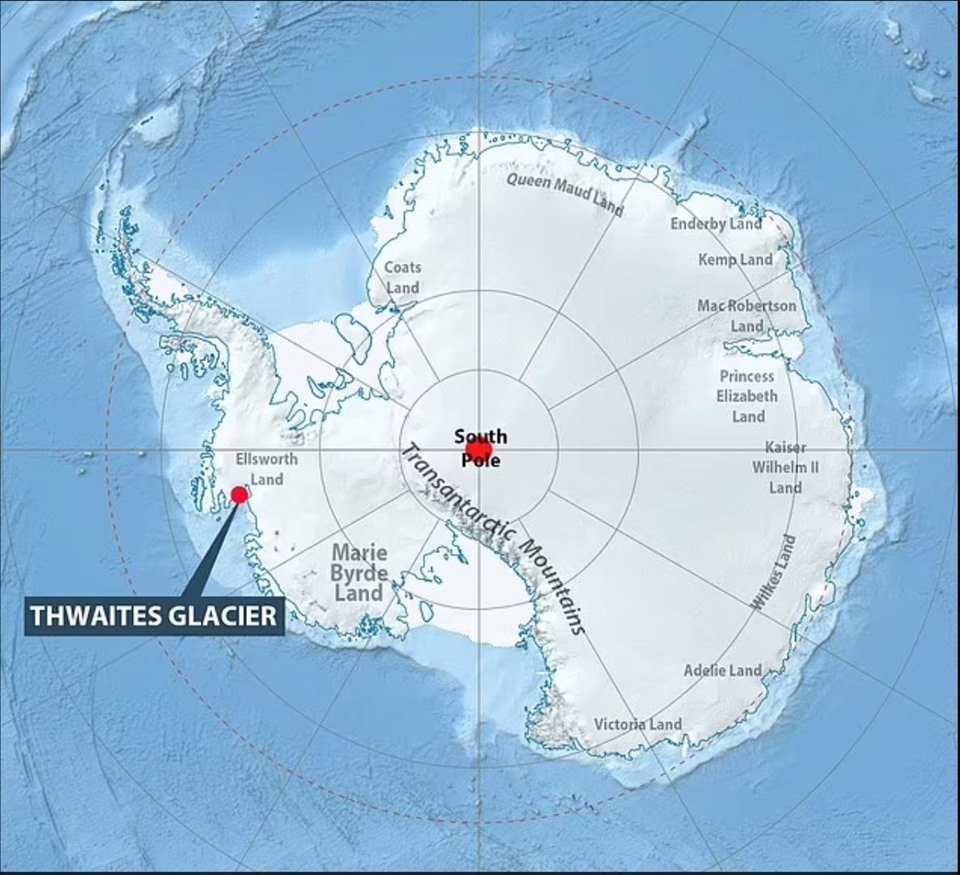
Theo BBC, sông băng Thwaites đóng góp khoảng 4% vào mực nước biển dâng hàng năm và hiện được cho là mất đi 80 tỉ tấn băng mỗi năm.
Kể từ năm 1980, sông băng này đã mất ít nhất 600 tỉ tấn băng, theo một phân tích năm 2017 do New York Times thực hiện, sử dụng dữ liệu từ NASA.
Live Science cho hay, một số băng biển bị mất đi nhanh chóng có thể là do các con sông ẩn dưới lớp băng, nhưng phần lớn liên quan đến biến đổi khí hậu và nhiệt độ Trái đất nóng lên.
Các nhà nghiên cứu đã xem xét tập dữ liệu trường địa từ ở khu vực Tây Nam Cực để tạo ra bản đồ dòng địa nhiệt mới.
Những điều này cho thấy yếu tố nóng lên của Trái đất quan trọng như thế nào đối với sông băng và tan chảy của băng sau đó, ngay cả khi tác động chính xác vẫn chưa hiện rõ.
Đồng tác giả và nhà địa vật lý của Viện Nghiên cứu Biển và Địa cực, Tiến sĩ Karsten Gohl, giải thích: ''Nhiệt độ ở bên dưới của sông băng phụ thuộc vào một số yếu tố - chẳng hạn như liệu mặt đất có bao gồm đá rắn chắc hay là lớp trầm tích bão hòa nước dày hàng mét''.
''Nước dẫn nhiệt rất tốt. Nhưng nó cũng có thể đẩy nhiệt năng đi xa trước khi nó chạm đến đáy sông băng'' - Tiến sĩ Karsten Gohl lưu ý.
Vào năm 2020, các nhà nghiên cứu đã thu được những hình ảnh đầu tiên về mặt dưới của sông băng, cho thấy vùng nước ấm hỗn loạn dưới lớp băng đang gây ra ''một cuộc rút lui không thể ngăn chặn''.
Nhiệt độ của vỏ Trái đất có thể thay đổi tùy theo vị trí, nhưng nó có thể dao động từ 200 độ C đến 400 độ C tại điểm tiếp giáp, theo National Geographic .
Nhóm nghiên cứu phát hiện ra rằng luồng nhiệt từ vỏ Trái đất cần phải được xem xét nghiêm túc trước tình trạng tan chảy nhanh chóng của sông băng.
Tiến sĩ Gohl nói thêm: ''Một lượng lớn nhiệt địa nhiệt có thể dẫn đến việc đáy sông băng không còn đóng băng hoàn toàn hoặc hình thành một lớp nước vĩnh viễn trên bề mặt của nó''.
Cả hai điều này đều sẽ dẫn đến việc các khối băng trượt dễ dàng hơn trên mặt đất. Ngoài ra, nếu tác dụng kìm hãm của thềm băng bị mất, như tình trạng đang được quan sát thấy ở Tây Nam Cực, dòng chảy của các sông băng có thể tăng tốc đáng kể do nhiệt địa nhiệt tăng lên''.
Lưu vực khổng lồ chứa lượng nước có thể khiến mực nước biển dâng cao thêm hơn 1,8m và sự tan chảy đáng kể của băng có khả năng biến sông băng Thwaites trở thành đúng tên gọi ''ngày tận thế'' của nó.