
An infrastructure project that seemed to have to be abandoned has become a new milestone of modern construction technology, when China successfully carried out an unprecedented " reunion" between two giant tunnel mining machines under the Yangtze River with a vertical error of only 2mm.
This technical miracle takes place in the Yangtze-Jiang River tunnel project (Giangyin - Jingjiang), 6.4km long, in Jiangsu province. This is a high-standard road tunnel, designed with 2 tunnel pipes, each pipe with 6 lanes, connecting 2 large industrial parks on the 2 largest riverbanks of China.
In February 2023, when the project had been constructed for more than half a stage, a sudden incident occurred at a depth of 54m under the riverbed. A Shield Tunneling Machine (STM), up to 16m in diameter, suddenly stopped operating completely. Unable to be repaired, unable to be pulled back, the machine worth about 50 million USD was "buried alive" right under the main maritime route of the Yangtze River.
If abandoned, the project risks becoming one of China's biggest infrastructure failures in the past decade.
Instead of accepting losses, Chinese engineers chose an unprecedented option: Bringing a second tunnel excavator from the opposite bank into the ground to "rescue" the stuck machine, by directly connecting two STMs at the bottom of the river.
After many discussions with the participation of members of the Chinese Academy of Technology, a bold plan was approved. To ensure safety for the junction point, the technical team used artificial ice-freezing technology, creating a nearly 4m thick "ice wall", with an average temperature of minus 13 degrees Celsius, covering the entire complex area.
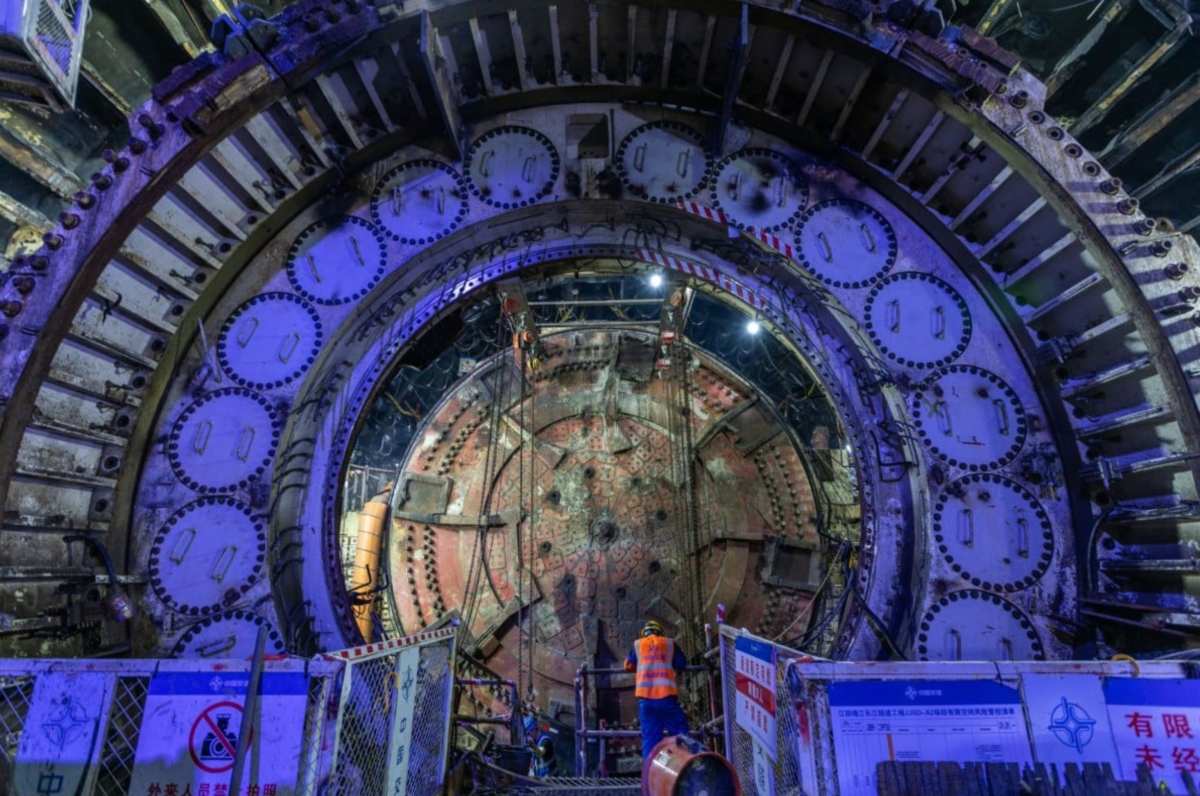
The biggest challenge, according to engineer Yao Zhanhu of China Road Construction Group No. 1, is controlling the second excavator to move accurately in extremely complex geological conditions.
Six months after the incident, the second STM began its journey from the opposite bank. A real-time navigation system was developed specifically for this mission, combining cameras, sensors and high-precision geodesic devices, allowing continuous tracking of the location, direction and deviation of the excavator in the ground.
On July 21 last year, two giant machines met accurately at the bottom of the Yangtze River. The results far exceeded all expectations: Horizontal deviation equal to 0, vertical deviation only 2mm, much lower than the allowed threshold of 10cm according to the design.
But that is just the beginning. The next stage is to fix and reinforce the connecting point in conditions of saturated sand and water. The group of engineers applied the "fertilizer pump first, freeze later" method, drilling 363 pipes from inside 2 excavators to reinforce the soil foundation, before creating a protective freezing soil layer.
The final stage of dismantling 2 STMs is even more difficult. Due to being stuck in head-on collision, each machine must be cut into about 2,000 parts, each part weighing nearly 1 ton. The entire process is done manually to avoid breaking the heat balance of the protective ice layer.
By the end of November, the underwater tunnel section was completed, marking the completion of the main structure of the entire route after 5 years of construction.
Expected to be put into operation from mid-year, the Giang Am - Tinh Giang tunnel will be the road tunnel with the largest diameter in China and with the highest water pressure resistance.


