
Foundation for development
In the 80-year journey of Vietnamese sports, athletics has always played an important foundational role. Over the past decade, this sport has recorded clear progress in the regional arena and gradually approached the continent.
According to expert - Dr. Duong Duc Thuy, the period of 10-12 years recently marked a significant breakthrough of Vietnamese athletics when investment was expanded into many content groups.
SEA Games achievements continuously maintained at a high level with 17-20 gold medals, even at times exceeding the milestone of 20 gold medals. In addition, Vietnamese athletics has won gold medals at the Asian Games (ASIAD), meeting Olympic standards in some events, showing a change in development orientation.
This progress comes from clearly defining strengths and adjusting strategies. Instead of just focusing on the SEA Games goal, the sports industry has begun to move towards higher standards.
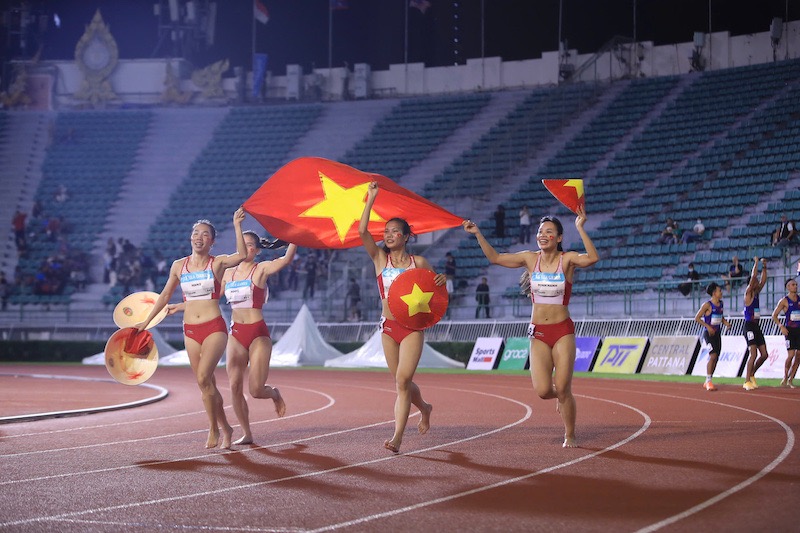
However, according to expert Duong Duc Thuy, development is still affected by objective factors, especially limitations in stature in some content groups such as throwing and pushing.
Vietnamese athletics in the past 10-12 years has had a strong breakthrough. In that process, we have invested in many sports groups. When we were working, we advised the leaders of the General Department of Sports and Physical Training (now the Vietnamese Department of Sports and Physical Training) that we must clearly analyze the strengths and weaknesses of Vietnamese athletics. It is necessary to identify events with opportunities and especially to aim for a higher level, not simply to get medals at the SEA Games," Mr. Thuy said.
Besides strategic factors, the appearance of outstanding individuals also contributes to creating achievements. Athletes such as Nguyen Thi Oanh or faces in the middle-distance event group have helped the team maintain its position in the region.
However, Mr. Duong Duc Thuy said that the current success is a combination of personal and system factors, in which the training system is still limited. Initial selection and training have not strongly applied science and technology.
Access to international documents and professional exchanges with foreign experts are still limited, partly due to foreign language barriers of coaches. This directly affects the quality of long-term training.
At the regional level, Vietnamese athletics currently maintains its position in the leading group in Southeast Asia. But if considering the quality of achievements, the gap with countries like Thailand, Indonesia or the Philippines is still there. Some previous strengths, especially mid-distance, are showing signs of stagnation, posing the requirement to adjust development strategies.

Long-term development problem
Despite maintaining high achievements at the SEA Games, Vietnamese athletics still faces many challenges when aiming for bigger goals such as ASIAD or the Olympics.
According to expert Duong Duc Thuy's assessment, part of the limitation lies in the system of selecting and training young athletes. Currently, the discovery of talents does not have a clear system of criteria on physical fitness and expertise. Indicators such as height, stride, lifespan... have not been applied synchronously to orient athletes according to each content group. This makes the training process unscientific and difficult to create breakthroughs.
Facilities in many localities also do not meet requirements. The number of integrated covered fields is small, many fields do not meet standards, even national training centers... directly affecting technical content such as high jump, long jump or pole vault.
The lack of synchronization in the training selection system from the grassroots level causes the quality of input human resources of the national team to be lacking and unstable.
According to Dr. Duong Duc Thuy, another issue is "yin prospers, yang declines" - meaning the mismatch in the chapter ratio. Medals of Vietnamese athletics currently mainly come from many women's events, while the group of men's events is still limited.
Even in women's sports, achievements are mainly in running events and depend heavily on some individuals. The technical sports group has not yet recovered from the golden age of Bui Thi Nhung (high jump), Hue Hoa, Vu Thi Men (triple jump), Bui Thi Thu Thao (long jump)...
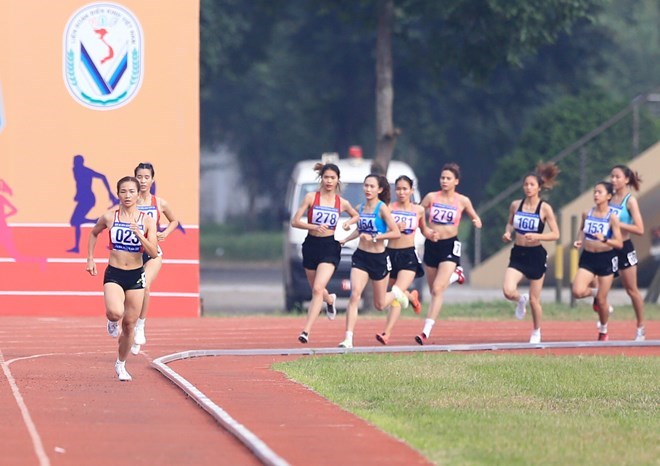
The group of combined sports is almost devoid of high-level athletes. This is the clearest reflection of youth training, which is: developing diverse motor skills in the initial stage for young talented athletes.
This shows the urgent need to build a successor force. The discovery and training of young athletes needs to be implemented early, with a clear roadmap from 12-13 years old to aim for long-term goals such as the Olympics.
Regarding professional orientation, expert Duong Duc Thuy believes that Vietnamese athletics needs to focus on content groups suitable for actual conditions, especially technical groups such as long jump, triple jump or high jump. These are contents that require analytical - synthetic thinking of athletes and do not require much investment in facilities, and at the same time have the ability to create breakthroughs if invested in the right direction.
In addition, the role of sports science, nutrition and rehabilitation needs to be enhanced. Instead of just increasing the diet, it is necessary to pay attention to nutritional quality and absorption capacity. At the same time, rehabilitation and injury prevention programs must be integrated into the training curriculum.
In the context that countries in the region are improving their qualifications, Vietnamese athletics needs to have comprehensive adjustments, from investment strategies to training methods. The goal is not only to maintain its position at the SEA Games, but also to aim for Olympic standards and achievements at the Asian Games.
Towards the next 10 years, the rise of Vietnamese athletics depends on the ability to build a synchronous training system, select the right key content groups and strengthen international cooperation. These are decisive factors for the sport to continue to develop and enhance its position on the regional and world map.


