
The third-place match at the World Cup is often viewed through many different perspectives. For some people, this is a match that no team wants to participate in. For others, it is considered the most famous consolation match in the world, or an opportunity for players to accumulate more personal statistics.
While some major tournaments do not host third-place matches, most World Cups still maintain them, even though not everyone is interested. There are a few reasons.
First, each match in the World Cup finals brings additional revenue to FIFA and the host city, including ticket sales.
The third-place match also helped fill the schedule gap between the semi-finals and the finals, giving broadcasters a match with high viewership ratings for broadcasting (and advertising).
Next, this match has a much larger number of points than regular friendly matches. The victory could help raise the rankings in the world rankings, which could affect seeded positions in regional tournaments and the draw for the next World Cup qualifiers.
The honor factor is also quite important for many teams, as it gives one of the two teams the opportunity to end the tournament with the joy of victory.
When did the third-place match start?
From 1934 (the second World Cup), the bronze medal match was scheduled, ending with Germany's 3-2 victory over Austria.
At the first World Cup in 1930, the 2 teams that lost in the semi-finals, the USA and Yugoslavia, did not compete for third place but were decided by goal difference (the USA ranked above).
The match continued to be held in 1938 but was cancelled in 1950 (the first World Cup after World War II) because the tournament applied a round-robin format. By 1954, this match was restored and became a tradition since then.
Conversely, the European Championship (EURO) abandoned the 3-4 match after 1980.
The winning team in the third-place match will receive a bronze medal (in 1930 alone, both teams were awarded medals).
Germany (who has won the World Cup 4 times) is the country with the most bronze medals with 4 times, most recently in 2010.
In terms of individual awards, this match provides more opportunities for players to pursue the Golden Boot title. Golden Boot winners such as Eusebio (1966), Toto Schillaci (1990), Davor Suker (1998) and Thomas Muller (2010) have all improved their scoring record thanks to the third-place match.
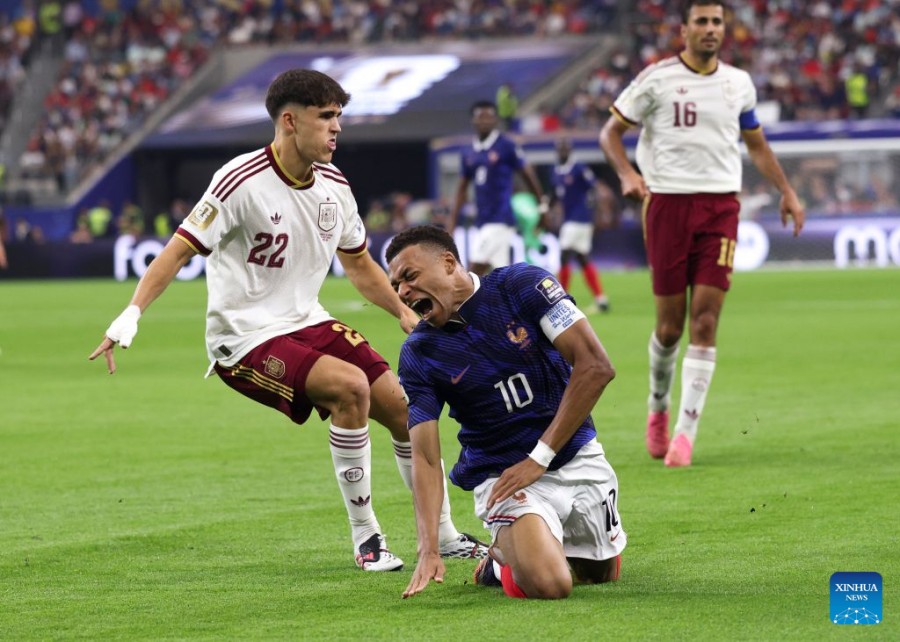
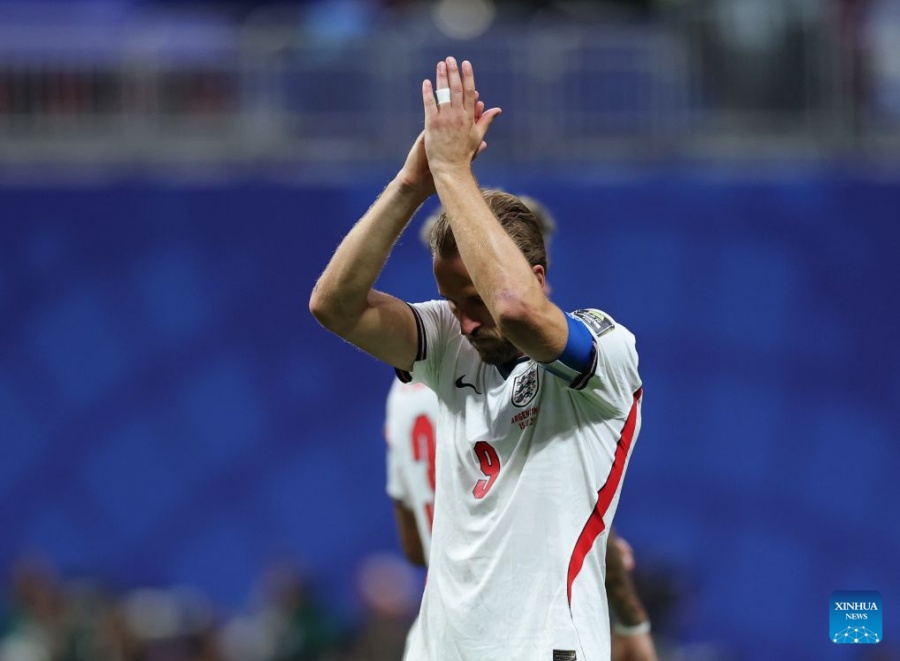
This year, this will be the last chance for Kylian Mbappe and Harry Kane to increase their hopes of winning the Golden Shoe.
Many coaches, including Louis van Gaal, Gareth Southgate, or former striker Alan Shearer, do not like the third-place match, even though it has a long history. The reason is that it is meaningless, easily turning the team into a loser when they return even though the whole tournament played excellently...
For those reasons, not every team approached this match seriously. For example, the French team did not use captain Michel Platini in the third-place matches at the 1982 and 1986 World Cups.
Coaches also often changed the starting lineup compared to the semi-final to give opportunities to reserve players who are rarely fielded.
However, for some teams, winning a place on the medal podium is a great pride. Typically, Sweden in 1994, they had a miraculous journey to the semi-finals and then destroyed Bulgaria 4-0 in the third-place match.
Or Croatia winning third place right in their first time participating in the World Cup as an independent nation in 1998 is also a historic feat celebrated enthusiastically in their home country.
For neutral audiences, the third-place match is usually a goal feast, when 2 or more goals are scored in every match since Poland's 1-0 victory over Brazil in 1974.
The 2 teams that lost in the semi-finals of the 2026 World Cup, France and England, will face off for a bronze medal at Hard Rock Stadium in Miami at 4:00 AM on July 19 (Vietnam time).


