
Domestic pepper prices: Increase adjustment week
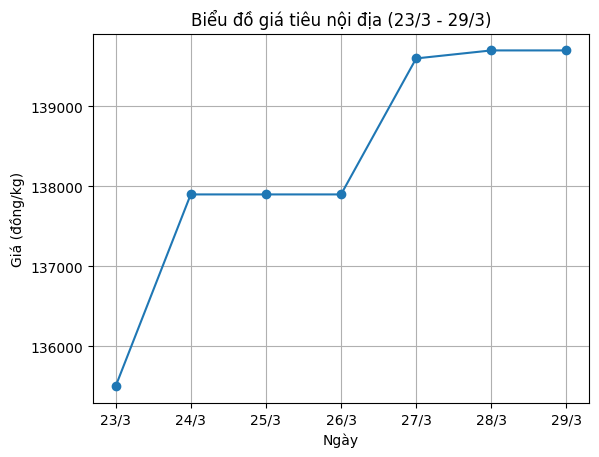
Today (March 29), domestic pepper prices traded in the range of 139,000 - 140,50 VND/kg, up from 4,000 - 4,500 VND/kg.
At the end of last week, pepper prices in Dak Lak and Lam Dong recorded the highest increase of 4,500 VND/kg, bringing the purchase price to 140,500 VND/kg. This is also the highest price on the market today.
The remaining localities simultaneously increased by 4,000 VND/kg, with prices in Ho Chi Minh City reaching 139,500 VND/kg, while Gia Lai and Dong Nai provinces are commonly at 139,000 VND/kg.
World pepper prices: Increase
According to the International Pepper Association (IPC), pepper prices in leading producing countries recorded an upward trend last week.
Indonesian black pepper closed last week at 6.994 USD/ton, up 11 USD/ton compared to the previous week. At the same time as the survey, Indonesian white pepper prices increased by 14 USD/ton last week, reaching 9,274 USD/ton.
Brazilian black pepper ASTA 570 decreased by 0.82% (about 50 USD/ton), down to 6,050 USD/ton. Meanwhile, black and white pepper prices in Malaysia recorded the strongest adjustment, increasing by 200 USD/ton, to 9,300 USD/ton and 12,200 USD/ton.
In the opposite direction, in Vietnam, the export price of black pepper remains stable in the range of 6,300-6,400 USD/ton for types 500 g/l and 550 g/l. The price of white pepper in Vietnam remains stable at 9,050 USD/ton.
Assessments and forecasts
Domestic pepper prices decreased by 1,500-4,000 VND/kg in February and continued to lose another 10,000-11,000 VND/kg in the first 20 days of March, due to the impact of tensions in the Middle East and increased new supply.
Recovering after a week of deep decline, losing 8,500 VND/kg, domestic pepper prices for the week ended March at nearly 140,000 VND/kg. Global pepper supply is gradually narrowing due to farmers reducing investment and switching to other crops during the low price period, along with the impact of extreme weather and epidemics reducing yields. In Vietnam, pepper production this year may decrease by about 12-15% compared to last year due to unfavorable weather and aging pepper gardens.


