
In the context that many gardeners are still struggling to find a way out for Cadmium, correctly identifying the origin and mastering the technology of "isolating" toxins from the ground is considered the golden key to protecting this billion-dollar industry.
Decoding" Cadmium toxin
Many people mistakenly believe that Cadmium is an unforced natural disaster factor. However, according to Master Nguyen Phuoc Tuyen, former Director of the Dong Thap Provincial Agricultural Extension Center, Cadmium does not naturally appear in such large concentrations that tree roots absorb strongly as it does now.
Traces" of this heavy metal mostly originate from input materials brought down to the ground by humans during excessive intensive farming.
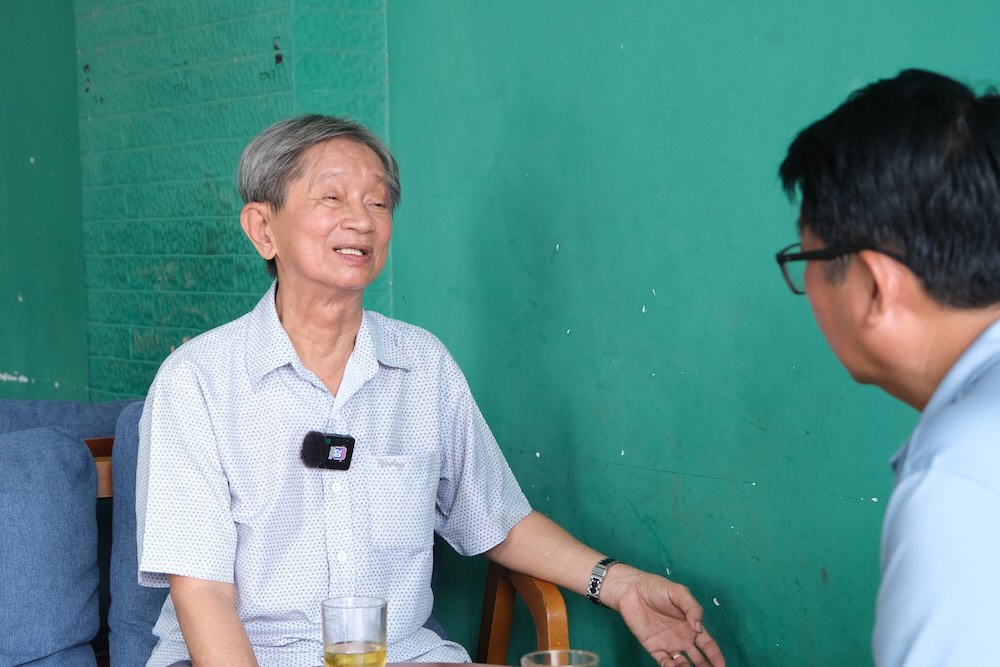
Through practical research, the Master pointed out 3 core causes of soil contamination.
First, impurities accumulate from inorganic fertilizers: In nature, phosphate ore used to produce phosphate fertilizer always contains cadmium impurities. When gardeners fertilize continuously for many years, this heavy metal will gradually accumulate and "accumulate" in the soil. In addition, poor quality NPK fertilizer lines, unprocessed industrial chicken manure or cheap waste mud are also direct sources that exacerbate this situation.
Second, the phenomenon of soil acidification: This is considered the most dangerous factor. The abuse of chemical fertilizers for a long time causes the pH of the soil to drop deeply below 5.5 (acidification). In a highly acidic environment, Cadmium from a fixed state will be "released" into a freely soluble ion in the soil solution. In this flexible state, durian roots absorb them extremely easily. This phenomenon is common in the basalt soil of the Central Highlands and alum soil areas in the Mekong Delta.
Third, soil ecosystem degradation: Excessive "plant-pressure" farming makes the soil calloused, organic-poor and seriously degrades the indigenous microbiome. When the natural organic buffer layer is lost, the soil no longer has the ability to retain and fix heavy metals. Encountering extreme weather such as prolonged flooding or drought, coupled with a lack of natural antagonists such as Zinc, Iron and Calcium, the durian root system will absorb Cadmium even more strongly.
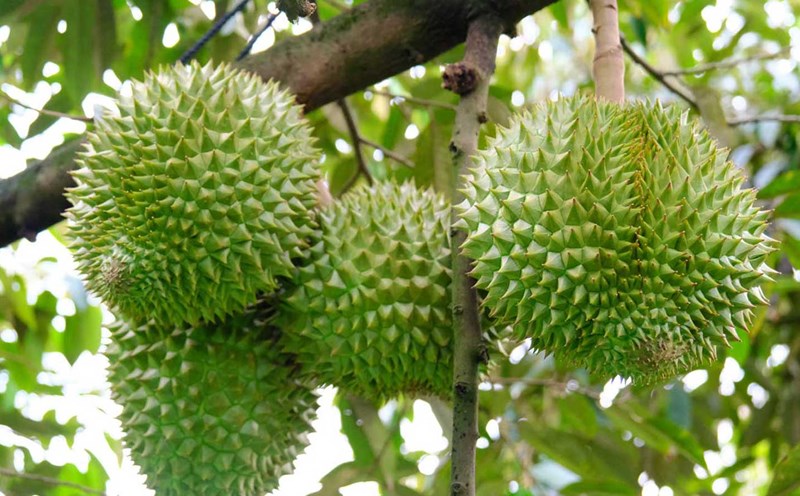
According to Master Tuyen, the survey results for the period 2022 - 2024 by specialized agencies show that all three largest durian growing regions in the country are facing the accumulation of Cadmium in soil and fruit.
A 3-year experimental model in a 4-year-old durian garden has shown very clear results. In models using fertilizers with high Cadmium content, the amount of Cadmium accumulated in the soil increases sharply over time, leading to residues in the fruit tissue far exceeding the international safety threshold and the risk of being warned or returned. Conversely, in models that strictly control input materials and say no to fertilizer sources containing Cadmium, both soil and fruit are maintained at a safe level and meet export standards" - Mr. Tuyen emphasized.
Turn the tide" with heavy metal isolation technology
According to the former Director of the Dong Thap Provincial Agricultural Extension Center, completely removing Cadmium from the soil in a short time is impossible and extremely costly. However, scientists have proven that it is entirely possible to apply the "immobilization" strategy - that is, locking this metal in a hard-to-dissolve form so that tree roots cannot absorb it.
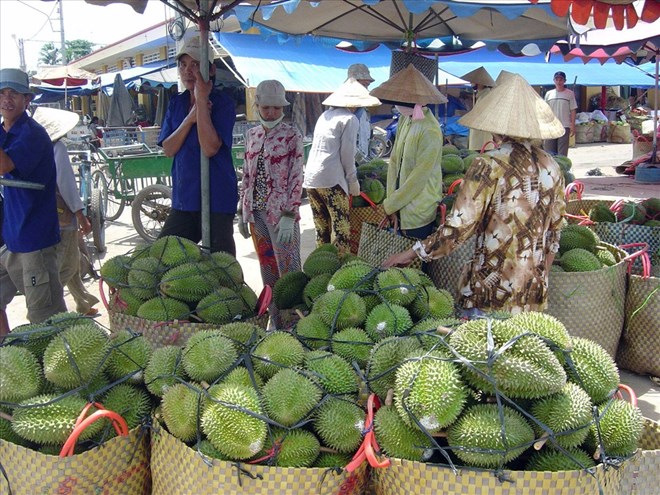
To reverse the situation and protect durian from the risk of poisoning, gardeners need to synchronously implement the following 3 core technical solutions:
First, applying biochar (Biochar) and humus-rich organic carbon. Biochar acts as a "natural filter" thanks to its porous hollow structure and strong negative absorption capacity, helping to trap and hold Cadmium in the soil. At the same time, humus-rich organic compounds (such as humic acid, fulvic acid) act as "biological locks", minimizing the conversion of heavy metals to soluble forms, while stimulating beneficial microorganisms to develop to improve soil structure.
Second, apply lime combined with decomposed organic fertilizer. Fertilizing lime is the fastest solution to raise the pH of the soil to a safe level (from 6.0 to 6.5), pressing Cadmium back to a harmless precipitation state. In addition, the calcium element in lime will compete for a direct absorption position with Cadmium at the roots, making the roots preferential to absorb calcium and "reject" Cadmium. However, if only applying lime individually, calcium is very easily washed away by rain or irrigation water, causing the soil to quickly become sour again. Therefore, it is mandatory to combine lime fertilization with decomposed organic fertilizer to keep the humus layer of calcium stable for a long time in the topsoil layer, while regenerating soil structure and improving plant health.
Third, implement the "3 no" strategy for Vietnamese durian. To go the long way and penetrate deeply into demanding markets, especially in the context of market prices having many fluctuations, the entire industry needs to strongly shift to a transparent production model according to the "3 no" principle: Not exceeding the threshold, by absolutely controlling to avoid residues of heavy metals and pesticides exceeding the permitted level. Not abusing, allowing epidemics to break out with chemical drugs; instead, prioritize biological solutions, strictly manage input materials and transparentize farming logs. And not fragmentation: Eliminate small-scale production; it is mandatory to closely link according to the value chain between farmers, cooperatives and official export enterprises.
Converting from "removing" to "locking down" Cadmium from the root is not just a simple technical solution, but a vital farming mindset for Vietnamese durian to maintain its position on the world agricultural map.


