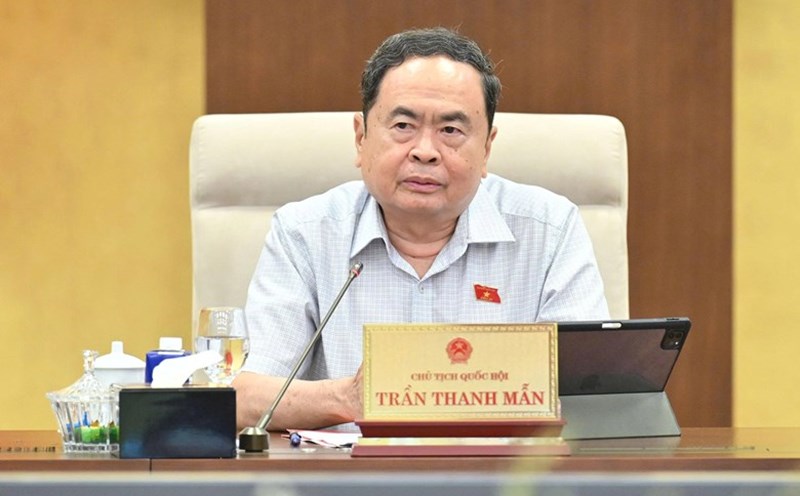
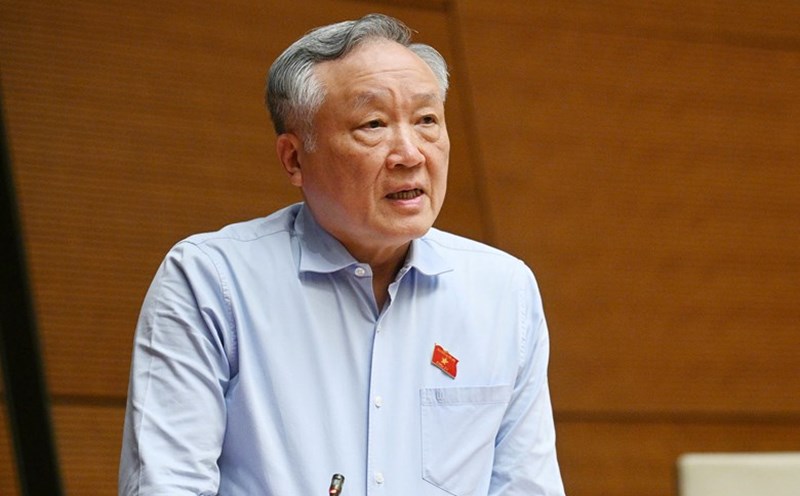
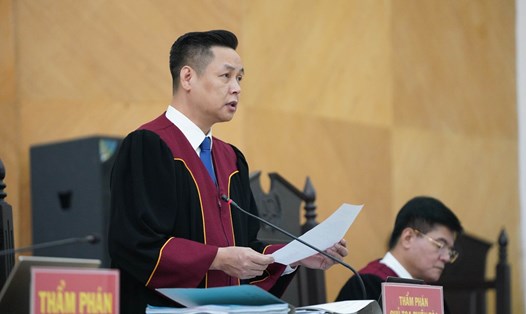
On the afternoon of December 4, Chief Justice of the Supreme People's Court (SPC) Nguyen Van Quang presented the proposal for the Specialized Court Law at the International Financial Center.
The draft law stipulates the principles of organization and operation of specialized courts, including:
1. Independence according to the authority of the trial;
2. Judges are independent and only follow the law;
3. Ensure equal rights before the law and the Court;
4. Resolve the case fairly, transparently, impartially, objectively, quickly and effectively;
5. The first instance and appellate trial regime is guaranteed;
6. Conducting debate in court;
7. Flexible and specific litigation procedures according to international standards and practices;
8. The court will try publicly, except in cases of closed trial as prescribed by law;
9. Ensuring the right of self-determination of the parties.
The draft law stipulates basic procedures for litigation to resolve cases at the Court; the specific order and procedures for litigation will be specified in detail by the People's Court in the litigation rules of the specialized Court.
Regulate that the parties are allowed to negotiate the choice of applying foreign law, international trade practices, and international treaties to which Vietnam is not a member to resolve disputes when at least one of the parties is a foreign individual or organization.
Regarding the organization of a specialized Court, establish a specialized Court in Ho Chi Minh City, with the authority to resolve disputes and requests arising at the International Financial Center in both Ho Chi Minh City and Da Nang City.
The organizational structure of the specialized Court includes: First instance Court; Appellate Court; Serving apparatus. The specialized court has Chief Justice, Deputy Chief Justice, Chief Justice, Deputy Chief Justice, Judge, Secretary of the Court, other civil servants and employees.
Special Court judges are appointed by the President from the following sources:
First, foreigners;
Second, Vietnamese citizens are civil servants, lawyers, arbitrators, university lecturers, scientists, and experts;
Third, court judge.
Conditions, standards, terms and other issues are specifically stipulated in Article 9 and other provisions of the draft law.
For foreign judges, Vietnamese judges from experts and lawyers will work at specialized courts under contract regimes and will be paid according to the case of participating in the trial and settlement.
According to the submission, there are two different opinions on the authority to appoint Chief Justice of the Special Court.
The first view is that the Chief Justice of the Court is a specialized court appointed, dismissed, or dismissed by the Chief Justice of the Supreme People's Court.
The second viewpoint is that the Chief Justice of the Court is a specialized judge appointed by the President, dismissed from office, and dismissed from office.
The TANDTC agreed with the first view. This regulation ensures consistency and synchronization in the authority of the Chief Justice of the Supreme People's Court in appointing management leadership positions under the People's Court system, in line with the current organizational model.
The regulation that the President appoints Chief Justice of a specialized court such as the appointment of Deputy Chief Justice of the People's Court is not in accordance with the structure, organization of the apparatus as well as the position and role of this position in the People's Court system.
Regulations on the language and writing used at the specialized court in English or English with a Vietnamese translation; stipulate that the requesting party is not accepted by the court to pay court fees, fees, litigation costs, reasonable costs for lawyers and other costs to resolve the case, unless the parties have another agreement.
The fees, charges, litigation costs, the collection, submission, management, and use of fees, charges, and litigation costs at specialized courts are implemented according to the provisions of the General Confiscation of Shareholders after reaching an agreement with the Ministry of Finance.