
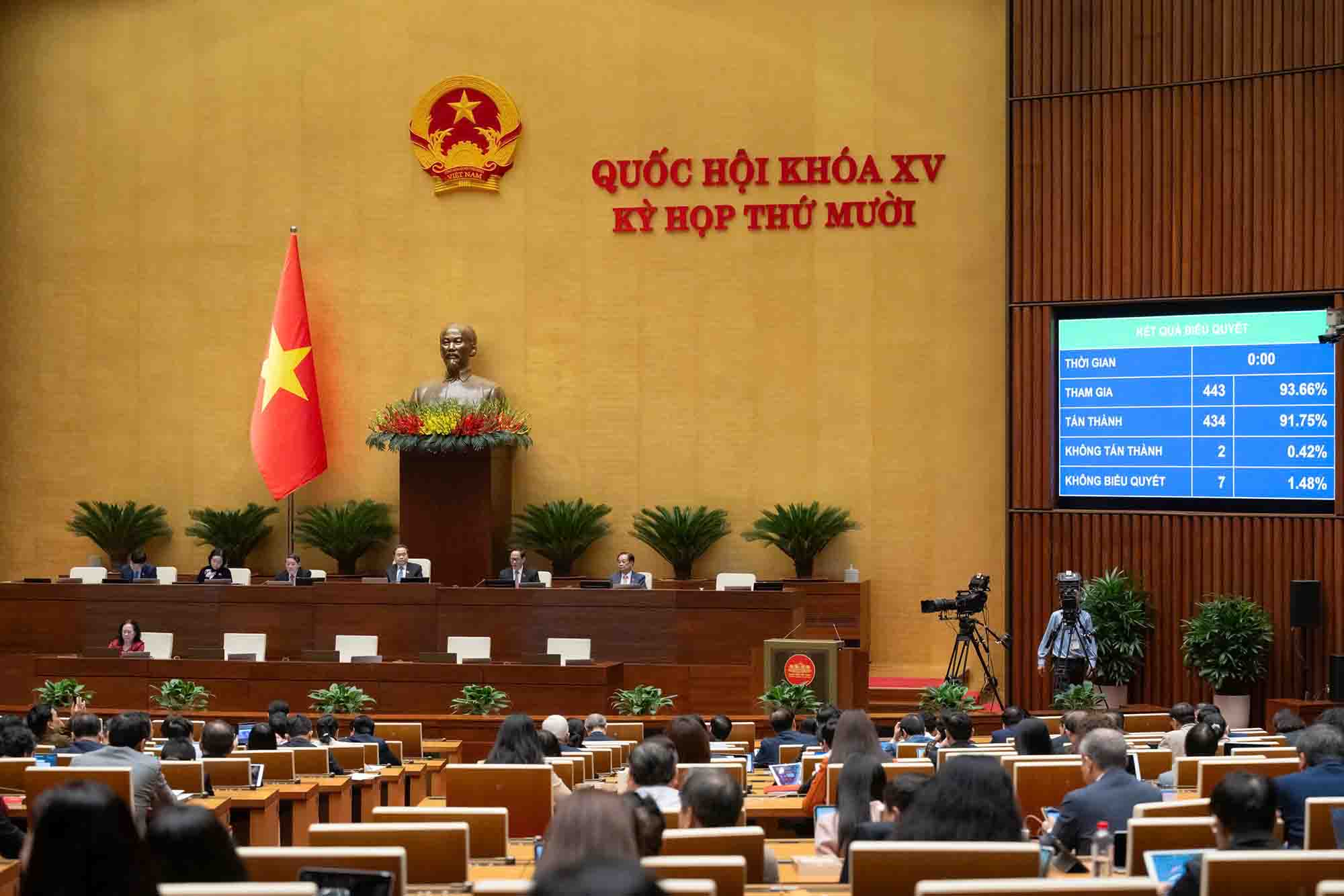
On the morning of December 10, with 434/443 delegates in favor, the National Assembly voted to pass the Law on Cyber Security.
The Law consists of 8 chapters and 45 Articles regulating cyber security, cybersecurity protection, rights, obligations, and responsibilities of relevant agencies, organizations, and individuals. The law takes effect from July 1, 2026.
This Law stipulates network security, network security protection; rights, obligations, and responsibilities of relevant agencies, organizations, and individuals.
In the explanation of words, the law states that cyber attacks are acts committed in cyberspace by using information technology or electronic means to appropriate information, disrupt, disrupt, paralyze operations, sabotage or control telecommunications network systems, Internet networks, etc.
Meanwhile, cyberterrorism is an act of committing in cyberspace by using information technology or electronic means to cause public panic or political instability.
Cybersecrete is an act committed in cyberspace by using information technology and electronic means to secretly invade to appropriate, collect, and copy information under state secrets, important data of agencies, organizations, and individuals with the aim of harming national security, social order and safety.
The law has a separate article regulating prohibited acts on cybersecurity. Accordingly, it is strictly forbidden to post and disseminate propaganda information against the Socialist Republic of Vietnam on the internet.
In particular, strictly prohibit propaganda to distort and defame the people's government; psychological warfare, inciting war of aggression, division, and hatred between ethnic groups, religions and peoples of other countries; insulting national groups, national flags, national huylas, national anthems, great masters, leaders, nobles, and national heroes.
On the other hand, strictly prohibit distorting history, denying revolutionary achievements, destroying the great national unity bloc, insulting religion, discriminating against gender and race; fabricating, slandering, providing false information, insulting the dignity, honor and reputation of others; act of providing false information that causes panic among the people, causes damage to socio-economic activities, makes difficulties for the normal operations of state agencies or civil servants, violates the legitimate rights and interests of other agencies, organizations, individuals...
The law also strictly prohibits the appropriation, trading, confiscation, and intentional disclosure of information belonging to state secrets, working secrets, business secrets, personal secrets, family secrets, and private life that affect the honor, reputation, dignity, rights and legitimate interests of agencies, organizations, and individuals.
It is strictly forbidden to intentionally listen to, record, or illegally record conversations on cyberspace; disclose information about civil code products, information about customers legally using civil code products, using, or trading civil code products of unknown origin.
Before voting, the National Assembly listened to Minister of Public Security Luong Tam Quang present the Report on receiving, explaining, revising and perfecting the draft Law on Cyber Security.
Regarding the viewpoint of developing the Law, Minister Luong Tam Quang said that the draft Law on Cyber Security in 2025 was developed on the basis of merging the Law on Cyber Security 2018 and the Law on Cyber Information Security 2015 on the principle of not changing the functions and tasks of ministries and branches, not creating new policies.


