
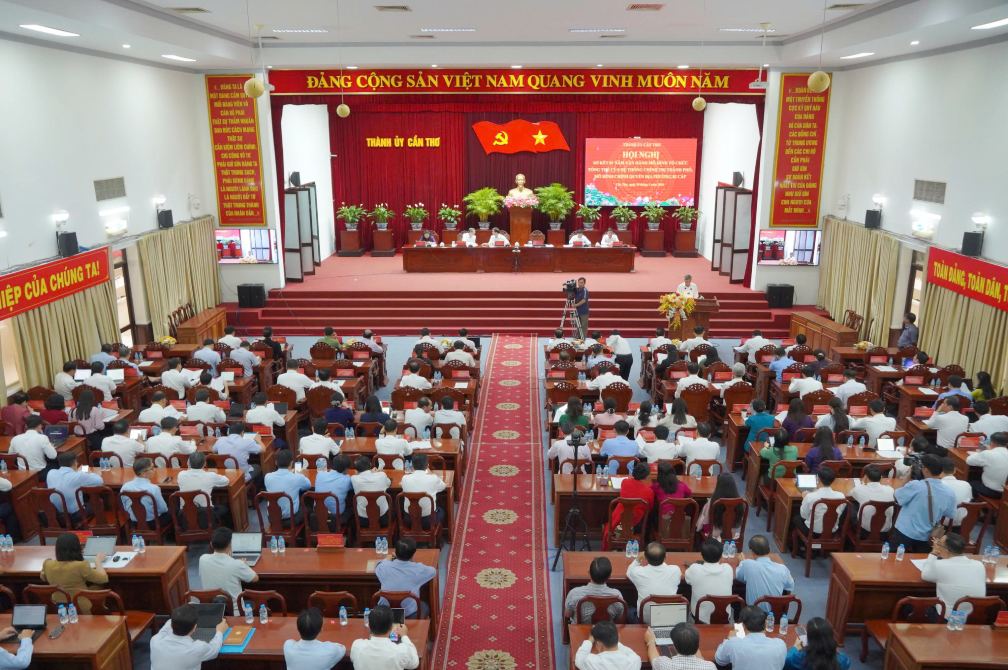
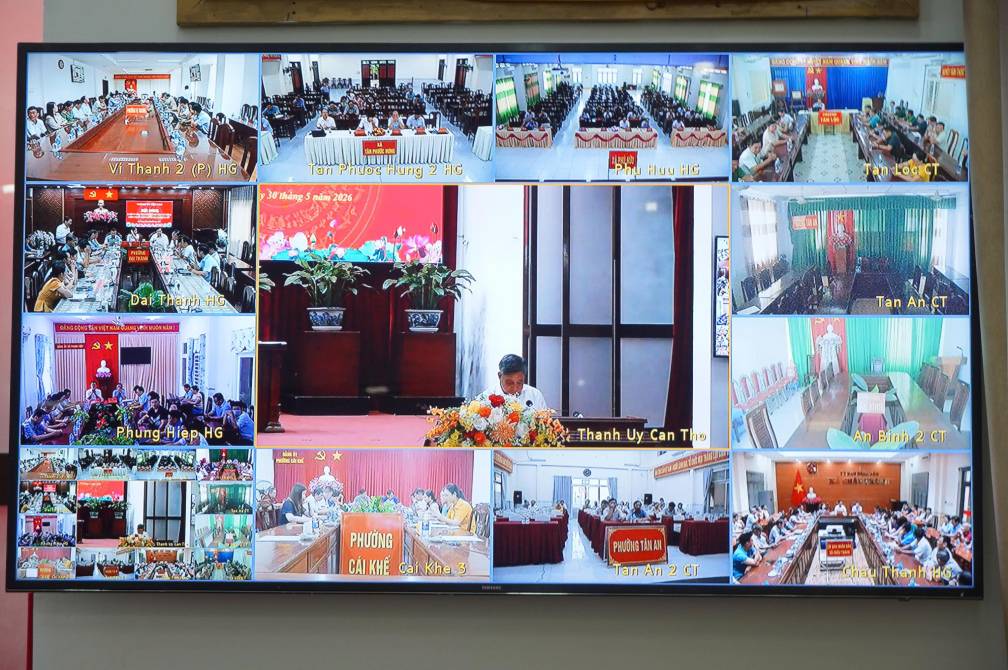
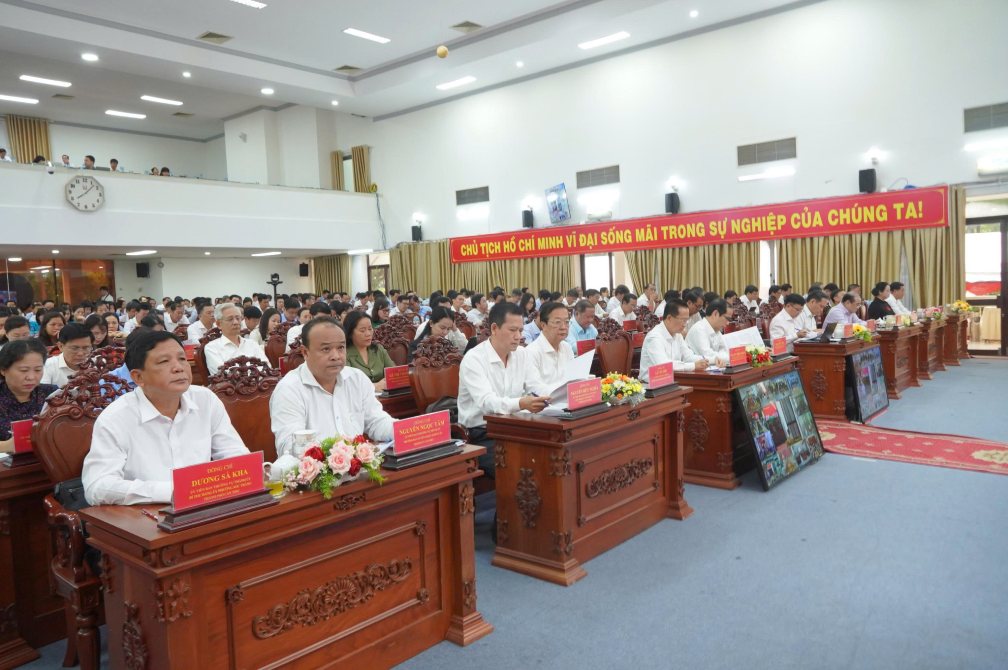
On the morning of May 30, the Can Tho City Party Committee organized a conference to summarize 1 year of operating the apparatus of the political system and local government at 2 levels.
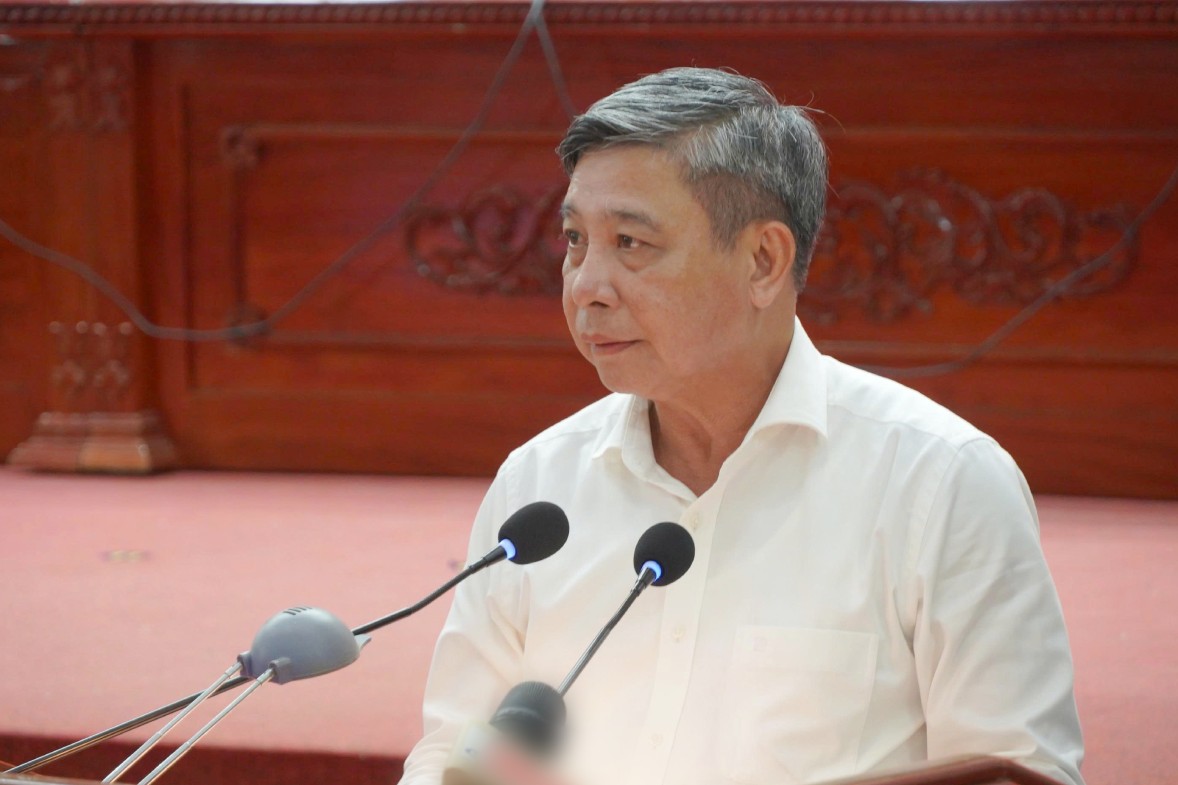
Speaking at the opening of the conference, Mr. Dong Van Thanh - Member of the Party Central Committee, Standing Deputy Secretary of the City Party Committee, Chairman of the People's Council of Can Tho City - emphasized that today's conference is very important. This is not only an opportunity to review the results of 1 year of implementing the arrangement, consolidation and operation of the overall organizational model of the political system, the 2-level local government model. More importantly, the conference aims to accurately assess the operational efficiency of the model, the level of service to people and businesses.
At the same time, this is also an opportunity to identify bottlenecks in institutions, organizations, cadres, decentralization, delegation of power, resources, public assets, digital transformation and data that need to be further removed to implement better in the coming time.
Mr. Dong Van Thanh said that after the arrangement, Can Tho has a wider development space, with 103 communes, wards and 1,896 hamlets and areas. Although the workload at the commune level has increased significantly, in the process of organization and implementation, many important and outstanding results have been achieved, the basic apparatus is stable, leadership, management, administration and service to the People are not interrupted.
Public administrative service centers operate in a regular manner; administrative reform, digital transformation, citizen reception, petition processing, national defense, and security are maintained, maintained and stable.
However, Mr. Thanh also frankly acknowledged that the new model is shifting from the "organizational stability" phase to the "operation quality improvement" phase. Many issues related to staffing, job positions, organizational structure, data, public assets and personnel policies... still need to be analyzed carefully, proposed, considered, and handled to improve the efficiency of serving people and businesses.
According to a report by the Can Tho City Party Committee, after 1 year of operating the overall organizational model of the political system and local government at 2 levels, the city's apparatus is basically stable and smooth. Administrative reform, digital transformation and serving people and businesses have achieved positive results. The City Public Administration Service Center and commune level operate stably; the total number of administrative procedure dossiers received and resolved is 791,125 dossiers, of which commune level received and processed 703,139 dossiers, city level 87,986 dossiers.
In the first quarter of 2026, the rate of timely dossier resolution reached 99.83%, the rate of dossier digitization reached 95%; the city reviewed 111 administrative procedures, amended and supplemented 64 procedures, kept 47 procedures unchanged, contributing to saving more than 483 million VND in compliance costs.
Economic growth in the first quarter of 2026 reached 7.02%, showing that the city still has room for recovery and acceleration in the following quarters if solutions to promote production, investment, consumption, science and technology, innovation and digital transformation are implemented synchronously and drastically.
Besides the achieved results, the operation of the overall organizational model of the political system and local government at 2 levels in the city still has some difficulties and obstacles that need to be further removed; mainly arising in the stage of institutionalizing the new model, specialized processes, resource conditions and implementation tools have not kept up with the volume of tasks transferred to the commune level.
The Standing Committee of the Can Tho City Party Committee also set out tasks and solutions for the period 2026 - 2031, focusing on continuing to innovate leadership, direction, propaganda, inspection, and supervision; Completing synchronously institutions, functions, tasks, and operating mechanisms; and completing the commune-level organizational structure in the direction of sufficient development space.
Along with that, arranging public non-business units, improving the quality of essential public services; improving the quality of the contingent of cadres, civil servants, and public employees; innovating evaluation according to results; building shared data, digital transformation and application of artificial intelligence; removing bottlenecks, releasing resources, and promoting development.


