Security is not about creating a safe zone so that officials do not have to take responsibility.
On the morning of September 3rd, the Politburo and the Secretariat organized a national conference to study, study, thoroughly grasp and implement a number of Resolutions and Directives of the Politburo.
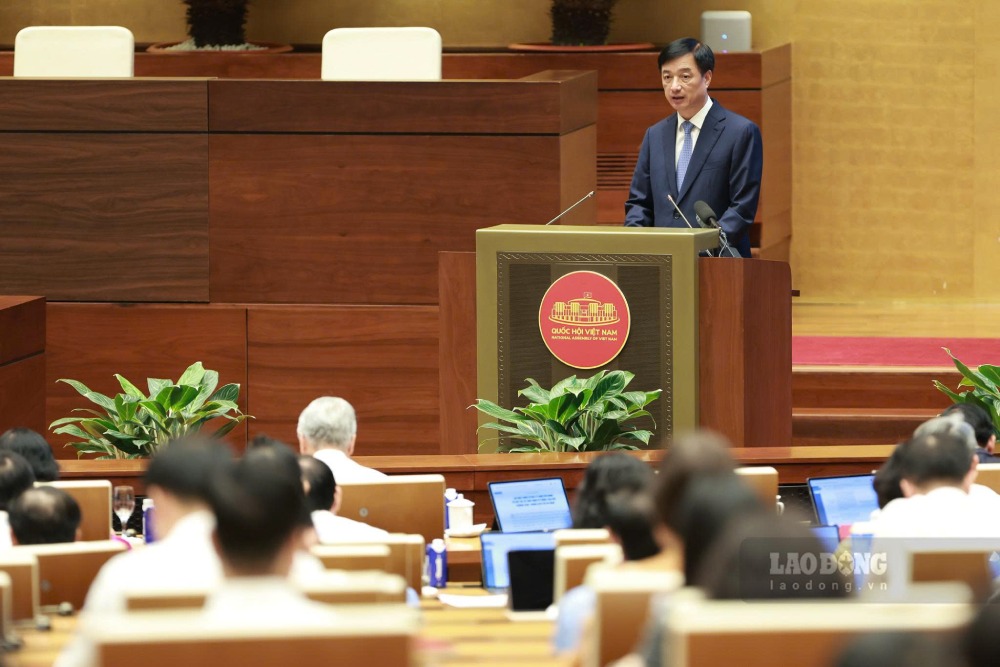
At the conference, Politburo Member, Secretary of the Party Central Committee, Head of the Central Organization Committee Nguyen Duy Ngoc reported on the key contents of Resolution No. 24-NQ/TW, dated August 22, 2026 of the Politburo on promoting the pioneering, exemplary, and spirit of innovation, daring to think, daring to do, and daring to take responsibility of cadres and party members in the new era.
According to the Head of the Central Organization Committee, Resolution 24 has made a shift from encouraging and protecting cadres who dare to think and dare to do to identifying pioneering, exemplary, and responsible action as the standards of cadres and party members in the new era.
Not every cadre must have a major initiative, a breakthrough project. But it is also unacceptable to accept passivity, delay, and avoid responsibility in performing tasks. Thus, from "encouraging those who dare to do", the Resolution moves towards requiring "building a contingent of cadres with capacity and responsibility to act".
Cadres protection cannot only start when errors or damages have occurred and then consider exemption or reduction of responsibility. Before requesting cadres to be responsible, the organization must clearly assign tasks, assign sufficient powers, allocate necessary resources, determine authority limits, identify and manage risks, and monitor and support in the implementation process.
According to the Head of the Central Organization Committee, protection is not about creating a "safe zone" so that officials do not have to take responsibility, but about creating a clear operating space, accepting risks, and controlled testing so that officials dare to take responsibility.
The very clear spirit is to choose people to follow work, assign work to challenge, take products and results to evaluate, take practice to discover, value and screen cadres.
People who do work, have products, and create real effects must be recognized, honored and valued. People who are slow, shirk, avoid, work in moderation or put personal interests above common interests must be recognized, screened and handled appropriately.
If you do not decide, even if work is interrupted, you must be responsible.
The Head of the Central Organization Committee noted that it is necessary to fully understand both sides of the issue, both protecting those who dare to do and resolutely handling those who refuse to do it.
Current practice has two different situations, which should not be equated. There are officials who really want to do it, have initiatives, have capacity, have bright motives, but are still concerned and hesitant because the mechanism is not clear, the law is still overlapping, new issues have no precedent, and risks are unpredictable.
For such officials, the responsibility of the organization is to remove, empower, guide, share risks and protect them.
But there are also officials who are not afraid to do it but actually do not want to do it; afraid of difficulties, afraid of conflicts, afraid of responsibility, working in moderation; doing easy things, avoiding difficult things; actively doing beneficial things, delaying common things; encountering problems, pushing them up, down, or pushing them to other agencies.
Especially, it is necessary to be vigilant against the situation of taking "fear of wrongdoing", "fear of responsibility", "mechanisms are still stuck", "unclear laws" as a cover-up for delays, irresponsibility, and even concealing personal motives.
The spirit of Resolution 24 is to protect those who dare to do, but at the same time must identify the responsibility of those who refuse to do it. Not acting can also cause consequences. A wrong decision must be held responsible; but not deciding, allowing work to be stalled, development facilities to be missed, resources to be wasted, people and businesses to suffer real damage must also be held responsible.
For a long time, we have often paid attention to checking what officials do wrong. In the new stage, we need to pay more attention to another question: belonging to the responsibility and authority of comrades, why don't comrades do it?", Head of the Central Organization Committee emphasized.
In particular, it is necessary to overcome the paradox that those who receive difficult jobs, accept responsibility and risks are more likely to suffer disadvantages than those who choose safe jobs and avoid responsibility.