
The apparatus is gradually streamlined, reducing intermediate levels
After more than 1 year of operating the 2-level local government model, the apparatus has gradually been streamlined, reducing intermediate levels, and many tasks have been resolved faster and with clearer focal points.
The improvement of legal institutions, decentralization, delegation of powers, decentralization of authority, administrative procedure reform (TTHC) and the business environment, digital transformation and database building have been promoted. State management activities, public service provision, and administrative procedure resolution are basically maintained continuously.
According to the Ministry of Home Affairs, 33/34 localities have established and operated 3,189 Commune-level Public Administrative Service Centers; The National Public Service Portal connects with 34/34 localities; The average Administrative Reform Index reached 89.96%, the highest level ever; The satisfaction index is maintained at over 83%.
Bringing public services closer to the people, associated with communes, wards, and special zones is very important. People not only need a more streamlined apparatus but also need to see the government closer, solve problems faster, have a better service attitude and have clearer responsibilities. The commune-level government in the new model is gradually shifting from the grassroots administrative level in the traditional sense to the level directly governing the grassroots area, organizing policy implementation, providing public services and handling daily problems.
Mr. Pham Manh Hung - Director of the Department of Administrative Reform (Ministry of Home Affairs) stated clearly that from April 2026 to now, the Prime Minister has drastically directed ministries, branches, and localities in administrative procedure reform. In particular, the Government has issued many resolutions on cutting and simplifying administrative procedures, business conditions, as well as promoting decentralization and delegation of power in resolving administrative procedures.
Just 11 Resolutions issued from April 29, 2026 to May 2026 (including the cluster of 8 Resolutions issued on April 29, 2026) will cut compliance costs by about 23,000 billion VND per year.
According to the Director of the Department of Administrative Reform, currently, ministries, branches, and localities are focusing on implementing these resolutions to simplify procedures, abolish unnecessary business conditions, towards a more open and convenient administrative procedure system.
From "management" thinking to "development creation
One of the prominent highlights in the past time is the clear shift from "management" thinking to "construction of development". This is not simply a change in the way of expression, but a turning point in awareness.
The State no longer stands in a controlling position, but becomes a companion force, paving the way, removing barriers, and unlocking resources for people and businesses. When taking people and businesses as the center, the law is no longer a "barrier", but becomes a "launch pad" to help liberate all production capacity and social creativity.
Dr. Nguyen Viet Chuc - Deputy Chairman of the Advisory Council on Culture and Society (Central Committee of the Vietnam Fatherland Front) - said that the shift from "management" to "construction and development" in governance is a historic step forward. This reflects the maturity of national governance thinking and the nation's aspiration to rise up strongly. However, the biggest challenge lies not in the promulgation of laws, but in the quality of implementation.
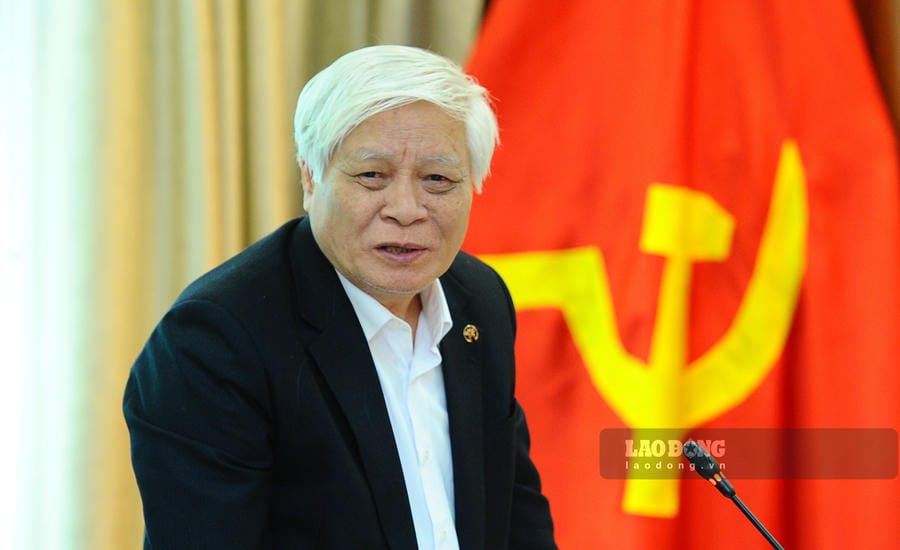
For legal "designs" to truly go into life, it requires transparency, consistency and responsibility of the entire political system. In that journey, each law must truly become a broad path for the country to firmly move towards a prosperous future.
Assoc. Prof. Dr. Bui Hoai Son - Specialized Member of the National Assembly's Committee for Culture and Society emphasized that it is necessary to change the operating philosophy of the State apparatus from the mindset of "managing what people and businesses are allowed to do" to establish transparent frameworks for people, businesses and society to maximize their creativity, and at the same time be responsible before the law.
According to the delegate, it is necessary to expand the participation of people, businesses, intellectuals, experts and social organizations in the process of building and implementing policies. The constructive government does not replace society but creates an environment, connects subjects and unleashes potential resources in society. At the same time, it is necessary to build a governance culture based on the spirit of service, cooperation and responsibility.
streamlining the apparatus, screening cadres to improve the capacity of grassroots cadres
The streamlining of the apparatus, towards the goal of modern management, not only reduces focal points but more importantly ensures that the apparatus after arrangement operates smoothly, screening, selecting, and arranging cadres with better capacity.
In Resolution No. 221/NQ-CP, the Government requested that in October 2026, ministries and ministerial-level agencies implement the arrangement of the internal organizational structure synchronously with decentralization and delegation of power. Another important task requested by the Government is to restructure and improve the quality of the contingent of cadres, civil servants, and public employees, especially at the commune level.
The 3rd Plenum of the 14th Central Committee also requested to continue to "purge" the organization inside, and at the same time shift the focus to operational quality, management capacity and efficiency in serving the people.
After a year of operating the new model, the elimination of intermediate levels and promoting decentralization and delegation of power have helped many procedures to be resolved immediately at the commune level, significantly shortening processing time, reducing costs and creating convenience for people and businesses. In localities that invest in synchronous digital infrastructure, build shared databases and promote online public service provision, management efficiency and service quality for people have been significantly improved. The whole country has received over 42.5 million dossiers, of which the online submission rate reached 91.74%; the on-time resolution rate is maintained at over 95%; more than 16.5 million digitalized dossiers (reaching nearly 95%). Reduced and simplified 3,466 administrative procedures and 1,754 business conditions, contributing to reducing 53% of implementation time and 54.6% of compliance costs. People's satisfaction level reached 83.08%.
Not only shortening the process of handling work, administrative procedure reform also contributes to changing the thinking of cadres and civil servants from "management" to "service". This is also a consistent requirement when reforming the organizational structure must go hand in hand with reforming operating methods, building a professional, effective, efficient and serving people administration that is increasingly better.
Talking to Lao Dong Newspaper, National Assembly Deputy Nguyen Thi Viet Nga (Hai Phong National Assembly Delegation) said that it is necessary to focus on building a team of cadres, civil servants, and public employees to meet the requirements of operating the new model. The arrangement is not only to streamline the apparatus, reduce the budget burden, but also to be a "screening" to improve the capacity of the grassroots cadre team - where the rate of job-responsibility is currently only about 30%. The requirement is that the recruitment, evaluation, training and use of cadres must be carried out democratically, publicly, fairly, objectively, associated with job positions, job title standards and specific products. Organization streamlining if it is not accompanied by improving human quality, correctly defining job positions and controlling power, it is difficult to create real effectiveness. Conversely, when functions are clearly defined, powers are linked to responsibilities, and cadres are evaluated by work results, the apparatus will have more room to operate proactively and flexibly. Tue Linh


